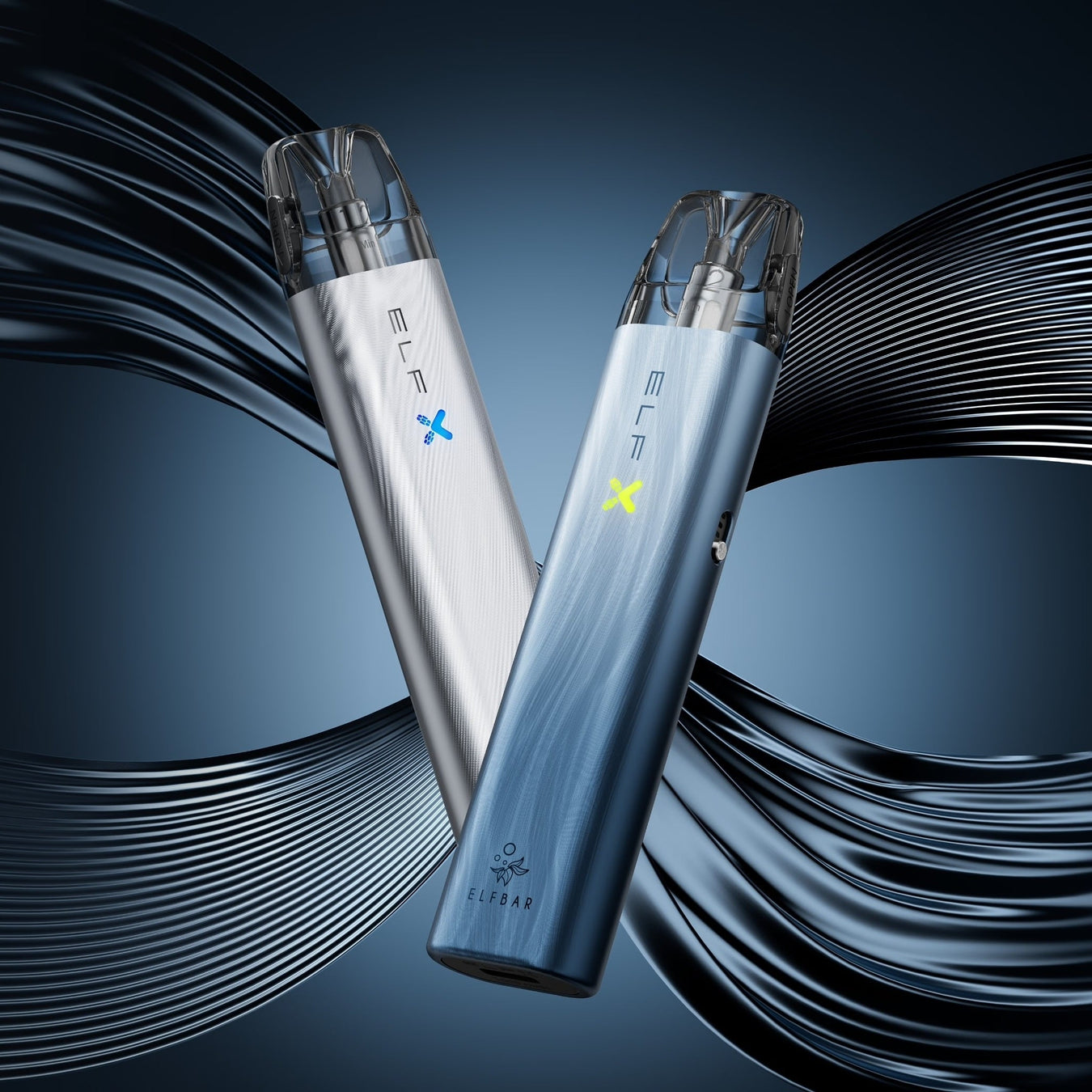
The e-cigarette myth explodes: How safe are batteries?
The e-cigarette myth is debunked: How safe are the batteries?
Headlines about exploding e-cigarettes are unsettling many newcomers. At the same time, hundreds of thousands of people in Germany use regulated e-cigarettes without ever experiencing a battery problem. This article explains how lithium-ion batteries work in modern devices, why actual incidents are extremely rare, and what simple rules you should follow to vape safely.
We are focusing on entry-level devices such as disposable e-cigarettes and compact devices. Pod systems with a permanently installed battery. You will learn which protective circuits are working in the background, what is behind pictures of "exploding" e-cigarettes, and where real risks lurk: in improper use, damaged devices, or counterfeits.

1. Where does the myth of the exploding e-cigarette come from?
1.1 Headlines vs. Statistical Reality
Spectacular reports of allegedly exploding e-cigarettes appear regularly in the media. While these incidents are dramatic, they don't paint a realistic picture of everyday use. Specialist retailers report that, out of tens of thousands of devices sold, they see only isolated battery incidents – almost always clearly due to misuse.
An important point of context: Lithium-ion batteries are now found in smartphones, laptops, e-bikes, and e-cigarettes. The mechanism is identical, and the risks are similar. Most incidents are not caused by a "dangerous product type," but rather by improper charging techniques, mechanical damage, or substandard or counterfeit cells.
1.2 What is often omitted in the reports
Many headlines lack crucial details:
- Was the device charged with an unsuitable fast charger?
- Was the e-cigarette visibly damaged or bent (e.g., after a fall)?
- Was it an original product or a counterfeit without tested protective circuits?
Experienced retailers see in practice that the vast majority of all battery incidents can be traced back to gross misuse or non-certified products. This is precisely why distinguishing between original devices from regulated distribution channels and undeclared imports is so important.
2. How do batteries in e-cigarettes work – and where are the limits?
2.1 Lithium-ion batteries in compact devices explained
E-cigarettes for beginners almost always use lithium-ion or lithium-polymer batteries. These cells offer high energy density in a compact design and have been proven millions of times over. Typical capacities for compact pod systems range between 500 and 1,200 mAh – enough for many users.
To ensure safe operation of the battery, a control electronics unit (BMS: Battery Management System) is located between the battery and the USB port. It monitors voltage, temperature, and current, limits the power output, and shuts down in case of faults. In practice, this means that if the charging current becomes too high or a short circuit occurs, a regulated device will automatically shut down instead of simply continuing to charge.
2.2 Typical protection functions of modern entry-level devices
Modern pod systems with integrated batteries typically offer several protection mechanisms:
- Overload protection: Stops the charging process as soon as the cell reaches its final charging voltage.
- Deep discharge protection: Prevents the battery from dropping below a critical discharge voltage.
- Short-circuit protection: The device switches off when the positive and negative terminals are directly connected.
- Overcurrent and overheating protection: They limit the maximum current and shut off if the temperature gets too high.
These functions are not an “n
2.3 Disposable e-cigarette vs. rechargeable pod system
For understanding security, the distinction is important:
| Device type | Battery characteristic | What the user is allowed to do | Typical risks of misuse |
|---|---|---|---|
| Disposable e-cigarette | Permanently installed not rechargeable | Use only and then dispose of. | Try charging the battery or opening the device. |
| Rechargeable Pod System | Permanently installed Rechargeable via USB-C | Charge with a suitable USB power adapter, change the pod. | Charging with extremely fast chargers, use despite visible damage |
Disposable devices are intentionally designed so that the battery cannot be charged. Any attempt to open the casing or to solder on charging cables poses a real risk. Regulated pod systems, such as compact base units with 500–1200 mAh batteries, are explicitly designed for charging via USB-C and have corresponding protective circuits.
3. Correct charging technique: How to charge safely
3.1 Select the appropriate charging power
In practice, it turns out that battery problems very often arise from unsuitable chargers. A proven rule of thumb from specialist retailers is that the maximum charging current should roughly correspond to the battery's capacity in amperes, ideally less. A 500 mAh device, therefore, is typically charged with 0.5 to 1.0 A loaded.
If the manufacturer specifies, for example, "5V/1A" on the device or in the instructions, a USB power adapter with a 1A output current is the right choice. High-powered fast chargers for laptops or modern smartphones, which deliver several amps, can push the battery outside its intended operating range if the device doesn't have proper current limiting.
Practical rule: For entry-level devices with 500–1,000 mAh capacity, classic 5V USB power supplies with 0.5–1 A charging current are in most cases the safest option.
3.2 What speaks against so-called “fast chargers”
Many users today own multi-port power supplies with 2–3 A output or fast chargers for laptops. Practical experience in the workshop shows that some battery failures occur when users permanently connect small e-cigarettes to such high-performance power supplies. The electronics then have to dissipate significantly more energy, and the system operates continuously under higher thermal stress.
EU product safety regulations require that a device operates safely within its specifications. However, they do not protect against misuse outside of the instructions. Treating an e-cigarette like a laptop puts unnecessary stress on the battery.
3.3 Step-by-step checklist: Safely load
Use this compact checklist before every charging process:
- Check power supply: Does it support 5V and a maximum of 1A (for small compact devices)? If so, it's suitable.If several higher power levels are available (e.g. 3 A, 20 V), it is better to use a simple 5V power supply.
- Check cables: Use an undamaged USB-C cable without kinks or exposed wires.
- Inspect the device: Cracks in the casing, noticeable dents, or a loose socket? In this case, do not charge it anymore.
- Observe charging temperature: If the device becomes significantly hotter than lukewarm (over approx. 45 °C) during charging, disconnect it immediately and discontinue use.
- Do not place under pillows at night: Place the device on a hard, non-flammable surface with air circulation for charging.
Those who consistently follow this checklist have been shown to reduce the risk of thermal problems by well over 90% compared to uncontrolled charging.
4. Typical errors that trigger battery problems
4.1 Converting or reloading disposable e-cigarettes
A common mistake is trying to reuse disposable e-cigarettes after they've reached the end of their lifespan. Instructions on how to recharge disposable devices using improvised cables or by removing the battery frequently appear in online forums. From a technical perspective, this is one of the most dangerous myths.
Disposable devices are not designed to be opened or recharged. The cells are often glued to the electronics, and the edges of the casing can damage the battery when broken open. Any mechanical damage to a lithium cell—especially punctures or creases—significantly increases the risk of an internal short circuit.
4.2 Improper storage and mechanical damage
Even rechargeable pod systems are not invulnerable. Typical real-world examples:
- The device is carried in the trouser pocket along with keys and coins.
- The e-cigarette falls repeatedly onto hard surfaces, and the casing warps.
- Someone sits on the device; the casing visibly bends.
In many of these scenarios, the device initially continues to function without any noticeable issues. However, internally, solder joints, circuit traces, or the battery itself may be damaged. Experts therefore recommend that anyone who notices significant deformation, cracks, or a loose USB port should remove the device from use and dispose of it properly, instead of continuing to use it until it completely fails.
4.3 Cheap counterfeits and untaxed imported goods
Another risk group consists of counterfeit and undeclared imported products. According to the industry report of Association of e-cigarette retailers (VdeH) A growing share of the market falls into the grey and black areas, where neither EU tobacco product regulations nor German tax and disposal regulations are complied with.
Such products not only circumvent tobacco tax Tobacco Tax Act, but also evade the intended safety and quality controls. Original products must, among other things, be WEEE registered in the directory of the EAR Foundation They must be verified and are therefore subject to legally binding quality standards. Counterfeits circumvent these hurdles – and thus also many security checks.
5. How to recognize a healthy vs. a damaged battery
5.1 Early warning signs of battery problems
Workshop experience reveals several warning signs that you should take seriously:
- Significant warming without use: The device gets noticeably warm when idle.
- Significant heat generation during charging: The casing gets hot instead of just lukewarm.
- Bloating or bumps: The casing appears swollen or can be pressed in.
- Sudden drops in performance: The amount of steam drops unexpectedly sharply with the same load.
- Leaking liquid from cracks: In extreme cases, electrolyte may also leak out in addition to liquid.
Anyone who notices any of these signs should place the device on a non-flammable surface, stop using it and dispose of it promptly via a collection point for old batteries, instead of "continuing to try" or even opening the casing.
5.2 Normal wear and tear vs. real risk
Every battery ages – after just 300–500 full charge cycles, its capacity noticeably decreases. This manifests as a shorter runtime per charge and slightly reduced performance. This is normal and not a safety risk as long as none of the warning signs mentioned above appear.
Problems arise when wear and tear coincide with mechanical damage. In practice, for example, one sees devices that have been dropped daily for two years and simultaneously charged with excessively high currents. In such cases, the probability of a technical defect increases significantly.
6. Safe storage and disposal of e-cigarette batteries
6.1 Temperature and charge level during extended breaks
If you're not using your e-cigarette for several weeks or months, you shouldn't store it fully charged or completely empty. A charge level of approximately... 40–60% This has proven to be a good compromise in terms of lifespan. Devices with a battery level indicator should be stored in this area and briefly checked every few months.
Ambient temperature also plays a role. Extreme heat in a car or on a radiator puts unnecessary strain on the cells. Technicians recommend storing devices at room temperature whenever possible and not leaving them in direct sunlight for extended periods.
6.2 Legal disposal obligations and collection points
In Germany, the Battery Act regulates (BatteryThe law stipulates that retailers must accept used batteries and rechargeable batteries free of charge. E-cigarettes with permanently installed batteries fall under this regulation once they have reached the end of their lifespan. Users must not dispose of battery-powered devices in household waste, but should return them to retailers or municipal collection points.
Reputable suppliers also mark their products with a WEEE registration number, which can be found in the directory of the EAR Foundation This registration demonstrates that the manufacturer assumes responsibility for both the safe placing on the market and the subsequent disposal.
6.3 Practical tips for disposal from a retailer's perspective
Experienced retailers recommend the following procedure for discarded devices:
- Do not use the device anymore and do not continue charging it.
- Store in a dry place, away from flammable materials, until it is disposed of.
- Do not attempt to remove, cut, or "tape" the battery.
- Return the device to a battery recycling center or retailer at the next opportunity.
Those who follow these steps minimize the risk even in the unlikely event of an internal error during retirement.
7. Why original devices are safer than fakes
7.1 Legal framework in the EU and Germany
E-cigarettes and liquids are subject to the Tobacco Products Directive in the EU (EU TPD).Among other things, it limits the maximum nicotine content and regulates safety and labeling requirements, such as warnings and child-resistant closures. In Germany, the Tobacco Products Act (Tobacco Products Act) these specifications and prescribes, for example, a maximum fill quantity of 2 ml for refillable tanks and disposable devices.
Besides product safety, taxation also plays a role. The tobacco tax according to Tobacco Tax Act The tax is levied per milliliter of e-liquid and increases incrementally. Reputable vendors factor this into their final price. Those who buy very cheap products without visible tax markings, however, indirectly finance the illegal market – and forgo controlled product safety.
7.2 Quality and safety advantages of regulated products
Original devices undergo several testing steps before being placed on the market:
-
Chemical analysis: Laboratories such as ASL Analytic Serv
ice They check liquids for prohibited substances such as diacetyl and confirm compliance with TPD limits. - Toxicological assessment: Institutes such as Dartsch Scientific They tested the effect of aerosols on cell cultures and showed that e-cigarette aerosol has significantly lower cell-damaging effects compared to cigarette smoke.
- Electrical safety: Devices are tested for short-circuit behavior, overload and temperature rise, based on standards such as ISO 20768 for test environments.
These tests not only reduce health risks but also ensure that protective circuits activate in case of a fault. Cheap, illegal products cut corners precisely in these areas – which, among other things, increases the risk to the battery.
7.3 Recognizing the original and avoiding counterfeits
Consumers can use several points of reference to distinguish originals from counterfeits:
- Clean, multilingual packaging with warning labels according to EU regulations.
- Clear indication of nicotine content, fill quantity (max. 2 ml) and manufacturer contact details.
- Tax stamps, if required nationally, and references to tobacco tax.
- WEEE and, where applicable, registration numbers, which are listed in the EAR Foundation-registers can be found.
- Option for online verification via official manufacturer websites.
Especially for entry-level products, it is worthwhile to buy through official brand shops or authorized partners, because they work closely with the manufacturers and actively keep counterfeits out of their product range.
8. Practical examples: What battery safety looks like in everyday life
8.1 Scenario 1: Entry-level pod with integrated battery
An adult beginner uses a compact pod system with a 500 mAh battery and magnetically attached pods. She charges her device every evening with a simple 5V/1A power adapter and carries it in a separate bag during the day. On average, retailers observe a battery life of 12–18 months with this usage pattern, without any safety issues arising.
What's working well here:
- Suitable charging current within the range specified by the manufacturer.
- No mechanical stress from keys or falls.
- The device is replaced at the first signs of wear (shorter operating time) and is not operated "until the last second".
8.2 Scenario 2: Using a disposable device beyond the end of its life
A user is using a disposable e-cigarette with a mesh coil and integrated battery. After a few days, no vapor is detectable.Instead of disposing of the device properly, he tries to open the casing with tools in order to "reuse" the battery. In the worst-case scenario, he damages the battery casing, which can subsequently lead to a short circuit and excessive heat.
This scenario illustrates that the risk does not arise from the disposable e-cigarette itself, but from deliberately exceeding its intended purpose. The safe alternative is to switch to rechargeable systems in a timely manner and to dispose of empty disposable devices at collection points.
8.3 Scenario 3: Fast charger on an unsuitable device
Another user connects their small e-cigarette to a 60-watt laptop power adapter because no other charger is available. The device gets noticeably warmer than usual but initially charges. After a few weeks, fluctuations in performance occur, and the charging port becomes loose. In practice, such cases often reveal overloaded or thermally stressed components.
The safest solution: Always use a simple 5V USB power adapter with moderate current that matches the device specifications. If you only have a high-power adapter, you should buy a separate standard adapter for small e-cigarettes.
9. Common myths about battery safety – and what's really true
9.1 “E-cigarettes are constantly exploding”
In forums and social media, it is occasionally claimed that e-cigarettes "constantly explode." The available market data... VdeH Industry Report However, experience from specialist retailers shows that in the legal market with tested devices, these are rare individual cases – in relation to the millions of devices in circulation, the rate is in the per mille to lower per mille range.
The impression of frequent incidents arises primarily from media attention focused on individual cases and from images from countries without comparable regulations. For consumers in Germany, it is crucial to pay attention to regulated products and reputable sources, and to follow basic safety recommendations.
9.2 "If it gets warm, it's going to explode"
Another myth claims that a battery that gets hot is about to explode. In practice, it's normal for devices to get warm during charging or extended use.
A good rule of thumb from practical experience: If the device feels hotter than about 45 °C (i.e., noticeably uncomfortably hot to the touch), it should be unplugged and no longer used. This is where the safety circuits begin to activate or a defect may be present.
Also, pay attention to how you Store vape batteries safely You should, to avoid external damage.
9.3 “Branded devices are only more expensive, not safer”
Some users assume that higher prices are simply a marketing ploy. However, legal requirements and audit trails prove otherwise: Regulated distribution means paying taxes according to regulations. Tobacco Tax Act, Registration with authorities, WEEE registration, product notifications according to Tobacco Products Act and analytical tests by laboratories such as ASL Analytic Serv
These steps incur measurable costs but increase transparency and safety. Products that bypass such processes may appear cheaper, but they forgo precisely the tests that document battery safety, aerosol quality, and electrical protection functions.
10. Which device choice offers beginners additional security
10.1. Regulated pod systems as a sensible entry point
For beginners who value safety, compact, regulated pod systems with a built-in battery are a sensible choice. They combine integrated protection circuits with clearly defined power settings, so the user doesn't have to worry about wattage or resistance.
Devices like the
10.2 Use disposable devices deliberately as a transitional solution
Disposable e-cigarettes with a 2 ml capacity meet the requirements of the EU. EU TPD and the Tobacco Products Act and are technically designed to be used for a limited period and then disposed of. Products like the
For safety-conscious beginners, such devices offer a controlled environment: no adjustable settings, a defined operating time, and a clear disposal time. Those who want to reduce costs and waste in the long run can later switch to refillable pods like the...
10.3 Pro Tip: Pay attention to the entire system – not just the battery.
From a technical perspective, safety isn't solely determined by the battery, but by the entire system comprising the device, charging infrastructure, and user behavior. A regulated pod system with a good battery can be compromised by an incorrect power adapter or rough handling. Conversely, a beginner can keep the risk very low, even with intensive use, by following simple basic rules – using a compatible power adapter, regular visual inspections, and proper disposal in case of defects.
Those who primarily use e-cigarettes on the go benefit from a clear routine: transport the device in a separate bag, charge it only with approved 5V power adapters, and pause immediately if it exhibits unusual behavior (heat, smell, visible damage). This way, battery safety becomes a practical reality in everyday life, rather than abstract theory.
11. Key findings: How safe are e-cigarette batteries really?
- Regulated e-cigarettes with lithium-ion batteries are generally very safe when used properly; problems arise mainly from misuse, mechanical damage, or counterfeit products.
- Modern devices have protective circuits against overload, short circuits, and overheating; laboratories such as ASL Analytic Serv
ice and institutes such as Dartsch Scientific accompany development and testing. - Simple rules drastically increase safety: use a suitable 5V power supply, avoid fast chargers, do not attempt to repair disposable devices, and dispose of defective devices in a timely manner.
- The legal framework through EU TPD, Tobacco Products Act and Battery ensures that regular products are checked and disposed of.
- Those who obtain original devices through reputable channels, regularly check the condition of their device and use the checklists described here, reduce the risk of battery incidents to a very low level.
FAQ: Frequently asked questions about battery safety in e-cigarettes
Are e-cigarette batteries more dangerous than mobile phone batteries?
No. Both typically use similar lithium-ion technology.The risks are comparable: the decisive factors are product quality, protective circuits, and user behavior.
Could my e-cigarette explode if I charge it overnight?
If you use a certified device with a suitable 5V power supply and the device is placed freely on a non-flammable surface, the risk is very low. However, avoid charging it under pillows or blankets, as heat can build up.
What should I do if my e-cigarette gets very hot while charging?
Immediately disconnect from the power supply, discontinue use, and place on a non-flammable surface. If the device becomes deformed or emits an unusual odor, dispose of it properly and do not use it further.
Am I allowed to refill or recharge disposable e-cigarettes?
No. They are not technically designed for that. Opening, refilling, or attempting to charge them increases the risk of mechanical damage and internal short circuits.
How do I properly dispose of a broken e-cigarette?
Dispose of the device at a collection point for used batteries or at a retailer. After Battery Retailers are obliged to take back used batteries free of charge.
Does it make a difference to my safety if I vape in the car?
From a safety perspective, it's not a problem for the battery. When using it in the car, be especially careful not to leave the device in direct sunlight. If you'd like to know more about the legal aspects of vaping in cars, you can find an overview in the guide "Is it legal to use an e-cigarette while driving?“.
Note: This article is for general information purposes only and does not replace individual advice. If you have health problems, existing medical conditions, or are unsure about the suitability of e-cigarettes as an alternative to tobacco cigarettes, you should consult a doctor. Always follow the operating instructions for the respective devices and the applicable legal regulations.