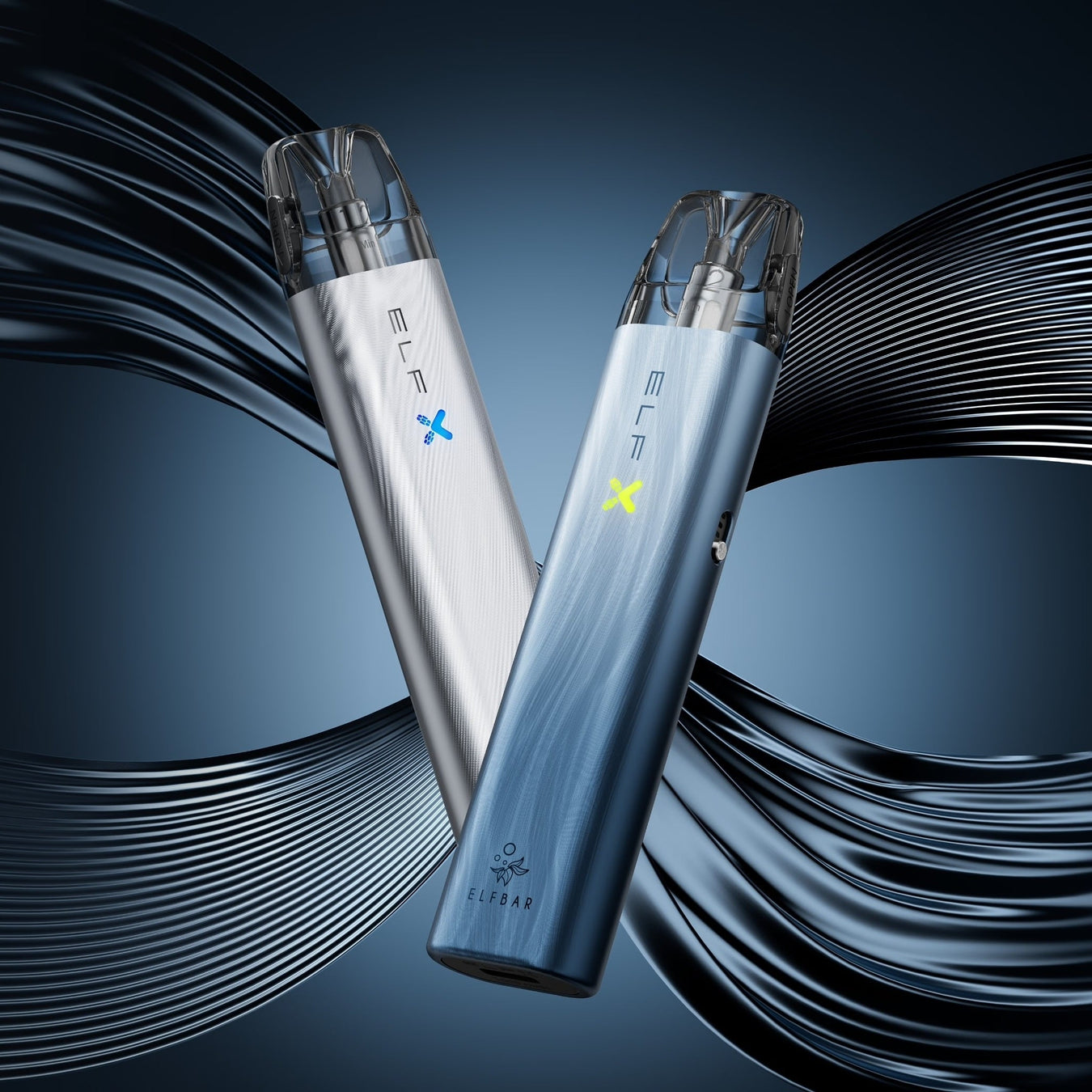
The best power source: Where you should charge your e-cigarette

Transparency note: As a specialist retailer for e-cigarettes, our recommendations are based on technical specifications, applicable safety standards, and our many years of experience in customer support. We carry the products linked in the text in our product range.
Power bank, laptop, or wall adapter? Many vapers ask themselves this question when their battery is running low. However, choosing the right power source is more than just a matter of convenience – it's crucial for the lifespan and safety of your e-cigarette. We'll explain which power sources are ideal and why some USB adapters can damage your device in the long run.
Always use a high-quality USB-C cable, to avoid charging errors and defects.
The basics of charging: voltage, current, and power
To understand why not all USB ports are the same, we need to clarify three basic terms. These follow the physical standards that are also defined in the international standard. IEC 62368-1 for the security of audio, video and IT equipment.
- Voltage (V): This is the "pressure" at which the current flows. According to the USB-IF (USB Implementers Forum), the standard for USB-based small devices is primarily 5 volts.
- Current (A): This is the "amount" of current that flows. Common values for e-cigarettes range between 0.5 A and 2 A.
- Power (W): The total energy (voltage × current). A standard vape charging process usually uses 5W (5V/1A) to 10W (5V/2A).
The charging electronics in your e-cigarette, a small chip (integrated circuit, IC), acts as a gatekeeper. It "decides" how much power it can safely request from the power supply to charge the device. internal lithium-ion cells (often manufactured according to safety standards such as IEC 62133) not to overload.
The myth of "faster charging"
A common misconception is that a 3A tablet charger will charge a 1A e-cigarette faster. In practice, the vape's charging electronics are the limiting factor. If a device like the
Risks arise when modern fast chargers with "Power Delivery" (PD). These can theoretically supply higher voltages (9V/12V). Although high-quality vapes have protective circuits, communication errors between the power supply and the charging IC can, in extreme cases, lead to overheating of the electronics. We therefore recommend primarily using power supplies with a stable 5V output for e-cigarettes.
The best power sources for your e-cigarette compared
Based on technical specifications and feedback from our repair service
| power source | Typical output | Evaluation | Why? |
|---|---|---|---|
| Laptop/PC | 5V/0.5A - 0.9A | Very safe | Strictly regulated output according to USB specification; protects the battery through slow charging. |
| Standard power supply | 5V/1A | Ideal | It exactly matches the specification of most Pod systems. |
| Power bank | 5V/1A - 2A | Good | Portable; pay attention to brand quality to avoid voltage fluctuations. |
| Mobile phone fast charger | Variable (5V-12V) | Conditional | Only safe if the power supply reliably "switches down" to 5V. |
Expert tip: If you want to maximize your battery's lifespan, a computer's USB port is often the best choice. The lower current results in less heat generation during the chemical charging process within the cell.
The wall plug check: How to identify a safe power supply
Before connecting any power supply, you should check the technical specifications on the casing. This is a simple but effective safety precaution.
- Read the output line: Search for
Output: 5V ⎓ 1Aor5.0V, 1.0A. A value of5V ⎓ 2AIt is also safe for devices explicitly designed for faster charging, such as theELFX Pro Pink Kit. - Pay attention to the certification mark: A valid CE marking It is mandatory in the EU. It indicates that the power supply meets basic safety standards.
- Touch and warmth: Cheap, no-name adapters often get unusually hot while charging. This indicates a low-quality transformer that could be transmitting voltage spikes to your e-cigarette.

Common charging errors and practical tips for battery health
In our evaluation of Serv
1. Dirty charging ports (most common source of error). Lint accumulates in the USB-C port of trousers or handbags. This acts like an insulating layer, causing leakage currents or preventing proper contact, which can lead to heat generation.
- Measure: Clean the port gently on a monthly basis using a soft interdental brush or dry compressed air.
2. Extreme temperatures: Lithium-ion batteries are based on a temperature-dependent chemical reaction. Charging below 5 °C or above 35 °C puts significant stress on the cell chemistry.
- Recommendation: Ideally, charge your device at moderate room temperature (approx. 15–25 °C). Avoid charging in the car in direct sunlight.
3. The "continuous charging" overnight. Modern devices such as the
- Tip: Disconnect the device from the power supply as soon as the LED indicator signals "Full". This increases safety and protects the hardware, as explained in our battery safety guide.
4. The 20-80 principle (heuristic for longevity). It is a well-established rule of thumb in battery research not to constantly operate lithium batteries between 0% and 100% charge. Chemical stress is highest at the capacity limits.
- Practice: Recharge when the device shows approximately 20% remaining capacity, and unplug it at around 80-90%. This can significantly increase the number of usable charging cycles. Further technical details can be found in our article on charging cycles. Pod systems.
Disposal and legal standards
Safety doesn't end with charging, but includes disposal. According to the Battery Act (BattG) E-cigarettes should never be disposed of in household waste.Batteries contain valuable raw materials and potentially environmentally hazardous substances. Please use the free return systems available at retailers or municipal collection points.
Manufacturers striving for the highest standards also orient themselves towards the ISO 20768, defines the requirements for steam generation. Responsible use of the power source is the first step towards a long-lasting and safe vaping experience.
Disclaimer: This article is for general information purposes only and is based on common technical standards. It does not replace reading the original instruction manual for your specific device. If you notice any signs of damage or excessive heat, disconnect the device from the power supply immediately.
References
- International Electrotechnical Commission (IEC) - Standard 62133 (Safety requirements for portable sealed secondary cells).
- Federal Ministry for the Environment, Nature Conservation, Nuclear Safety and Consumer Protection (BMUV) - Battery Act (BattG).
- Foundation for the Register of Waste Electrical and Electronic Equipment (EAR) - Manufacturer directory.
- International Organization for Standardization (ISO) - Standard 20768.