E-cigarette for beginners 2026: The entry-level guide
An e-cigarette for beginners essentially consists of a battery, a liquid reservoir, and a heated coil—nothing more. Nevertheless, the initial selection process can be overwhelming for many: disposable vape or pod system? With or without nicotine? Which coil resistance? Which draw type? This guide explains how an e-cigarette works technically, how to identify the right device for beginners, and which user mistakes to avoid at the start—without making any promises about health, enjoyment, or quitting smoking.
Last updated: May 2026. This article explains how it works and how to select a device. It is not medical advice and does not recommend quitting smoking.
How does an e-cigarette work?
An e-cigarette consists of three main components that perform the same job in every device — whether a 10-euro disposable or a pod system with a display.
Battery
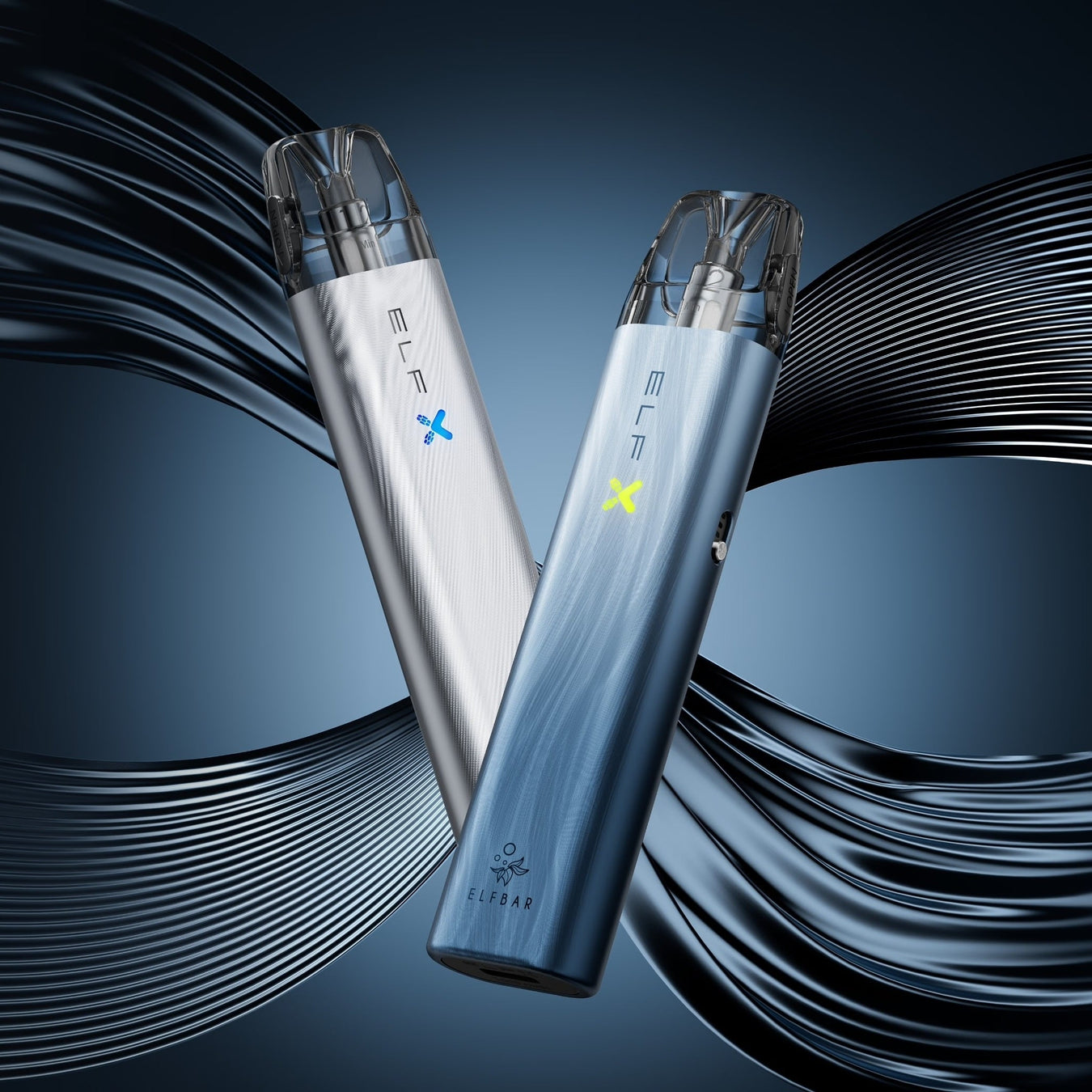
The battery supplies power to the coil. In disposable devices, it is permanently installed and not replaceable; in pod systems, it is located in the battery holder and is often rechargeable via USB-C. Some ELFX models have a display showing the battery level and mode. Lithium batteries are sensitive to heat, cold, and pressure—therefore, they should not be left in a car in summer or in a freezer.
Pod or tank with liquid
The pod or tank contains the e-liquid: usually a mixture of propylene glycol (PG), vegetable glycerin (VG), flavoring, and—if desired—nicotine. Disposable e-cigarettes The liquid tank is firmly glued in place.
Coil with cotton
The coil is a small heating element wrapped in cotton. The cotton absorbs e-liquid, which the coil vaporizes when the device is inhaled. The coil resistance (in ohms, e.g., 0.6 Ω, 0.8 Ω, 1.1 Ω) determines, along with the wattage, how hot the device gets and how much vapor is produced. Lower resistances (0.6–0.8 Ω) produce more vapor, while higher resistances (1.0–1.2 Ω) are more energy-efficient and better suited for mouth-to-lung (MTL) vaping.
What happens on the train?
In most pod systems, a pressure sensor in the battery activates the coil as soon as you inhale. So there's no button to press—inhale = power on, stop = power off. Larger mod devices also have a fire button; in most cases...
The pressure sensor reacts to negative pressure in the mouthpiece. Therefore, draw gently and evenly, not hard and short. A draw that is too forceful can draw liquid towards the sensor and cause problems such as gurgling or spitting – details in the article.
Disposable vape or pod system: Which is better for beginners?
Disposable vape (easy to start, short-term use)
A disposable vape is ready to use immediately, costs little per unit, and is the simplest option for trying vaping. No filling, no pod changes, no display logic. The disadvantages: higher costs per puff in the long run, more electronic waste, and no way to fix problems—if something jams, the device goes straight to the recycling center.
Pod system (more flexible in the medium term)
A pod system like
For a direct comparison, we recommend the article
MTL, DTL, RDL: Which puffing style is suitable for beginners?
The draw style describes how you inhale from the e-cigarette — and which coil is intended for that.
- MTL (Mouth-to-Lung): First draw the vapor into your mouth, then inhale into your lungs. Similar to a tobacco cigarette. Tighter draw, less vapor, often with a higher coil resistance (1.0–1.2 Ω). Usually the obvious choice for beginners.
- DTL (Direct-to-Lung): Inhale deeply and directly. Very open draw, lots of vapor, low resistance (0.2–0.4 Ω) and higher wattage. Often too much and unusually hot for beginners.
- RDL (Restricted Direct to Lung): A middle ground between MTL and DTL. Comfortable even for slightly more advanced beginners. Resistance usually 0.6–0.8 Ω.
For beginners, MTL is the most relaxed way to get started. You can find a detailed explanation with examples at [link/website address]. MTL vs. DTL vs. RDL for pod systems.
With or without nicotine?
E-liquids are available with nicotine (e.g., 10 mg/ml, 20 mg/ml) and without nicotine (0 mg/ml). In Germany, there is a legal limit of 20 mg/ml for e-cigarette liquids (Tobacco Products Ordinance §27). Sale to persons under 18 years of age is prohibited (Youth Protection Act §10).
What's right for you depends on your individual circumstances. We don't offer medical advice on this. If you'd like to vape nicotine-free, please also read the following.
Coil resistance: 0.6 Ω, 0.8 Ω or 1.1 Ω?
With refillable pod systems like ELFX, you choose the coil resistance yourself. Rule of thumb:
- 1.0–1.2 Ω: Tighter draw, more MTL style, less vapor, more economical liquid consumption.
- 0.8 Ω: The perfect middle ground for most beginners — a little more vapor, even more comfortable MTL/RDL draw.
- 0.6 Ω: More vapor, slightly open RDL draw, higher liquid consumption.
Beginners usually start with 0.8 Ω or 1.1 Ω. Details: Choosing the right 0.6 vs. 0.8 ohm pod.
How to choose your first e-cigarette: step by step
- Set a budget: Disposable from approx. 8–10 €, Pod system starter kit usually 20–40 €.
- Choose the type of train: MTL for a smooth start, RDL for a bit more vapor.
- Disposable vs. Pod: Disposable for testing, pod system for regular use.
-
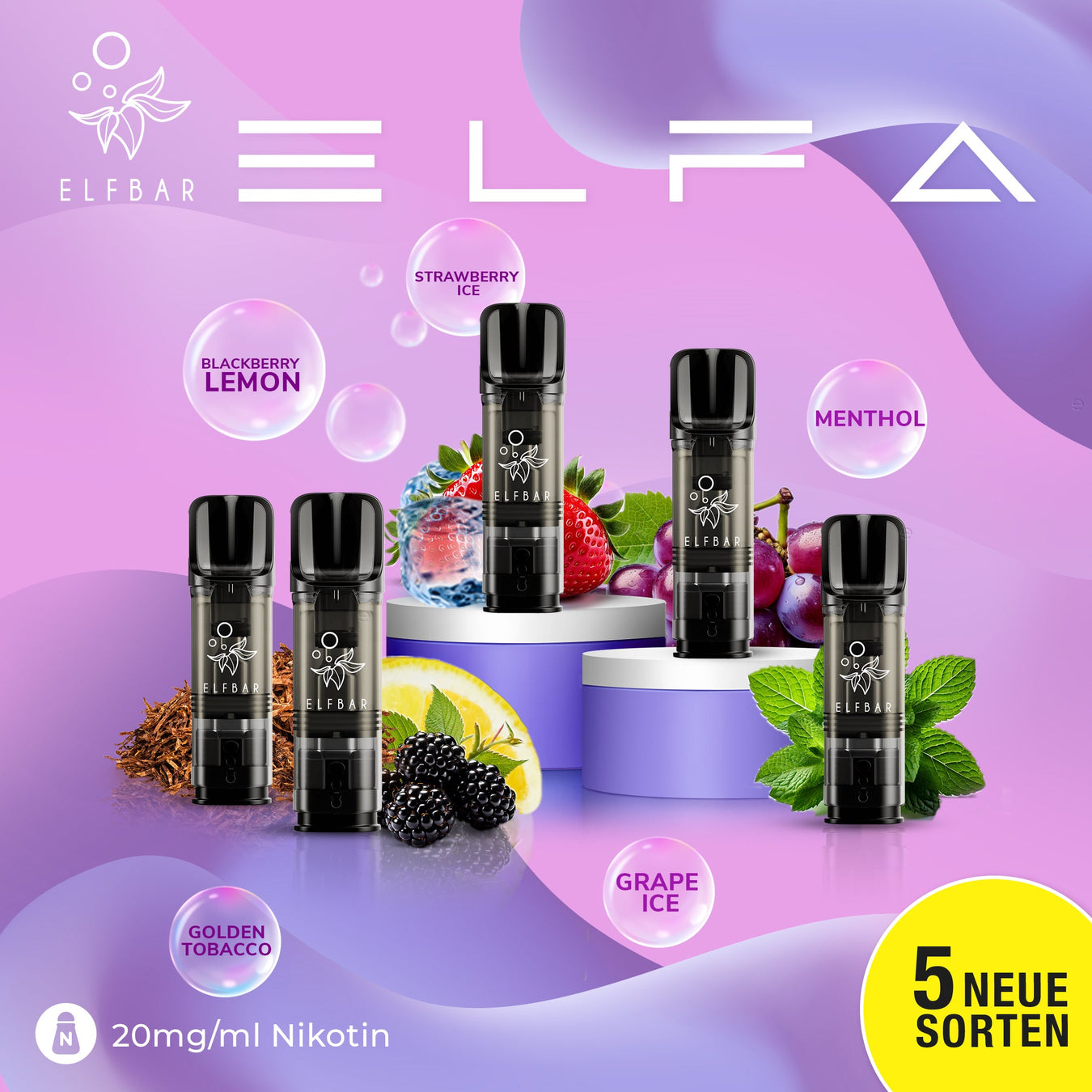
Flavour choose: Fruit, menthol, tobacco, dessert — beginners often try 2–3 varieties. - Choose nicotine strength according to personal requirements: 0 mg/ml, 10 mg/ml or 20 mg/ml.
- Buy from official retailers: More information can be found at Where
Elfbar buy?. - Check authenticity: Check the QR code and packaging of branded devices.
User errors that beginners should avoid
- Pulling too hard: Causes gurgling, spitting, and sometimes liquid in the mouth.
- Blow into the mouthpiece: Pushes liquid towards the sensor.
- Fill the pod completely immediately after filling it: The cotton wool is not yet saturated — wait 3–5 minutes.
- Cover the airflow hole with your finger: Make the train artificially heavy.
- Insert the pod at an angle: Poor connection, "Pod not recognized".
- Leaving the device in a hot car: Battery and liquid risk.
- Dispose of in household waste: E-cigarettes are electronic devices and should be taken to the collection point.
If you encounter one of these problems, that's normal — all issues are resolved in the Sprint 1 troubleshooting articles, e.g. Vape tastes burnt and Auto-firing on disposable vapes.
Care and storage
- Store upright: Reduces leakage and glug problems.
- Protect from heat and cold: Room temperature is optimal.
- Keep contacts dry: Remove condensation regularly with a cloth.
- Change the pod in time: If
Flavour When the coil becomes flat, it is worn out. - Use original liquids and pods: Incompatible components increase the error rate.
What an e-cigarette is not
An e-cigarette is not a medical device and not an approved aid for smoking cessation. It is also not a "harmless" alternative—claims such as "safe," "harmless," or "guaranteed to be better for your health" are untenable and avoided by reputable sources. An honest assessment of the current state of research can be found in the article. What do lung specialists say about vaping?.