DTL or MTL? Find the train for your advanced pod
Modern pod systems for advanced vapers have a crucial advantage: they let you choose how you want to inhale. You can dial in a tight, cigarette-like mouth-to-lung (MTL) draw or a free, dense direct-to-lung (DTL) draw—often even both on the same device. In this guide, I'll show you how to fine-tune your advanced pod system so that your inhalation style, coil, wattage, and airflow are perfectly matched.
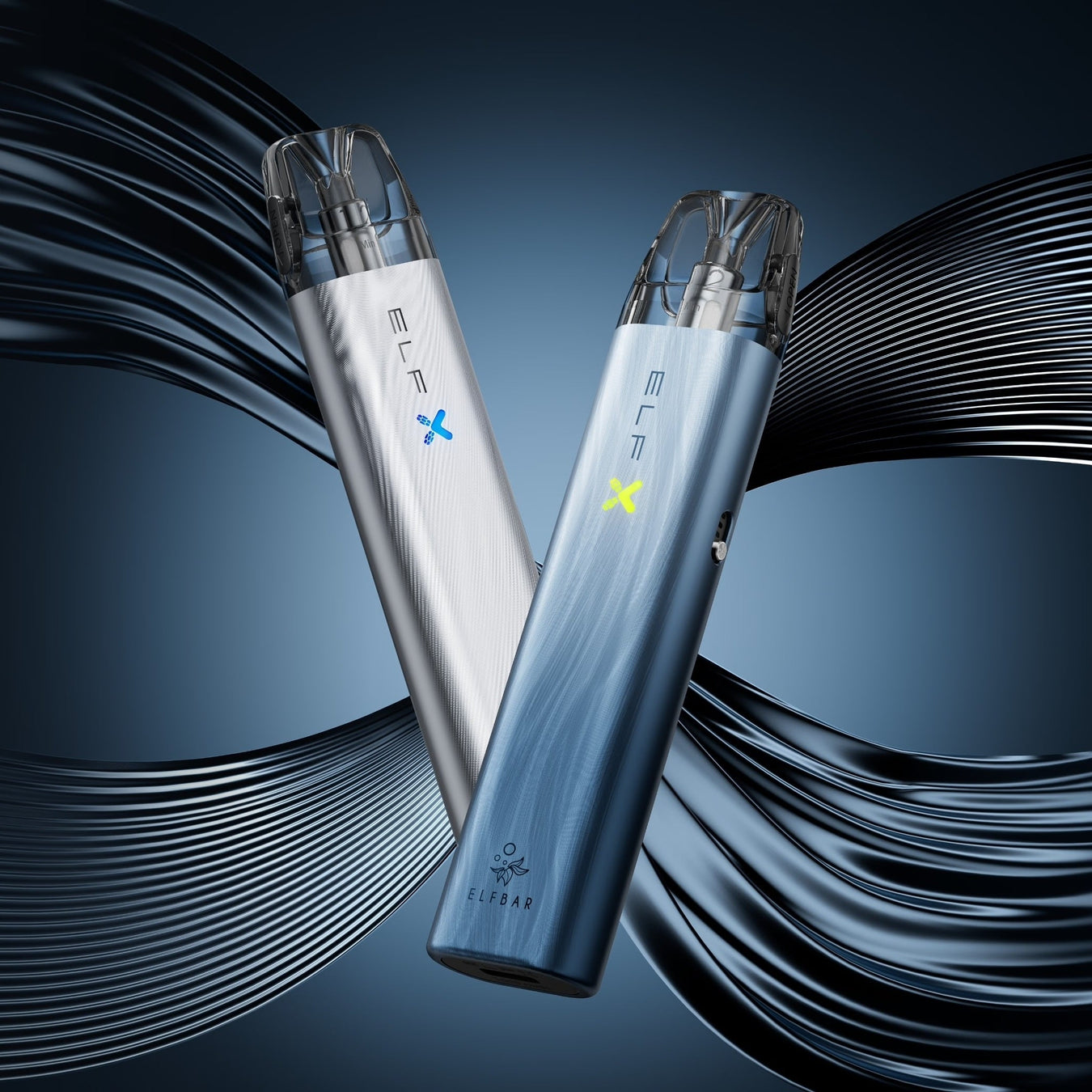
We take a practical approach: First, we clarify the technical and subjective differences between MTL and DTL vaping. Then, we translate this into clear setting recommendations for resistance, wattage, and airflow. We'll use concrete examples with adjustable pod systems like the...
For additional protection of your device, we recommend suitable Silicone protective cases for the
1. MTL vs. DTL – what's behind the different e-cigarette types?
1.1 How MTL and DTL feel
Mouth-to-Lung (MTL) This means the vapor is first drawn into the mouth, held briefly, and then inhaled into the lungs. This is very similar to the typical cigarette-smoking motion. The draw is rather tight, and the airflow is significantly restricted. Many former smokers feel most comfortable with this method because it feels familiar and less vapor enters the lungs at once.
Direct-to-Lung (DTL) This means you inhale directly into your lungs, like taking a deep breath. The airflow is significantly more open, the vapor volume greater, and the
A good rule of thumb: MTL = small, concentrated draw – DTL = large, free breath.
1.2 The technical difference: resistance, airflow and power
Pod technicians view zugarten as an interplay of three factors:
- Coil resistance (Ohm, Ω)
- Airflow (airflow, opening size and path)
- Power (watts)
Experienced vapers use it like a three-control mixing console:
- High resistance (1.0–1.4 Ω) + tight airflow + low power (7–14 W) → classic MTL.
- Medium resistance (0.6–0.8 Ω) + medium to open airflow + slightly higher power (15–35 W depending on the coil) → restrictive to free DTL.
The “extra information” from practical experience confirms: 0.6–0.8 Ω Mesh Coils are ideal for restrictive to loose DTL, while 1.0–1.4 Ω and/or tight pods deliver the typical MTL draw. Anyone who understands this can adapt almost any advanced pod device to their preferred draw.
1.3 Regulation: Why your device is built the way it is
The technical specifications of your pods are not random. The EU Tobacco Products Directive sets the requirements. z.B. one maximum nicotine concentration of 20 mg/ml and establishes clear requirements for warning labels and packaging. According to EU TPD This is intended to ensure uniform safety standards for e-cigarettes in Europe.
In Germany, this applies Tobacco Products Act of the Federal Ministry of Food and Agriculture (BMEL) additionally, among other things, a tank volume limit of 2 ml per refillable unit That's why you won't find gigantic 10ml pods in reputable shops that promise to last for days without refilling. Devices like
If your pod is leaking, you can find out how to fix it here.
2. MTL or DTL – which vaping style suits you?
2.1 Decision tree: Find the right move in 5 questions
Use this short decision tree as a starting point:
- How did you smoke before?
- Many short, fixed
puffs → Start with MTL. - Rare, but profound
puffs → DTL or restrictive DTL might be a better fit.
- Many short, fixed
- How sensitive is your throat (throat hit)?
- Sensitive, scratchy feeling → Prefers a tight MTL setup with moderate power.
- May have a noticeable kick → Try restrictive DTL with a bit more power.
- How important are large vapor clouds to you?
- "Discreet and understated" → MTL.
- "Rich steam, lots"
Flavour “→ DTL or restrictive DTL.”
- How long do you take per move?
- Shorter
puffs (1–2 seconds) → MTL settings are usually more pleasant. - Longer
puffs (2–4 seconds) → DTL coils and more open airflow.
- Shorter
- What nicotine strength do you use?
- Higher strengths (up to 20 mg/ml nicotine salt) → Better in MTL setups with higher resistance.
- Lower strengths → Well suited for DTL with higher vapor volume.
2.2 Typical user profiles – and which settings are suitable for them
To make the selection more tangible, it helps to look at typical profiles:
- Ex-smoker who "simply wants to quit smoking"
- Preferred: A cigarette-like draw, not a foggy, stormy feeling.
- Recommendation: MTL setup with 1.0–1.2 Ω pods or tight airflow + 8–12 W.
- Gourmet steamer with a focus on
Flavour - Preferred: Intense flavors, noticeable vapor, but no "cloud chasing".
- Recommendation: 0.8 Ω mesh coil, restrictive DTL, 18–25 W depending on the device.
- Tech enthusiast who wants to push their pod system to the limit
- Preferred: Experimenting with wattage, airflow, and different liquids.
- Recommendation: System with adjustable power and dual-mesh pods like the
ELFX Kit Silver Pink or thatELFX Kit Silver Blue, Test 0.6 Ω and 0.8 Ω pods.
The DEBRA study This shows that e-cigarettes in Germany are primarily used by adult smokers who are looking for an alternative to tobacco. According to DEBRA Study The proportion of vapers among young people is significantly lower than among adults. This underscores that the focus of advanced pod systems is on adult users who want to consciously control their consumption – and this includes choosing the right vaping style.
2.3 Myth vs. Reality: "DTL is always better than MTL"
A common myth in the community is: "DTL is automatically the better, more modern way to vape."
In practice, however, a different picture emerges:
- Many users who prematurely switch to very open 0.6 Ω setups report excessive throat hit, "overdose" and headaches – often because they are also using high nicotine salt liquids.
- MTL is more efficient at higher nicotine strengths because you need less vapor volume per puff.
Our analysis of user feedback and forum posts (z.B. on E-smoking forum) shows: Round 60–70% Switchers are significantly more satisfied with a clean MTL setup, at least in the first few months.DTL is particularly suitable for experienced users who prefer lower nicotine strengths and desire more vapor. It's not more "modern" – just different.
3. Understanding the technology: Coil, Airflow, Wattage – the 3-way tuning system
3.1 Resistance: Which ohm values are suitable for which train
The areas that have proven successful in practice can be summarized as follows:
| Coil type/resistance | Recommended train style | Typical performance range | Characteristics |
|---|---|---|---|
| 1.0–1.4 Ω | Classic MTL | approx. 7–14 W | Tight draw, subtle amount of steam |
| 0.8 Ω Mesh | Restrictive DTL/tight RDL | approx. 15–25 W | Saturated |
| 0.6 Ω Mesh | Relaxed DTL | approx. 20–35 W (depending on the device) | Lots of steam, intense |
These areas are based on the experiences of advanced users, as described in the additional information section. Important: These are operationally relevant zones, This is not about legal limits. Individual devices may vary slightly according to the manufacturer's specifications.
3.2 Correctly reading and using airflow
Airflow control is the second major lever. Almost all advanced Pod systems They can be adjusted from "almost closed" to "wide open".
Here's how to proceed systematically:
- Start in the Middle of the airflow scale.
- Take 2-3
puffs at your initial power output. - Then open or close in small steps (1-2 grids).
- Then adjust the power output to 1–3 watt increments to.
This iterative approach comes directly from practical experience: Experienced vapers first adjust the airflow to what feels "right", and only then adjust the wattage until
3.3 Power (watts): Why "more" is not automatically "better".
When it comes to performance, one of the most common mistakes is made: Revving up too high too quickly.
Dual-mesh pods like the one in the
- quickly “burnt”
Flavour - Increased liquid consumption without real consequences
Flavour profit - Significantly reduced coil lifespan (only 3–5 days instead of 7–14 days)
Our practical observations show: Those who only moderately adjust their performance within the recommended zone achieve 10–20% longer coil lifespans, without on
3.4 Pro Tip: Store two “profile setups” in your head
Advanced users are well advised to remember two fixed setups:
- Profile 1 – MTL:
- Higher resistance or tightened airflow
- Lower performance (z.B. 9–12 W with compatible pods)
- Shorter, cigarette-like
puffs
- Profile 2 – DTL:
- Lower resistance (0.6–0.8 Ω)
- Open airflow
- Higher performance within the recommendation
For devices with adjustable power, such as the
4. Nicotine form, e-liquid & Typical mistakes when switching over
4.1 Nicotine salt vs. freebase – which form suits which vaping style
Experienced vapers consider Nicotine form as the third adjustment lever besides coil and airflow:
- Nicotine salt liquids (up to 20 mg/ml) They are designed for a pleasantly smooth draw at higher strengths. They are ideally suited for MTL setups with higher resistances or very tight draws.
- Freebase liquids Lower strength e-liquids are well suited for DTL (direct-to-lung) vaping because you inhale more vapor per puff anyway.
A common mistake is the combination high nicotine salt strengths with very low resistances (z.B. 0.6 Ω) and open airflow. This leads to a strong throat hit, discomfort, and the mistaken belief that the device is "too aggressive." In reality, the problem lies in the parameter settings.
4.2 PG/VG ratio and mesh coils
Mesh coils are sensitive to the viscosity of the e-liquid. A proper PG/VG ratio is important so that the cotton can absorb enough e-liquid.
For more in-depth information, take a look at the article. "PG/VG ratio: Which e-liquid for your pod system?", which shows you how to specifically select mixing ratios for pod systems. You can find it here: PG/VG ratio: Which e-liquid is right for your pod system?.
4.3 Typical mistakes when switching from MTL to DTL (and vice versa)
Here are the most common mistakes – and how to fix them:
- Too high a nicotine content in the DTL setup
- Problem: Head pressure, nausea, severe throat hit.
- Solution: Choose a lower nicotine strength or switch back to an MTL setup.
- Too rapid a performance increase
- Problem: Burnt
Flavour The coil only lasts a few days. - Solution: Increase power only in 1–3 W increments, 2–3 after each change.
puffs test.
- Problem: Burnt
- Overfilled pods/incorrect filling
- Problem: Leaking, bubbling, uneven draft.
- Solution: Fill the pod only up to the mark, keep the filling opening clean.
- Airflow completely closed or completely open
- Problem: Neither pulling resistance nor
Flavour They feel "right". - Solution: Start in the middle, then adjust in small steps.
- Problem: Neither pulling resistance nor
For detailed help, should it taste burnt, it's worth taking a look at the article. "Burned
5. Practical setup: How to optimally configure your advanced pod system
5.1 Step-by-step checklist: From unpacking to the perfect train
Use this checklist with every new pod or coil – it works for both MTL and DTL:
- Select coil/pod
- For MTL: Higher resistance or a pod with a narrow airflow.
- For DTL: 0.6-0.8Ω Mesh Pod.
- Prepare the pod (priming)
- 1–2 drops Liquid Apply to the cotton openings and the mesh area.
- Fill the pod and 5–10 minutes Wait until the cotton wool is fully saturated.
- Set airflow to the center
- Not quite closed, not quite open.
- Start performance in the lower recommended range
- Example: 0.8Ω → 15W; 0.6Ω → 20W; 1.0Ω → 9-10W
- 2–3
puffs take and readjust- If it is too cold or not intense enough, increase power in 1-3 W increments.
- If it gets too hot or the
Flavour tilts, 1–3 W back.
- Fine-tuning the airflow
- Tighten the threads for an MTL feel.
- Open further for DTL.
This routine accurately reflects the practical workflow that experienced users in communities like Steamers' meeting Highly recommended.
5.2 Example setups with ELFX and ELFA MASTER
To make this more tangible, here are two typical setups using devices from the advanced pod segment:
Example 1:
The
-
Restrictive DTL setup (all-round)
- Pod: 0.8 Ω Dual Mesh
- Power output: Starting at 18 W, fine-tuning up to approx. 22 W depending on the e-liquid
- Airflow: Medium to slightly open
- Train: Satisfied
Flavour , still relatively compact in steam volume.
-
More flexible DTL setup
- Pod: 0.6 Ω Dual Mesh
- Power: Starting at 20 W, increasing to approximately 28 W, as long as no overheating is noticeable.
- Airflow: Clearly open
- Train: Noticeably more steam, more intense
Flavour – ideal for users who are already familiar with DTL.
Example 2:
The
- 9–12 W for 1.1-Ω-
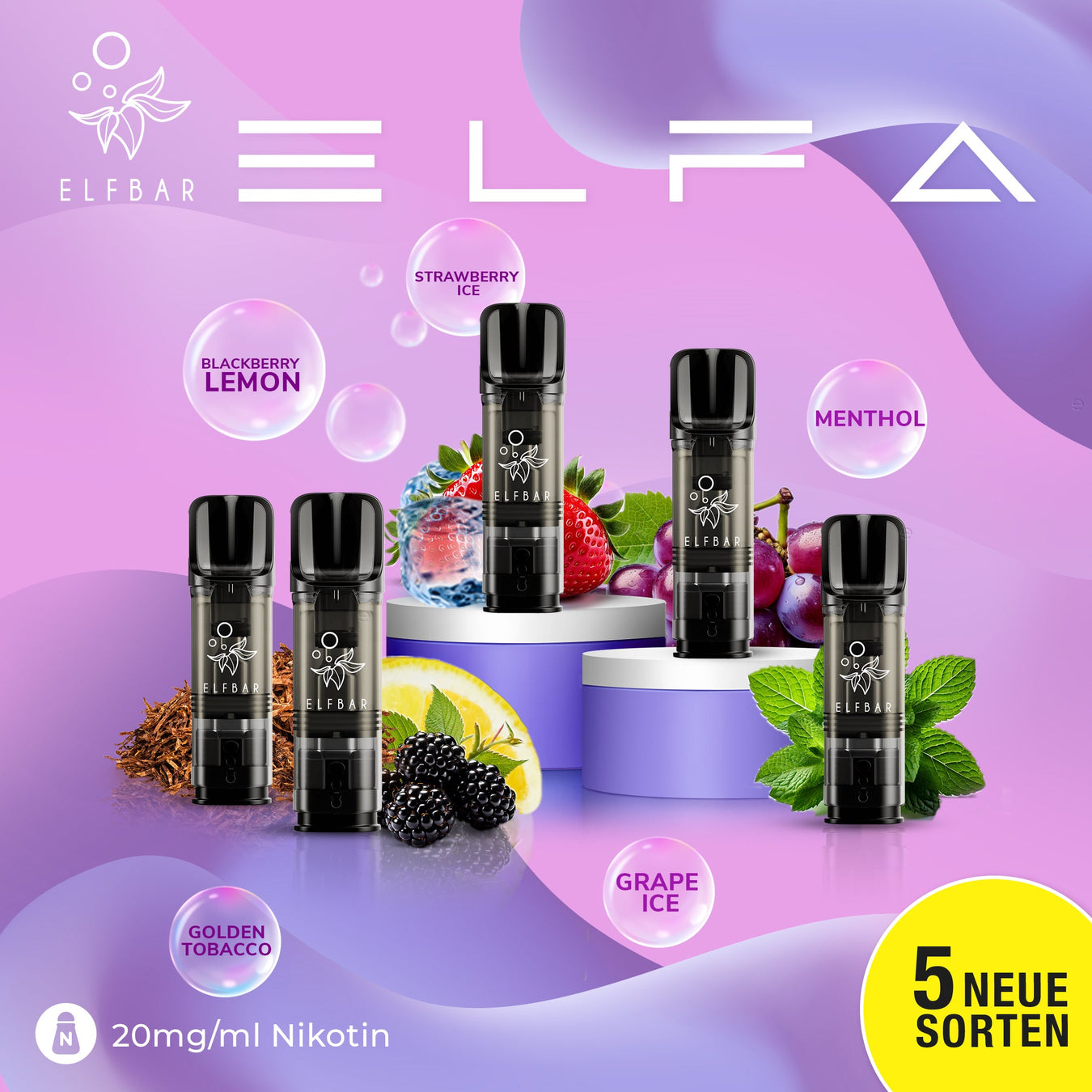
ELFA -Refillable and prefilled pods (classic MTL range) - 15–18 W for 0.8-Ω-
ELFA -Turbo-Refillable-Pods (restrictive DTL)
A tried and tested workflow:
-
MTL profile:
- Insert 1.1-Ω pod
- Set power to 10 W
- Choose a tighter airflow setting.
- Ideal if you want to vape discreetly, similar to a cigarette.
-
RDL profile (Restrictive Direct Lung):
- Insert 0.8-Ω turbo pod
- Start with 16W power, test up to 18W if necessary.
- Airflow centered to slightly open
- Perfect if you want more
Flavour and you want steam, but not extreme clouds.
5.3 Longevity and sustainability: Why the right settings are important
Besides performance, sustainability also plays a role. In Germany, e-cigarettes are subject to various environmental and disposal regulations.
- Loud BattG of the BMUV Retailers are obliged to take back used batteries and dispose of them properly.
- The foundation EAR maintains a register for electrical and electronic equipment, which identifies reputable manufacturers and importers as WEEE-compliant.
By avoiding prematurely ruining your coils through incorrect settings, you not only reduce your costs but also the amount of waste. Our observations show that those who prime their pods correctly, stay within the recommended power range, and avoid constantly dry-firing typically achieve optimal results. 7–14 days Runtime per mesh pod or approximately 8–10 refills with refillable turbo pods.
6. Important security and compliance aspects
6.1 Why legal, registered products offer added security
Legal regulations regarding nicotine strength, fill quantity, and labeling ensure that e-cigarettes in Germany offer a minimum level of control and transparency. Tobacco Products Act For example, it prohibits the free distribution of nicotine-containing products and requires warnings and ingredient lists.
In parallel, the industry report of VdeH pointing out that the black market for non-compliant e-cigarettes and Disposable devices has grown significantly in recent years. Many of these products override legal limits on nicotine, ingredients, and fill quantities.
For you as a user, buying through reputable channels means:
- Compliance with nicotine and fill quantity limits
- Registration in the EAR system and compliance with disposal requirements
- Transparent pricing, including the information in the Tobacco tax legislation fixed tax per ml of liquid
6.2 Is MTL "healthier" than DTL – or vice versa?
Neither MTL nor DTL is a "health product". However, there are differences in intensity and usage profile:
- MTL usually means less steam volume per puff, This often results in higher nicotine strengths.
- DTL generates more steam per train, mostly at lower nicotine strengths.
Official bodies such as the Federal Institute for Risk Assessment (BfR) emphasize that while e-cigarettes have a lower spectrum of harmful substances than tobacco smoke, they are not considered harmless.Systematic overviews such as in the Cochrane Library Studies show that nicotine-containing e-cigarettes can help many smokers quit tobacco. However, these studies are aimed at adult smokers; they are not a recommendation for non-smokers or young people.
From a user's perspective, the most sensible question is therefore not "MTL or DTL – which is healthier?", but rather: "Which train style helps me to control and consciously manage my consumption?"
7. Summary: How to find your ideal train style
In conclusion, here are the most important points in brief:
- MTL It imitates the cigarette draw: tight, less vapor, ideal with higher resistances (1.0–1.4 Ω) and lower power outputs.
- DTL delivers open, deeper
puffs With more vapor: good with 0.6–0.8 Ω mesh, sufficient airflow and suitable power (20–35 W, depending on the device). - The crucial point is that Interaction of coil, airflow, power and nicotine form.
- Use two profile setups (MTL and DTL/RDL) and stick to a clear Hiring checklist, to avoid burnt coils and frustration.
- Advanced pod systems like the
ELFX Kit and theELFA MASTER demonstrate how MTL and DTL vaping can be implemented on one device – if you consciously use resistance, wattage, and airflow. - Pay attention to legal and environmental aspects, only order through reputable channels and always dispose of devices, pods and batteries properly.
If you follow these principles, your advanced pod system will become a precisely adjustable tool that suits your personal vaping style – whether you prefer MTL, DTL, or something in between.
Disclaimer: This article is for informational purposes only and does not replace medical advice. E-cigarettes are not without risks. Individuals with pre-existing medical conditions or questions about health effects should seek medical advice before use. E-cigarettes and nicotine-containing products are intended for adult users only.
Sources:
- EU TPD – Directive 2014/40/EU
- Tobacco Products Act – BMEL
- DEBRA Study – Smoking and e-cigarettes in Germany
- BfR – Statements on e-cigarettes
- Cochrane Library – Reviews of e-cigarettes
- BMUV – Battery Act (BattG)
- EAR Foundation – WEEE Register
- VdeH Industry Report
- Tobacco Tax Act – Buzer
- Vaping Community
- E-smoking forum