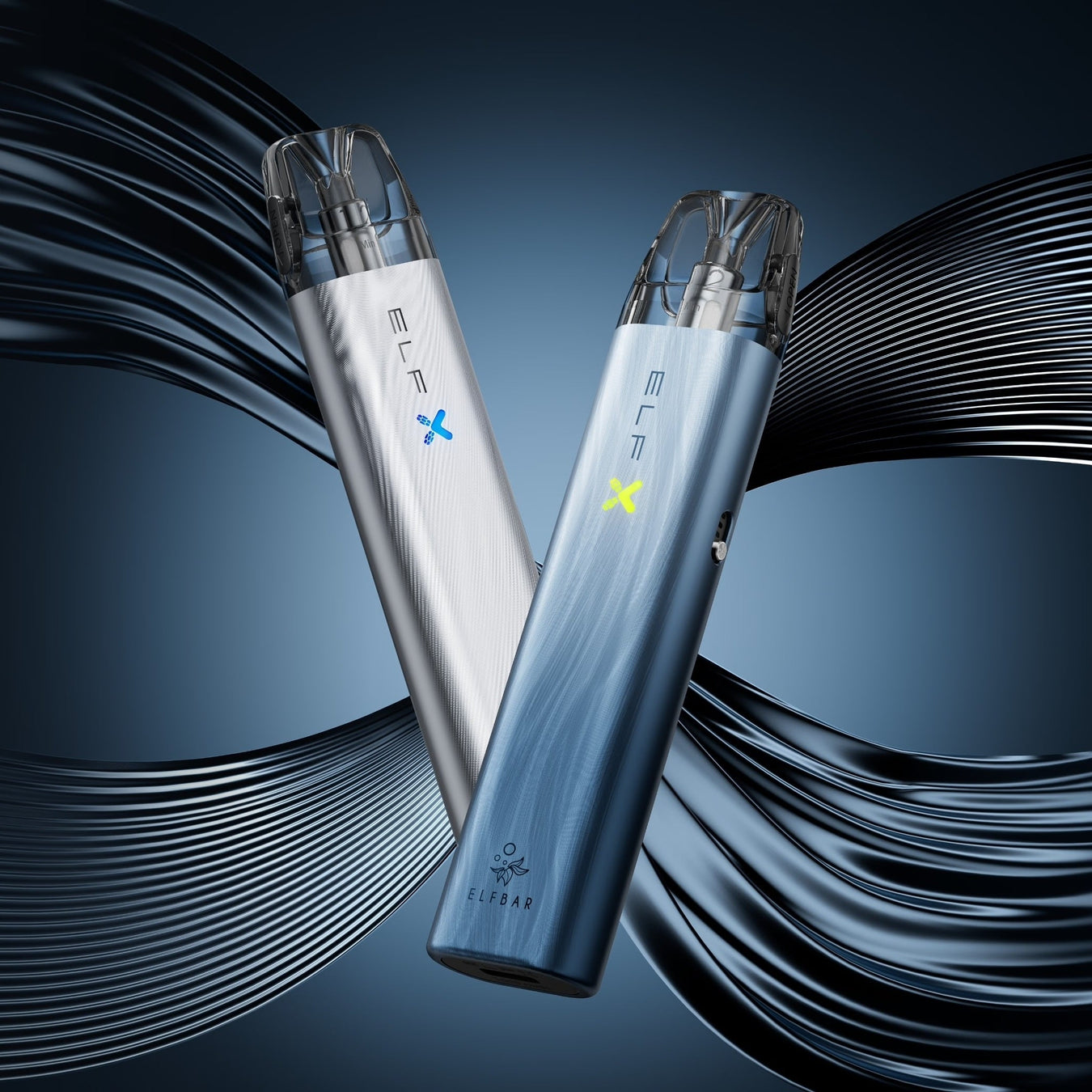
Pod system battery: capacity and charging cycles explained
How long does your pod system's battery really last? In this article, we explain what mAh values mean, how to maximize battery life, and what modern charging technologies like USB-C do.
1. Basics: What does battery capacity mean for the pod system?
mAh explained simply
The capacity of a pod system battery is given in milliampere-hours (mAh). In simple terms, this value describes how much electrical charge the battery can store.
Many are also wondering whether Fast charging via USB-C which will damage the battery in the long run.
- 500 mAh means: The battery could theoretically deliver 0.5 amps for one hour.
- 1000 mAh (1 Ah) could supply 1 amp for one hour – or 0.5 amps for two hours.
Important: Regarding e-cigarettes and Pod systems The reality is far more complex. The mAh rating alone says little about how long you can actually vape for.
Why capacity alone does not determine runtime
In practice, the entire system determines the runtime:
-
Battery capacity (e.g. 500 mAh in the
ELFA -Format) - Coil resistance (e.g. 1.1 ohms vs. 0.8 ohms)
- Power (watts), with which the chip powers the pod
- Their pulling behavior (Duration, frequency, breaks)
Our evaluations of typical
- Low-power pods (~1.1 ohms, approx. 9–12 W) deliver about [value] with a 500 mAh battery. 200–400
puffs with moderate use. - Higher-power pods (~0.8 ohms, approx. 15–18 W) deliver only about [value missing] with the same capacity. 40–60% this number of trains.
For precisely this reason, pod systems with moderate power are often more practical for everyday use than particularly "powerful" devices if you value long battery life.
Legal framework: Why capacity cannot be unlimited
In addition to technical limitations, legal regulations play an important role in Germany. EU Tobacco Products Directive (TPD2) limited according to EU TPD the nicotine concentration in E-liquids on 20 mg/ml and specifies, among other things, packaging requirements. In Germany, this is further specified. Tobacco Products Act these requirements, for example with the 2 ml fill volume limit for refillable tanks and pre-filled pods, as in the BMEL Tobacco Products Act determined.
There is no explicit upper limit for battery capacity, but the devices as a whole must meet these requirements. Oversized, high-performance devices combined with large battery capacities are therefore excluded from the regular market in practice, while compact systems with 500 mAh cells fit well within the regulatory framework.
2. Realistically estimate battery life
Why “How many puffs "Have I?" is the wrong question
Many users focus on the question: "How many
More important are:
- How often do you need to charge per day?
- How constant does the power output remain until discharge?
- How many months Does the battery retain its suitability for everyday use??
In everyday use, it turns out that a 500 mAh battery in an efficient low-power pod system usually lasts a full workday with moderate use. Intensive, continuous use noticeably reduces this time, regardless of the nominal mAh rating.
Real-world performance: 500 mAh in everyday use with the pod system
The following empirical values can be derived based on typical usage patterns:
| scenario | Setup (Example) | Estimated |
Typical charging interval |
|---|---|---|---|
| Occasional steamer | 500 mAh, ~1.1 Ohm, 9–10 W | 300–400 | every 1-2 days |
| Everyday users (office, breaks) | 500 mAh, ~1.1 Ohm, 10–12 W | 200–300 | 1x per day |
| Performance-oriented user (Turbo) | 500 mAh, ~0.8 Ohm, 15–18 W | 120–200 | 1–2 times per day |
These figures represent empirical values, not guaranteed values. Temperature, vaping technique, and pod condition (new vs. old coil) significantly affect the battery life.
Myth: "More mAh = always much longer runtime"
A common misconception is: "A battery with twice the mAh capacity lasts twice as long."
In practice, we often see the opposite:
- Users are upgrading from a 500 mAh system to a device with significantly more capacity.
- At the same time, they use a significantly more powerful coil (lower resistance, higher wattage).
- Result: The actual operating time hardly increases or even decreases – with significantly higher liquid consumption.
The crucial point is therefore the coordination of performance and capacity. A well-tuned 500 mAh pod system in the 9–12 W range often feels more “endurable” in everyday use than a highly tuned setup with a much larger battery that consumes 2–3 times more power for each puff.
3. Understanding charging cycles and battery aging
What is a charging cycle?
A charging cycle describes the usage of 100% of capacity – regardless of how often you reload in between. Example:
- Day 1: You discharge 50% and then recharge.
- Day 2: You discharge 50% again and recharge.
These two half-cycles result in a full charging cycle. Lithium cells in pod systems are designed to withstand a certain number of such cycles with acceptable capacity loss.
Typical lifespan: 300–500 cycles
In practice, lithium pouch cells in compact pod systems show after about 300–500 full charging cycles a noticeable decrease in capacity.
Typical observations:
- After a few hundred cycles, the operating time decreases noticeably.
- The battery seems to discharge "suddenly" in the last 20-30%.
- They need to be charged much more frequently than in the first few months.
This aligns with industry-wide findings from battery research: cells age due to Cycle loading and Time. High temperatures, deep discharges, and continuous full charging accelerate this process.
How to recognize battery aging in everyday life
Instead of relying on vague gut feelings, use simple monitoring:
- Set starting point: Note or record how often you charge your pod system in a typical week.
- Observe the development: Does the charging frequency increase by approximately [amount] from month to month? 20% or more, This indicates noticeable capacity aging.
- Check for changes in behavior: Have you changed your usage habits (more vaping, higher wattage)? If not, the problem is more likely with the battery.
If you suddenly experience problems while your usage pattern remains the same significantly more often If you need to charge your device frequently, this is a clear sign that the battery has aged and you should plan for a device replacement in the medium term.
4. Charging correctly: USB-C, fast charging and safety rules
Why USB-C makes sense for the Pod system
Modern pod systems are increasingly relying on USB-C. The plug is robust, can be inserted from either side, and supports higher charging capacities than older standards in many devices.
For compact pod systems like typical 500 mAh devices, this means:
- Significantly shorter charging times compared to older Micro-USB devices.
- More comfort in everyday life, because many users are already familiar with USB-C from smartphones or laptops.
What's important here is not so much the maximum theoretical charging power, but rather a cleanly regulated, moderate fast charging, This avoids unnecessarily stressing the battery. Reputable manufacturers have their devices tested by independent laboratories; for example, an ISO 17025-accredited laboratory such as... ASL Analytic Serv
Safe charging in practice: step-by-step
Use this checklist to charge your pod battery as gently and safely as possible:
- Use an original or high-quality USB-C cable. Avoid damaged, severely bent or extremely thin cables – they can heat up and put unnecessary strain on the charging electronics.
- Check the charging source. Use power supplies with moderate power (e.g., typical smartphone power supplies), not “fast charging monsters” with extremely high output power.
- Do not hold the device continuously while charging. Place it on a hard, non-flammable surface.
- Feel the temperature. A slightly warm device is normal. If it becomes consistently hot, stop charging and have the device checked.
- Keep an eye on the charging time. A 500 mAh pod system is typically ready to use again in under an hour with standard USB-C charging. Significantly longer charging times may indicate problems with the cable, power adapter, or battery.
The BfR In its statements on e-cigarettes, it emphasizes that the safe handling of e-cigarettes and their components, including proper charging and disposal, is crucial for minimizing risks. These guidelines are explicitly directed at adult users who use e-cigarettes as an alternative to smoking.
Also, pay attention to how you Safely charge your e-cigarette You can do this to avoid risks.
Common charging errors – and how to avoid them
Experience shows that similar errors occur repeatedly:
- Turbo mode is always active: Small 500 mAh batteries are constantly operated at their maximum power output. The result: significantly shorter runtime and faster aging.
- Charging with cheap adapters or USB ports of unknown quality: For example, no-name charging cubes or cheap multi-plugs.
- Continuous 0-100% charging: The battery constantly goes through full and deep discharge cycles.
- Charging in a hot environment: Devices are left in the sun in the car, for example, and then charged.
Correcting these errors will significantly extend the everyday usability of your battery – often by several months.
5. Conserve battery: How to extend the lifespan of your pod system
Optimal charging range: 20–80%
Lithium batteries age most slowly when they neither permanently almost empty nor permanently full are. In practice, a range of approximately has emerged for pod systems. 20–80% charge level proved to be particularly gentle.
Specifically, this means:
- Don't charge to 100% every time unless necessary.
- Avoid regularly letting the battery run completely flat.
- Short "top-up" charges in between are often gentler than long 0-100% cycles.
Many modern pod systems feature a Charge level indicator (LED or multi-stage display) that allows you to accurately target this area.
Temperature as the battery's greatest enemy
High temperatures are one of the most important factors for accelerated battery aging. Practical examples:
- Leave the device in the car during the summer.
- Do not charge on soft surfaces (sofa, bed) where heat can accumulate.
- Continuous fast charging without cooling breaks.
For a long service life, the following applies:
- Do not store in direct sunlight or in a hot car.
- Leave the device unobstructed while charging, not under pillows or clothing.
- Take breaks during repeated fast charging sessions., so that the device can cool down.
Proper storage when not in use
If you are not going to use your pod system for a few weeks or months, ideally store it in the following way:
- at 40–60% charge level,
- at a cool, dry place,
- separate from pods or tanks to prevent leakage.
This minimizes self-discharge and chemical aging during storage.
6. When should I replace my pod system?
Clear battery warning signals
Battery replacement is generally not possible with compact pod systems. Instead, you replace the entire base unit. Here's what you should keep in mind:
- Significantly shorter runtime: They need to be charged much more frequently than in the first few months.
- Sudden capacity jumps: The battery level appears to drop from "half full" to "empty".
Safety-related signs (replace device immediately):
- Noticeable Bloating of the casing or visible deformation.
- Unusually strong warming while charging or vaping.
- Chemical smell from the device.
The BMUV The Battery Act also stipulates that retailers must take back used batteries. Many specialist retailers therefore offer collection points. Never dispose of a defective device in your household waste, but take it to a suitable collection point.
Typical replacement intervals from practice
Practical experience has yielded the following rough guidelines for device replacement:
- 6–9 months: Heavy users with multiple daily charges, high power output, and frequent "chain vaping".
- 9–18 months: Typical everyday users with 1-2 charges per day.
- >18 months: Occasional users who rarely charge and treat the battery gently.
These ranges are based on experience. If you heed early warning signs and treat your battery gently, you can reach the upper end of the range.
7. Practical example: ELFA -Basic devices with 500 mAh battery
To make the theory more tangible, it's worth taking a look at a specific device format with a 500 mAh battery and a USB-C charging port.
500 mAh and mesh coil: A combination suitable for everyday use
A typical setup consists of:
- a compact Base unit with 500 mAh battery and USB-C, e.g. the
ELFA Base unit Navy Blue, - suitable Prefilled pods with mesh coil, for example
ELFA Prefilled Banana Pod.
The combination of moderate battery capacity, efficient electronics, and mesh coil technology ensures that you can easily get through the day with typical everyday use on a single charge, without having to worry about running out of power.
Authenticity and protection against counterfeits
Especially with battery-powered devices, the origin is crucial for safety and lifespan. Official sources protect you from products that do not comply with legal requirements.
- According to the Tobacco Products Act, BMEL Tobacco Products Act including the placing on the market of unregistered products.
- Customs points out Zoll.de This indicates that products without regular tax stamps and registration are considered black market goods and can be confiscated.
By purchasing pod systems and pods from official shops and using the provided authentication features, you significantly reduce the risk of counterfeits – and thus also the risk of poorly tested batteries.
8. Frequently Asked Questions about the Pod System Battery
How many charging cycles does a pod system typically last?
Experience shows that compact pod systems after 300–500 full charging cycles a noticeable reduction in battery life. The more gently you charge (20–80% range, moderate temperatures), the closer you get to the upper end of this range.
How does the battery life differ between 1.1-ohm and 0.8-ohm pods?
1.1-ohm pods operate at lower power (e.g., 9–12 W) and are therefore more efficient. They typically achieve the same performance with the same 500 mAh battery. 200–400
Will it damage the battery if I charge it overnight?
For devices with modern charging electronics and tested quality, the risk is low as long as you use a suitable power adapter and the device doesn't overheat. However, from a lifespan perspective, it's better not to keep the battery at 100% for extended periods.
What specific benefits does USB-C offer me with the Pod system?
USB-C enables shorter charging times, greater everyday usability and a more robust connector in compact pod systems.The plug is less important than the... clean, manufacturer-tuned charging electronics.
How do I properly dispose of a pod system with a permanently installed battery?
Devices with a permanently installed battery belong to not in household waste. The Battery Act of the Federal Ministry for the Environment, Nature Conservation and Consumer Protection (BMUV) Retailers are obligated to take back used batteries. Use collection points in stores or municipal collection points for waste electrical and electronic equipment.
Important: Health notice
E-cigarettes are products for adult users. According to BfR While the health risks of e-cigarettes are lower compared to tobacco cigarettes, they are by no means zero. Products containing nicotine, in particular, are addictive.
This article does not replace medical advice. If you suffer from pre-existing medical conditions, are taking medication, or have questions about your individual health, be sure to speak to a doctor before changing your usage habits.
Key findings at a glance
- The mAh rating describes the capacity, but does not alone explain the actual runtime – power, coil resistance and usage patterns are crucial.
- A 500 mAh battery in an efficient pod system typically delivers 200–400 minutes of use with moderate use.
puffs . - After 300–500 full charge cycles, most pod system batteries show noticeable aging; early warning signs include more frequent charging needs and sudden capacity jumps.
- Gentle use (20–80% SoC, avoiding high temperatures, using suitable USB-C charging technology) significantly extends the lifespan.
- Officially registered and tested products offer greater safety – both technically (battery safety) and legally (taxes, product safety).