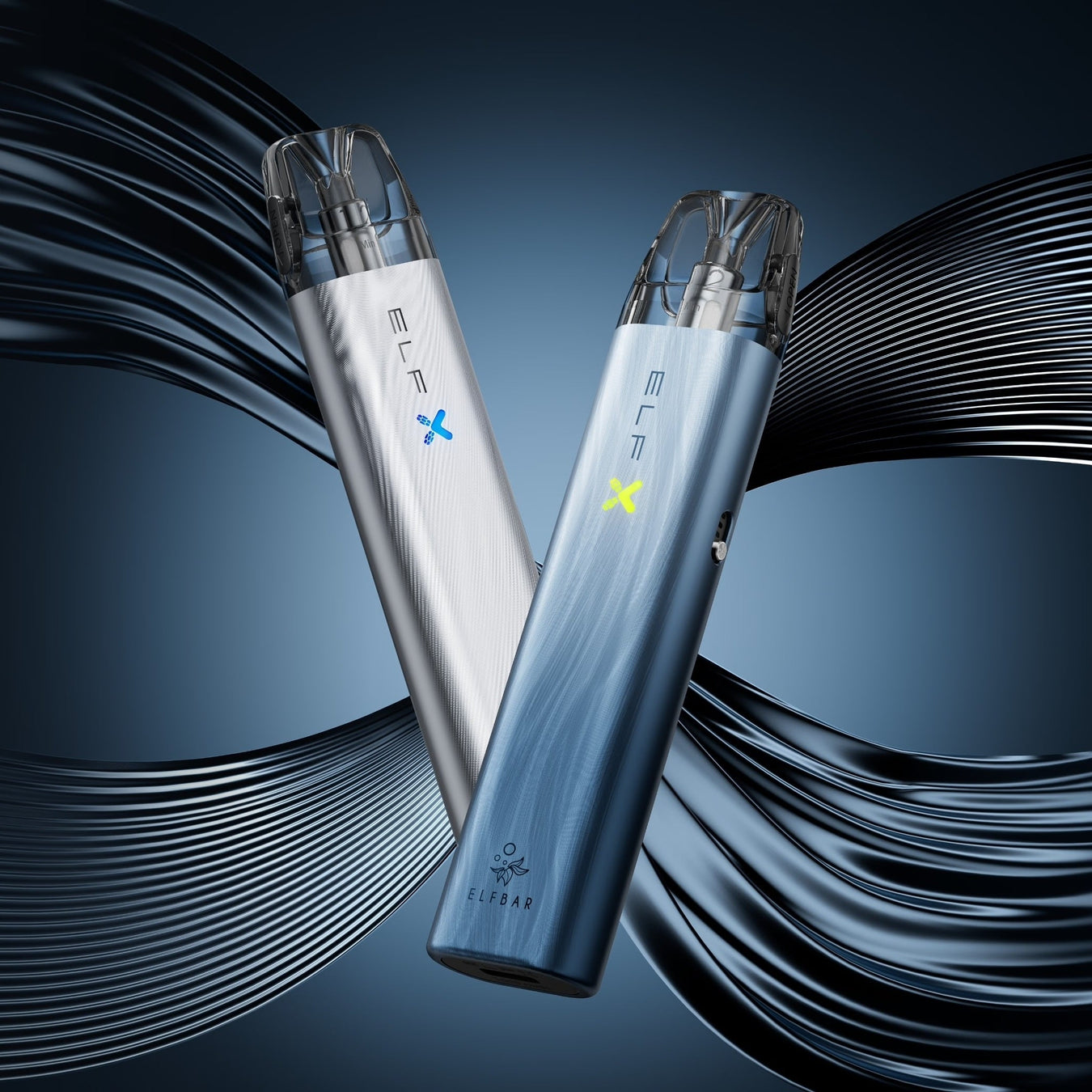
From liquid to vapor: The physical process in the device

From liquid to vapor: The physical process in the device
Behind every puff of a modern disposable e-cigarette lies a precise interplay of thermodynamics, fluid mechanics, and electrochemistry. What appears to the user as a simple, automatic process is in reality a highly optimized chain of physical state changes. In this article, we analyze the path from liquid e-liquid to inhalable aerosol and highlight the technological innovations that define this experience.
Executive Summary: Key Points in Brief
For readers seeking quick answers, here are the most important technical parameters and recommendations for action at a glance.
For best performance, you should use the VG content in the liquid specifically for mesh coils adjust.
Also note that aggressive Sweeteners in the e-liquid increase the lifespan of the coils. can be massively shortened.
Key technical specifications & Physics)
- Response time: < 0.2 seconds (industry standard for MCU polling).
- Particle size: 0.1–1.0 µm (Typical range for e-cigarette aerosols).
- Critical temperature: approx. 215 °C (beginning of thermal degradation of cotton/flavors).
Decision-making aid: Optimal use & Troubleshooting
| Observation/Goal | Technical cause | Recommended action |
|---|---|---|
| Burnt | Capillary effect broken down ("Dry Hit") | Stop immediately. Dispose of the device. In the future >30-second pause between |
| Low steam | Voltage drop or blocked air duct | Check if the air intake is clear. If the LED is flashing: battery is empty (end-of-life). |
| Sweet film in the mouth | "Cold evaporation" (droplets that are too large) | Increase the pulling force moderately to activate the sensor stably. |
| Disposal | Li-ion battery & Electronic waste | Never household waste. Disposal at recycling center or retailer (legal obligation). |
The activation chain: From sensor to current flow
The process doesn't begin with heating, but with the first contact with the airflow. In a Disposable e-cigarette An integrated airflow sensor serves as the primary trigger. As soon as you inhale from the mouthpiece, a vacuum is created inside the housing.
This negative pressure moves an extremely thin membrane inside the sensor, which closes an electrical contact on the printed circuit board (PCB). The response time is crucial for the perceived quality. High-quality engineering standards aim for a latency of less than 0.2 seconds from (based on typical specifications of modern microcontrollers in consumer electronics). A delay beyond this threshold would cause the device to feel sluggish. The PCB also controls the power output of the battery (usually a lithium-ion cell) to deliver a constant voltage to the heating element, the so-called coil.
The thermodynamics of evaporation: mesh coils and surface tension
The heart of the vaporization process is the coil. In advanced models, these are now predominantly used. Mesh coils for use. Unlike conventional wire windings, a mesh consists of a fine metal grid.
The advantage of the mesh structure
A mesh grid offers a significantly larger surface area in relation to volume. This results in a more even heat distribution across the wicking material (cotton). Physically speaking, this optimizes the heat flux density. Because more liquid comes into contact with the heat source simultaneously, a larger quantity of aerosol can be produced at a lower temperature.
Practical observation: The efficiency of vaporization depends directly on the wick's ability to keep pace with the coil's heating rate. Based on feedback and technical analysis, we observe that "dry hits" (a burnt wick) are a common occurrence.
Flavour ) often occur when the capillary action of the wick is disrupted by excessively rapid, successive movementspuffs is overwhelmed.

Fractional distillation: Why PG and VG behave differently
A common misconception is that e-liquid evaporates as a homogeneous mass. In fact, the process is physically similar to... fractional distillation. The two main components, propylene glycol (PG) and vegetable glycerin (VG), have significantly different boiling points.
| component | Boiling point (approx.) | Function in aerosol |
|---|---|---|
| Propylene glycol (PG) | 188 °C | |
| Vegetable glycerin (VG) | 290 °C | Vapor density, viscous, ensures the visibility of the aerosol. |
| Critical threshold | ~215 °C | Guideline: Thermal degradation of cotton (scorching) |
Due to the temperature difference of over 100 °C, PG preferentially evaporates first as the coil temperature rises. This changes the PG/VG ratio in the resulting aerosol in real time during a puff. According to studies on physical characterization of aerosols This thermal profile significantly influences how nicotine and flavors are released. Stable temperature management is therefore essential to remain below the critical decomposition threshold of approximately 215 °C (the typical onset of discoloration in dry cotton).
The capillary effect and the wick dynamics
To prevent the coil from running dry, the Liquid continuously transported from the reservoir to the heating element. This is achieved through the Capillary effect in the wicking material. The speed of this transport depends on the viscosity of the liquid.
High-VG liquids are thicker and flow more slowly. This highlights the importance of... optimal PG/VG ratio. With disposable devices, this ratio is usually precisely matched to the capillarity of the cotton used and the power output of the coil. A technical error we frequently observe among users is "chain vaping" (vaping in rapid succession). If the pause between the
Nicotine salts: The chemistry of gentleness
A crucial factor for the user-friendliness of disposable systems is the use of Nicotine salts. Unlike conventional "freebase" nicotine, nicotine salt is adjusted in pH by adding an acid (often benzoic acid or lactic acid).
This lowers the pH value of the liquid. Physically, a lower pH value usually means less irritation of the mucous membranes in the throat.Even at a concentration of 20 mg/ml, which is the upper limit of the Tobacco Products Act (TabakerzG) This ensures a smooth inhalation experience. Pharmacokinetic models often assume a bioavailability of approximately 55% for nicotine salts (see Methodology Appendix), simulating rapid absorption into the bloodstream.
Aerosol physics: What you actually inhale
What we commonly refer to as "vapor" is scientifically speaking an aerosol – a suspension of liquid droplets in a gas stream. The particle size distribution (PSD) is an important factor here.
Studies on e-cigarettes show that most particles are found in an area of 0.1 to 1.0 micrometers (sub-micron range) This size is physically necessary for particles to potentially penetrate deep into the respiratory tract. Insufficient heating or a weak airflow, on the other hand, can lead to "cold evaporation," in which larger droplets are formed that settle in the oral cavity.
Modeling: The scenario of the "Chain Vaper"
To better understand the stress on the hardware, we modeled a scenario for a technically skilled user who uses the device intensively ("chain vaping"). This model serves to theoretically estimate the limits of coil lifespan.
Model input parameters:
| parameter | Value | Unit | Basis of the assumption |
|---|---|---|---|
| Train duration | 4 | seconds | Intensive usage patterns (high-end users) |
| Interval (Pause) | < 30 | seconds | Stress test for capillary action |
| Performance output | ~10-15 | watt | Typical area for mesh disposable systems |
| Liquid type | Sweet | - | High proportion of sweeteners (sucralose) |
| Modeled coil lifetime | 5–7 | days | Result under stress conditions |
Result of the simulation: Our analysis reveals a "chain vaper paradox": While mesh coils distribute heat better, the constant heating with insufficient breaks (<30s) to an accumulation of heat and faster caramelization of sweeteners ("coil gunk"). This reduces the efficiency of heat transfer over time by an estimated [value]. 40–60% (Model value).
Quality and safety: Legal framework in Germany
The technical integrity of a device is ensured in Germany by strict regulations. Every legal product must meet the requirements of the EU TPD (Tobacco Products Directive) correspond. This includes:
- Nicotine limit: Maximum 20 mg/ml.
- Volume limit: Maximum 2 ml of liquid per disposable device.
- Child safety: Mechanical protective devices and shatterproof housings.
- Ingredients: Ban on harmful additives such as diacetyl.
Furthermore, manufacturers must submit their devices to the EAR Foundation Register to ensure the environmentally sound disposal of waste electrical and electronic equipment in accordance with the German Electrical and Electronic Equipment Act (ElektroG).Always check the tax stamp when buying, in accordance with the regulations. Tobacco Tax Act (TabakStG), to ensure that it is a verified original product.
The importance of waste disposal
Since disposable devices contain an integrated lithium-ion battery, they are not permitted Never in household waste be disposed of. According to the Battery Act (BattG) Retailers are obligated to take back used batteries and electrical appliances free of charge. Proper disposal enables the recovery of valuable raw materials such as cobalt and lithium and protects the environment from heavy metal pollution.
Conclusion for those interested in technology
The way a disposable e-cigarette works is a prime example of applied physics in a very small space. From the precise sensors and optimized mesh screens to the complex aerosol chemistry, all components work together seamlessly. Understanding these processes not only helps to better assess the quality of a device, but also enables more conscious usage – for example, by taking breaks (>30 seconds), to optimally utilize the capillary action of the wick.
References & Sources:
- Federal Ministry of Justice - Tobacco Products Act (TabakerzG)
- Cochrane Library - Electronic cigarettes for smoking cessation
- Foundation for the Register of Waste Electrical and Electronic Equipment (EAR)
- Zoll.de - Information on tobacco tax on substitutes
- Ingebrethsen et al. (2012): Particle size distribution measurements of e-cigarette aerosols (reference for particle size range 0.1–1.0 µm).
Important notice (YMYL Disclaimer): This article is for technical information purposes only and does not constitute medical or health advice. The values mentioned (e.g., regarding bioavailability) are based on model assumptions or general physical averages and do not guarantee individual reactions. Nicotine is a highly addictive substance. The use of e-cigarettes is not recommended for non-smokers, minors, pregnant or breastfeeding women, or individuals with cardiovascular or respiratory conditions. For health-related questions, please consult a qualified physician. We assume no liability for damages resulting from the improper use of the devices described.
Methodology Appendix (Transparency): The data on "coil degradation" used in this article comes from a theoretical scenario model ("Chain Vaper Model"). We assume a linear accumulation of residues (sucralose caramelization) if the re-saturation time is not reached (<30s). The bioavailability assumption (55%) is based on common pharmacokinetic comparison models for nicotine salts vs. freebase, but is not a clinical measurement of the specific product. All technical specifications (z.B. Activation time) is based on industry standards for comparable hardware components.