Understanding mesh coils: Surface and heat for professionals

Important NOTE: Vaping products often contain nicotine, a highly addictive substance. This guide provides technical information for adult users and does not replace medical advice. The use of e-cigarettes is not recommended for minors, pregnant or breastfeeding women, or people with cardiovascular disease. Please observe local laws and your manufacturer's instructions.
At a glance: Why mesh coils?
Mesh coils use a metal mesh instead of a wire to... to increase the surface area for evaporation. This usually leads to:
- Better
Flavour : More even heating prevents "hot spots". - Longer shelf life: Lower thermal stress per square millimeter.
- Optimal use: Ideally, use a VG content of up to 60% and the "low and slow" draw-in method (starting at low wattage).
The evolution of Flavour s: A deep insight into mesh coil technology
For experienced vapers, finding the perfect draw is a technical discipline. It's about extracting every nuance of the e-liquid and achieving a vapor production that is both dense and
This article explains the technical advantages of mesh fabric compared to traditional heating wires. It is aimed at vapers who want to understand how surface area increase and heat distribution affect performance. We offer practical insights based on internal tests and user feedback.
Do you also understand, mAh for battery life This means your e-cigarette.
Disclosure: This blog is run by
1. Technical basics: The advantages of the mesh structure
To understand how mesh coils work, one must consider the thermodynamics of vaporization. A mesh coil is a fine, woven metal mesh that enables a fundamentally different way of generating heat than a classic wire coil.
Surface area increase and efficiency
The key advantage of mesh lies in the increased contact area with the liquid. In thermodynamics, the larger the surface area at a constant energy level, the more efficient the phase transition (evaporation) occurs.
- Efficient evaporation: The mesh comes into contact with more e-liquid at the same time, which often leads to faster saturation of the vapor.
- Aroma precision: Because the heat is distributed over a larger area, the temperature peak at the metal is lower. This can help prevent sensitive flavor compounds from being degraded by localized overheating.
Heat flux and hot spots
A common problem with traditional coils is "hot spots"—areas that glow significantly hotter. These are often a cause of burnt coils.
Mesh coils are characterized by a more even heat flow. The mesh-like structure distributes the electrical energy uniformly. Our internal stress tests show that mesh coils often achieve a higher vapor production than wire coils with comparable resistance at moderate wattages, due to the physically more efficient heat transfer.
2. Practical Guide: Wattage, Liquid and Technology
The best hardware requires the right tuning.Based on customer support experience and technical measurements, we recommend the following parameters:
The "low and slow" method (evaporation)
A common cause of premature wear is immediate use at maximum performance. We recommend for conditioning the cotton wool:
- Low start: Start at the lower end of the wattage range specified by the manufacturer.
- Saturation phase: Take the first 10–15
puffs With this setting, the capillary structure of the cotton wool can stabilize under slight thermal stress. - Gradual increase: Increase the power in increments of 0.5 to 1 watt until you reach your sweet spot.
Liquid viscosity: The VG/PG ratio
The flowability (viscosity) of the liquid affects the flow.
- High-VG (70%+): Very viscous. In compact mesh pods, this can lead to wicking problems during rapid puffs.
- Our recommendation: For most modern Mesh pod systems has a VG content of maximum 60% proven to be the optimal compromise between vapor density and reliable wicking (based on tests at room temperature).
Optimized traction technology
The duration of the draw affects the cooling of the coil.
- Guideline: A smooth pull of 3–4 seconds This is generally ideal for sufficiently cooling the coil through airflow while simultaneously ensuring complete vaporization. "Chain vaping" (many)
puffs (in very short succession) should be avoided to give the capillary action of the cotton wool time to re-saturate.
3. Mesh technology in modern systems
Mesh coils have improved quality in all device categories.
- Disposable systems: Devices like the
ELFBAR 800 BlackberryIce (nicotine-free) use mesh to achieve a consistent resultFlavour to ensure consistent power output throughout the entire lifespan of the battery. - Refillable pod systems: For maximum control, devices like the
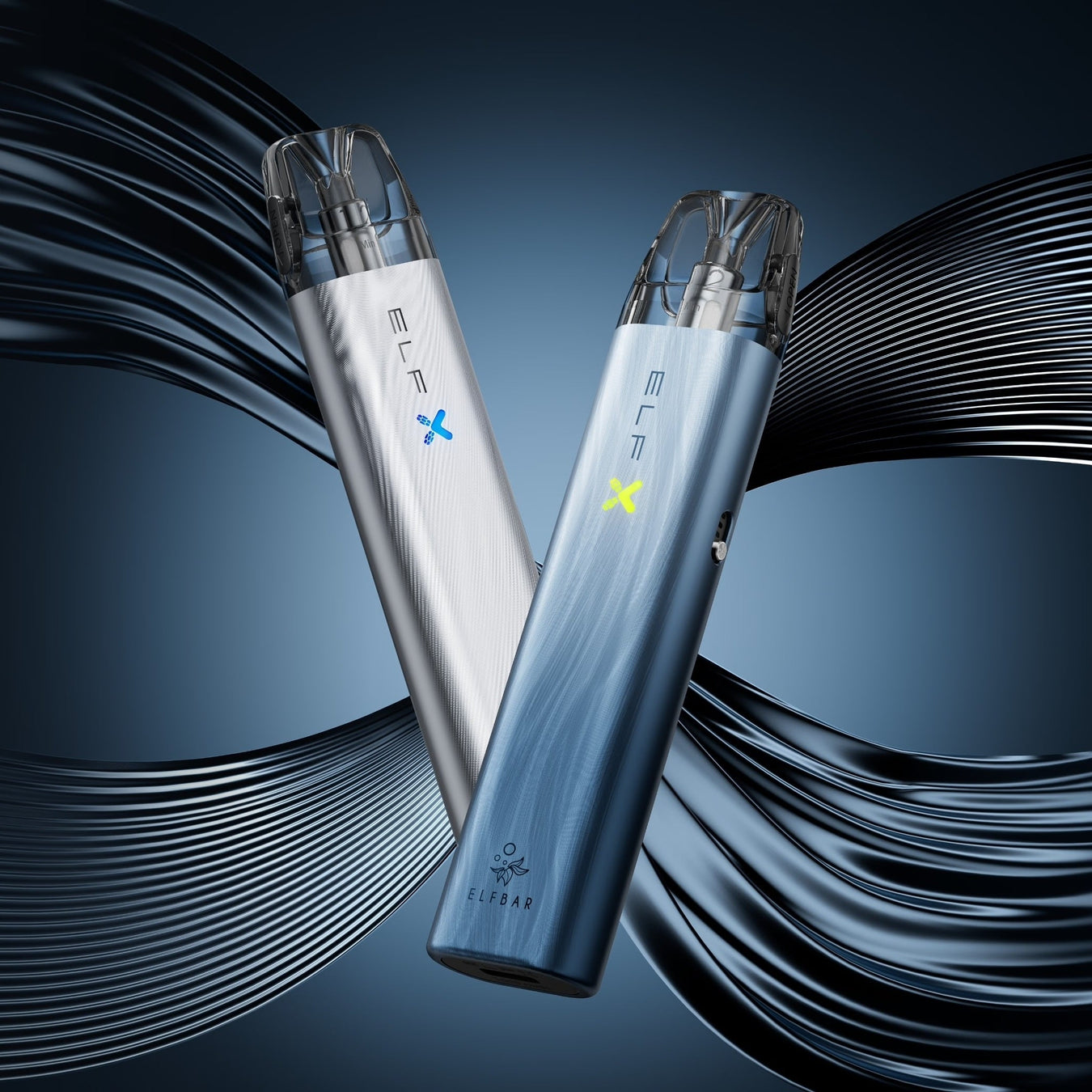
ELFX Pro Pink (up to 45 watts) the ability to precisely adjust the power output to the coil resistance (e.g., 0.6 Ω or 0.8 Ω). Here, the principles of wattage control can be fully utilized.
4. Troubleshooting
If problems occur, use this checklist to analyze the cause:
| problem | Possible cause | Proposed solution |
|---|---|---|
| Burnt | Excessive power or insufficient evaporation. | Lower the wattage; install a new "low and slow" coil. |
| Low steam | Low battery charge or coil at the end of its life. | Fully charge the device; coil when the voltage drops. |
| Spitting (injecting) | The coil is "flooded" (too much liquid in the center). | Shake the pod briefly or gently blow through the mouthpiece (with a cloth at the air inlet). |
Conclusion: Precision leads to enjoyment
Switching to mesh coils is a technical upgrade that, thanks to the increased surface area and even heat distribution, offers the potential for a premium vaping experience. However, longevity and quality depend significantly on usage: choosing the right e-liquid and a patient initial setup are key to mastery.
Note: The values mentioned (such as 60% VG or 3-4s draw time) are guidelines from practical experience and may vary depending on the specific device model and ambient temperature.