Expired liquid: How to recognize spilled aromas

Introduction: The find in the drawer and the question of freshness
Almost every vaper knows the situation: While tidying up, you find a nearly forgotten bottle of e-liquid or an old pod in a drawer. The immediate question is: Can you still vape it? Like many consumer goods, e-liquid has a limited shelf life. While using expired or "gone bad" liquid in typical household quantities is usually not immediately hazardous to your health, it significantly impairs the vaping experience – from disappointing to downright frustrating.
Transparency note: This article is sponsored by
This guide shows you how to use simple sensory tests – smell, color, and consistency – to determine if your e-liquid is still good. We explain the scientific background of the aging processes and provide clear instructions for proper storage and environmentally sound disposal according to German standards.
The shelf life of e-liquid: What the best-before date (BBD) really means
Every legally sold e-liquid bottle in Germany has a best-before date (BBD). However, this date is not an expiration date in the sense of a spoilage date for highly perishable foods, but rather a guarantee by the manufacturer that the product will retain its specific properties until that point (
The main components – propylene glycol (PG) and vegetable glycerin (VG) – are chemically extremely stable and have antibacterial properties due to their hygroscopic nature. The "weak point" in the mixture is the nicotine. It is sensitive to oxygen and UV radiation.
Factors that accelerate aging (results from stability tests):
- Storage: Temperatures above 25°C and direct sunlight accelerate the oxidation of nicotine to cotinine and other byproducts. A bottle in a car's glove compartment can age more rapidly in just a few days during the summer than it would in two years in a cool cellar.
- Nicotine content: The higher the concentration, the more pronounced the Color change visible during oxidation.
- Aroma chemistry: Certain flavorings, especially those containing vanillin or cinnamaldehyde, can react with the PG to form acetals. This is a natural aging process (steeping), but after reaching its peak, it can turn into chemical degradation.
For optimal durability, we recommend our Tips for the correct storage of e-liquid.
How to recognize spoiled e-liquid: The 4-point check
Don't rely solely on the date. Use this checklist, which we compiled based on quality control measures in production.
1. The color: The oxidation indicator
Nicotine is clear in its pure state, but turns yellowish to deep brown upon contact with oxygen.
- Observation: A liquid that was originally crystal clear is now amber-colored.
- Assessment: A slight darkening is often harmless and merely indicates advanced "ripening".
-
Warning signal: If the liquid takes on a deep black or unnaturally cloudy color, the oxidation has progressed to such an extent that the
Flavour will suffer massively.
2. The Scent: Volatile Aromas in Flux
Aromas consist of volatile organic compounds. When these break down, the olfactory profile changes.
- Observation: The liquid no longer smells like the described fruit or dessert, but rather flat.
- Warning signal: A pungent, sour, or musty smell (similar to old plastic or rancid grease) indicates that the flavorings have deteriorated. In this case, you should dispose of the e-liquid.
3. The Flavour The “pepper test”
The
-
Peppery spiciness: A very clear sign of oxidized nicotine is a sharp, peppery taste.
Flavour in the back of the throat, which is unrelated to the normal "throat hit". This often occurs when the nicotine breaks down into nicotine N-oxide. -
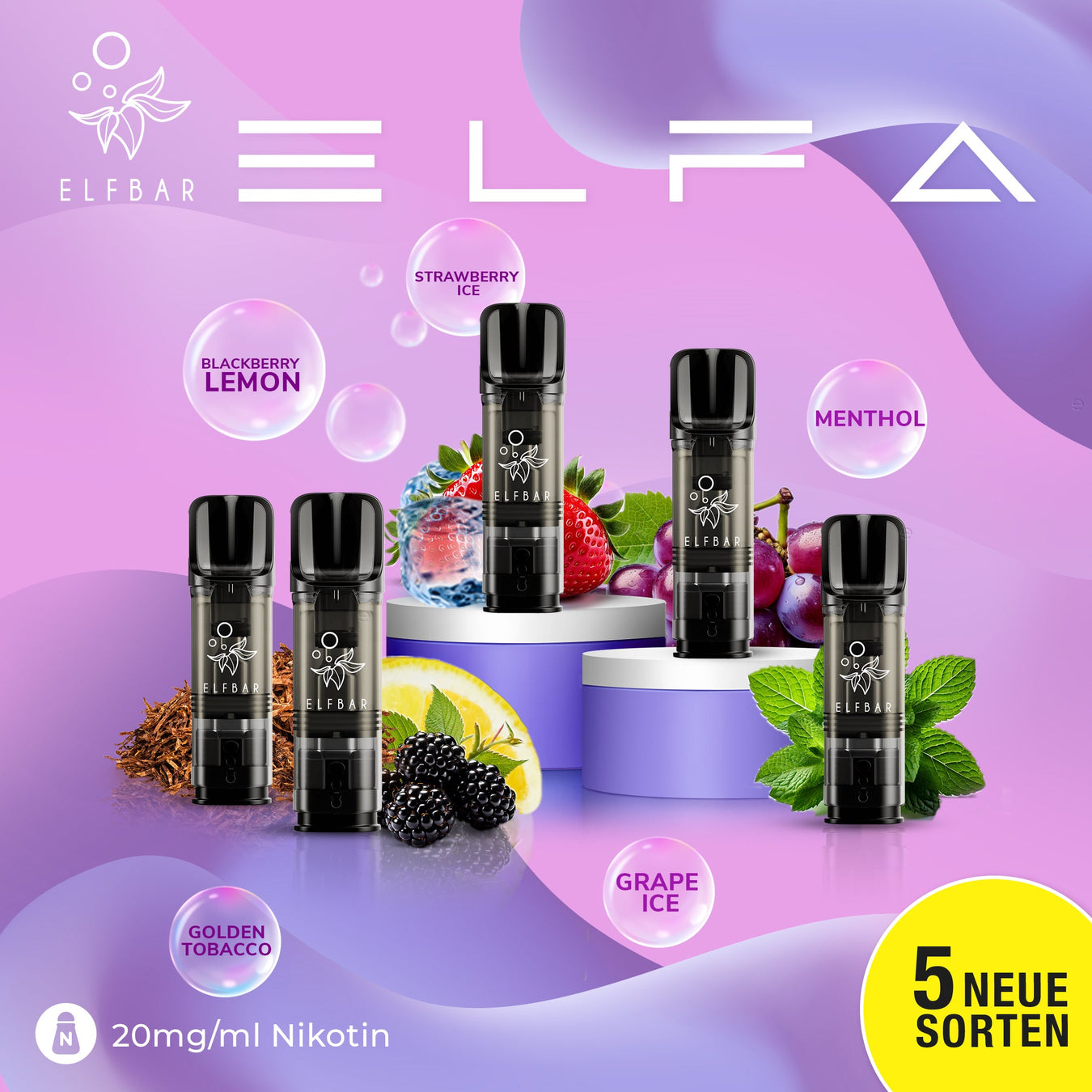
Loss of complexity: Nuances such as the acidity in
ELFA Prefilled Pod Apple Peach They appear "washed out" or soapy. -
Hardware check: If your coil after only a few
puffs If the liquid is crusted (“gunking”), this may be due to decomposed sweeteners in the old liquid, which caramelize at lower temperatures than fresh ingredients.
4. Consistency: Check for homogeneity
PG and VG normally remain permanently mixed. Extreme storage conditions can disrupt this bond.
- Observation: Streak formation or a visible separation of layers (sedimentation).
- Assessment: Try shaking the bottle vigorously. If the liquid remains cloudy or layers immediately form again, the emulsion is unstable. Do not use anymore.
Scientific background: Risks and chemistry
Are there health risks? The Federal Institute for Risk Assessment (BfR) emphasizes that e-cigarette liquids generally contain fewer harmful substances than tobacco smoke, but also points to the unpredictability of decomposition products.
Find out here whether Vaping expired e-liquid is dangerous is.
Scientific studies on the stability of E-liquids (z.B. Studies on thermal degradation products show that while oxidized nicotine loses potency, it does not exhibit acute toxicity in the sense of poisoning under normal use. However, the degradation of flavorings can produce traces of substances that could be more irritating to the mucous membranes.
In summary, "turned" liquids lead to:
- Reduced nicotine satisfaction: through the degradation of the active ingredient.
- Increased irritation: The peppery vapor can trigger a cough.
- Hardware damage: Deposits on the coil lead to "dry hits" and significantly shorten the lifespan of atomizer heads.
Proper disposal: Observe legal requirements.
Old e-liquid must be considered chemical waste due to its nicotine content. Nicotine is classified as hazardous to water.
Waste disposal regulations according to German standards (KrWG) & BattG):
- Household quantities (up to approx.100ml): Never pour the liquid down the drain! Absorb the liquid in absorbent material (cat litter or kitchen paper) and dispose of it in a tightly sealed container. Residual waste.
- Larger quantities/concentrates: These should be obtained from the local Hazardous waste collection vehicle or can be handed in at a recycling center (waste code according to AVV 20 01 19* – pesticides/chemicals, depending on local classification).
- Empty bottles: Once completely empty, they belong in the yellow bin/yellow bag.
-
Vapes and pods: Devices with permanently installed batteries (such as the
ELFBAR 600) or battery carriers must be disposed of via collection boxes in stores or municipal collection points. Battery Act (BattG) Disposal in household waste is strictly prohibited.
Conclusion: Quality comes first.
Expired e-liquid is no reason to panic, but it usually means it belongs in the trash. If the sensory test (color, smell,
Store your supplies in a cool, dark, and airtight container. This will ensure that your vaping experience remains exactly as it should be: enjoyable and consistent.
Disclaimer: This article is for general information purposes only and does not replace medical advice. The use of nicotine-containing products is associated with health risks and is intended for adults only. If you experience health problems, please consult a healthcare professional.