E-liquid allergies: interpret intolerances to PG & VG
Introduction: That scratchy throat that doesn't have to be there
Some vapers are familiar with this problem: instead of the expected enjoyment, they experience an unpleasant scratchy throat, a tickly cough, or a dry mouth. The suspicion of an allergy to the e-liquid quickly arises. In most cases, however, it is not a true allergic reaction, but rather an intolerance to the main ingredients of the liquid: propylene glycol (PG) or vegetable glycerin (VG).
The good news is that this problem can often be solved with targeted adjustments. This article serves as a practical guide to correctly interpreting the symptoms, identifying the cause, and finding suitable alternatives. We'll show you how to make your vaping experience enjoyable again.
The basis of every e-liquid: What are PG and VG?
To understand an intolerance, we first need to clarify the basics. Every e-liquid, whether in a Disposable-Vape or a refill bottle, is based on two main components.
- Propylene glycol (PG): This clear, odorless liquid is an excellent flavor carrier. ensures the intensive
Flavour and the sensation in the throat, known as a "throat hit," which is appreciated by many former smokers. PG is thinner than VG. - Vegetable glycerin (VG): VG is a more viscous, slightly sweet liquid that is responsible for the dense and voluminous vapor production. A high VG content It causes large clouds and a softer feeling in the throat.
Both substances are used by institutions such as the Federal Institute for Risk Assessment (BfR) These ingredients are evaluated as components in e-cigarettes and are also found in many other products such as food, cosmetics, and medications. You can find more information about their exact composition in our article "What is actually contained in the e-liquid of a disposable vape?"Read more."
Learn also the LED signals from your disposable vape to interpret correctly.

Symptoms indicate: Am I reacting to PG or VG?
A true, immunoglobulin-mediated allergy to PG or VG is extremely rare. Much more common is a sensitivity or intolerance that manifests itself through specific symptoms. Observing when and how the symptoms occur is the first step toward a solution.
In my experience as a consultant, I have found that most users who report a "PG allergy" are actually describing an irritation of the upper respiratory tract.
Typical signs of propylene glycol (PG) intolerance:
- Scratchy or sore throat: This is the most common symptom. It feels like the beginning of a cold.
- Dry mouth and increased thirst: PG is hygroscopic, meaning it binds water. This can dry out the mucous membranes.
- Coughing urge: Especially immediately after inhalation.
- Less common symptoms: In cases of heightened sensitivity, skin irritations or mild headaches may also occur.
Typical signs of vegetable glycerin (VG) intolerance:
VG intolerance is less common, but can occur. The symptoms differ significantly from those of PG sensitivity.
- A feeling of heaviness in the chest: A feeling of pressure or constriction.
- Increased mucus production: The feeling of constantly needing to clear your throat.
- Slight whistling breathing: May occur in sensitive individuals.
Here is a comparison for quick orientation:
| symptom | Main suspect: PG | Main suspect: VG |
|---|---|---|
| throat sensation | Scratchy, sore, dry | Rather inconspicuous |
| Mouthfeel | drought, thirst | Normal to slightly sweet |
| Chest/Lungs | Rather inconspicuous | Feeling of heaviness, pressure |
| Mucus production | Small amount | Increasingly |
| Steam sensation | A sharper, more intense "hit" | Gentler, "softer" |
Step-by-step instructions: How to find the right solution
If you recognize some of the symptoms mentioned above, don't worry. With a systematic approach, you can narrow down the cause and improve your vaping experience.
1. Change the PG/VG ratio: The most common solution approach
By far the most effective method is adjusting the PG/VG ratio.
- In case of suspected PG intolerance: Switch to an e-liquid with a higher VG content. Common "high-VG" blends are 70% VG/30% PG or even 80/20. This will make the vapor noticeably smoother and denser.
- Important NOTE: High-VG e-liquids are thicker. You need a device whose coils (atomizer heads) can handle the thicker liquid to avoid "dry hits" (burnt e-liquid).
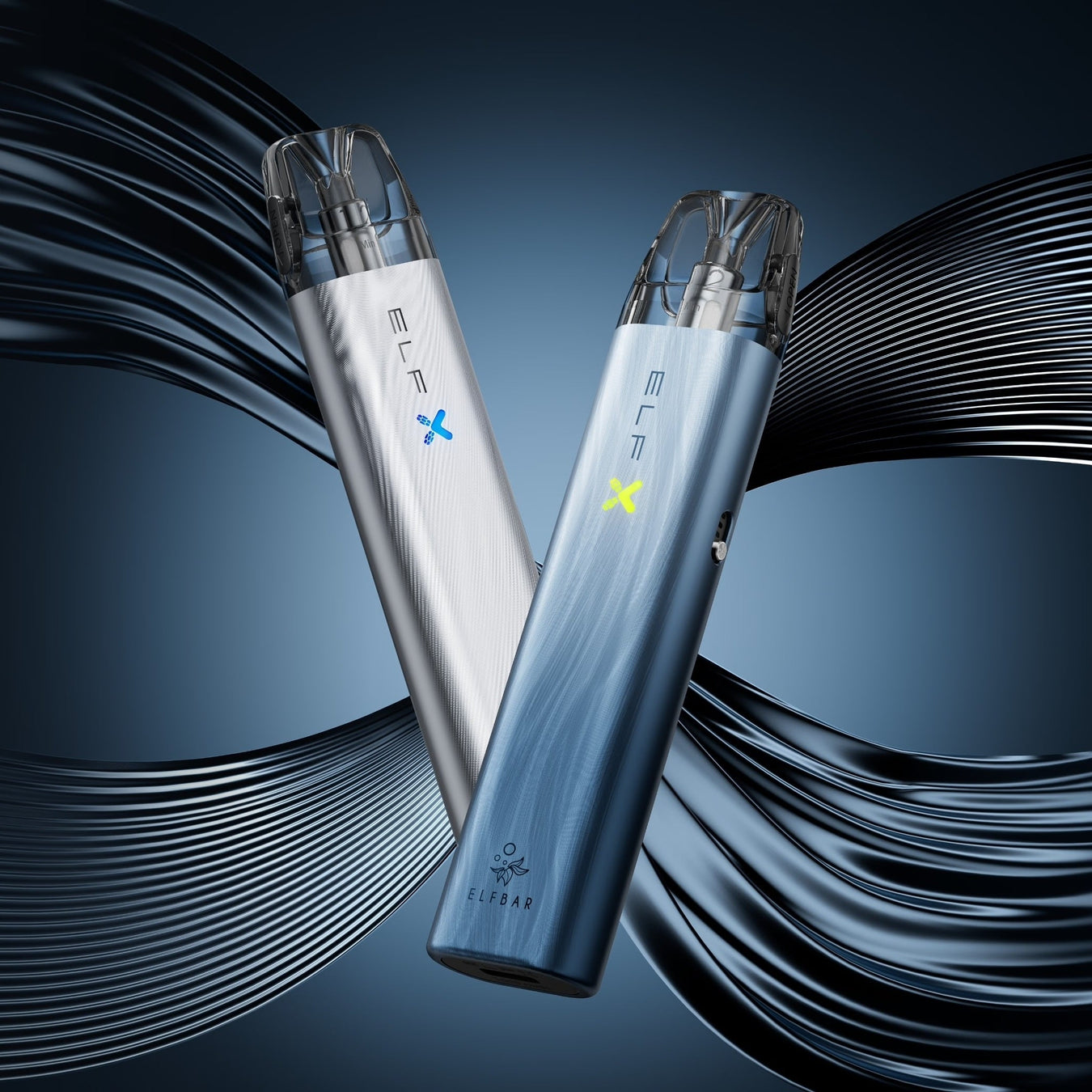
Flavour to avoid (due to insufficient liquid flow). Modern refillable systems such as theELFX Pro Pink are ideal for this purpose, as they are equipped with different pods (e.g. 0.6 Ω) that are also suitable for more viscous liquids. Liquids ensure a good flow.
Detailed instructions on how to choose the correct ratio can be found in our guide "PG/VG ratio: Adjust optimally for fruity e-liquids".

2. The role of nicotine: Nicotine salt as a gentle alternative
The harshness of traditional "freebase" nicotine is often mistakenly interpreted as PG intolerance. Especially at higher concentrations, freebase nicotine can cause a strong scratchy sensation in the throat.
This is where nicotine salts come in. They are formulated to produce a significantly smoother throat hit at the same nicotine strength. For many users who complain of a scratchy throat, switching to nicotine salt e-liquids has been the solution. If you would like to learn more about the differences, we recommend our "Comparison: Nicotine salt flavors from
3. Optimize device performance and coils
Hardware also plays a crucial role. High power (wattage) and low-resistance coils (sub-ohm) are essential. < 1.0 Ω) produce a lot of hot steam, which can irritate the mucous membranes more.
- Tip: Try reducing the power output of your device. If you have an adjustable system like the
ELFX Kit Silver Pink If using a coil with a higher resistance (e.g., 0.8 Ω or higher), try a coil with a higher resistance. The vapor will be cooler and smoother, which is often enough to minimize irritation.
4. The isolation test: Certainty through pure base
If you're unsure which substance is causing the problems, you can perform a simple test. Mix (or buy) a pure VG base liquid (with nicotine, if desired, but without flavoring) and vape it for a while.
- If the symptoms disappear, a PG intolerance is very likely.
- If the symptoms persist or change (e.g., to a feeling of heaviness in the chest), you could belong to the small group that is sensitive to VG.
5. Check nicotine-free options
In rare cases, the nicotine itself or a specific flavoring can also trigger the irritation. A test with a nicotine-free This variant can provide clarity here. Products like the
When you should consult a doctor
It is important to distinguish between a mild intolerance and a true allergy. If you experience severe symptoms such as severe breathing difficulties, swelling in the mouth or throat, a rash all over your body, or dizziness, stop vaping immediately and seek medical attention without delay. Such reactions are extremely rare but must be taken seriously.
An individual path to enjoyment
Finding the perfect e-liquid is a very personal matter. An intolerance to PG or VG doesn't mean the end of your vaping experience. On the contrary, it's an opportunity to better understand and optimize your setup.
By systematically testing different PG/VG ratios, choosing the right nicotine strength, and adjusting your hardware, you have all the tools at your disposal to find and eliminate the cause of irritation. Modern, flexible systems with refillable pods provide the ideal foundation for regaining full control over your vaping experience and restoring it to what it should be: uncompromising enjoyment.
Disclaimer: This article is for informational purposes only and does not constitute medical advice. The information contained herein is not intended to replace a professional medical diagnosis or treatment. If you have health concerns, especially severe or persistent symptoms, please always consult a qualified physician or other healthcare professional.
References
- Federal Institute for Risk Assessment (BfR) - Health assessment of e-cigarettes. Available at: https://www.bfr.bund.de/de/e_zigaretten-129574.html