Dual-Use: The right balance between smoking and vaping
Many smokers who want to switch to vaping find themselves in a transition phase where they do both: they smoke cigarettes and use an e-cigarette simultaneously. This "dual consumption" or "dual use" is a common step, but it also carries an often underestimated challenge: the risk of nicotine overdose.
Adding an e-cigarette to your usual tobacco use, rather than replacing a cigarette with it, can quickly overload your body with more nicotine than before. This can lead to unpleasant symptoms such as headaches, dizziness, or nausea. This guide will show you how to find a healthy balance, use e-cigarettes strategically as a tool for a gradual switch, and avoid the most common pitfalls of dual use.
1. The pitfalls of dual consumption: Why more isn't always better
The biggest misconception among dual users is the assumption that vaping is merely a harmless addition. For example, someone who continues to smoke half a pack of cigarettes a day and also uses an e-cigarette with 20 mg/ml nicotine salt increases their risk of smoking. cumulative nicotine intake significantly. The body reacts to this excess with clear warning signals.
Common symptoms of a nicotine overdose:
- Headache: A dull, pressing pain is often the first sign.
- Nausea and upset stomach: The autonomic nervous system is sensitive to excessive nicotine consumption.
- Dizziness and lightheadedness: A feeling of being beside oneself can severely impair concentration.
- Heart palpitations: An accelerated pulse is a typical reaction of the body to stimulants.
These symptoms are not only unpleasant, but also undermine the goal of finding a satisfying alternative to smoking. Instead of providing relief, uncontrolled dual use leads to physical discomfort and can destroy the motivation to quit completely.
2. Understanding nicotine absorption: The difference between cigarettes and e-cigarettes
To find the right balance, it's crucial to understand how differently cigarettes and e-cigarettes deliver nicotine. It's a common misconception that a "puff" on an e-cigarette is the same as a "puff" on a cigarette.
- Tobacco cigarette: It burns tobacco and delivers a quick, intense nicotine "kick," which, however, also fades rapidly. The amount of nicotine per cigarette is standardized, but only a portion of it is actually absorbed by the body.
-
E-cigarette with nicotine salt: Vaporizes a liquid. Modern devices with mesh coils produce a dense, nicotine-rich vapor. Nicotine salts are also absorbed by the body particularly efficiently and gently, resulting in a high nicotine hit without the harsh "throat hit" of conventional nicotine. A single long, deep draw on a 20 mg/ml pod system can thus deliver the equivalent nicotine dose of several cigarettes.
puffs deliver a cigarette.
In Germany, the nicotine concentration in e-liquids is regulated by the Tobacco Products Act (TabakerzG) The concentration is limited to a maximum of 20 mg/ml. This upper limit was deliberately chosen to ensure sufficient saturation for smokers wishing to switch, while simultaneously limiting the risk of accidental overdose.
A
3.The Strategy of Substitution: A Practical Guide
The key to success lies in viewing the e-cigarette not as a supplement, but as a direct replacement for certain cigarettes. Instead of vaping in addition to cigarettes, use the e-cigarette specifically to avoid a smoking opportunity. This way, you maintain control over your nicotine intake.
Step 1: Identify your “trigger cigarettes”
Observe your smoking habits: Which cigarettes do you smoke purely out of habit and not because of an acute nicotine craving? Typical examples are:
- A cigarette with morning coffee
- The cigarette after dinner
- Smoking during a work break or in the car
Choose one of these occasions and consistently replace the cigarette with a few
Step 2: Choosing the right tool for the transition
Not every device is equally suitable for switching. Beginners and dual users benefit most from a system that mimics the inhalation pattern of a cigarette (MTL, "mouth-to-lung").
- Recommendation: A train-activated Pod system Low-powered devices are ideal. They require a steady draw, similar to smoking a cigarette, and prevent accidentally inhaling too much vapor and nicotine. High-powered devices that produce huge clouds of vapor are often overkill for this purpose and can increase the risk of nicotine overdose.
-
The right strength: To start, a nicotine concentration of 20 mg/ml, as found in the
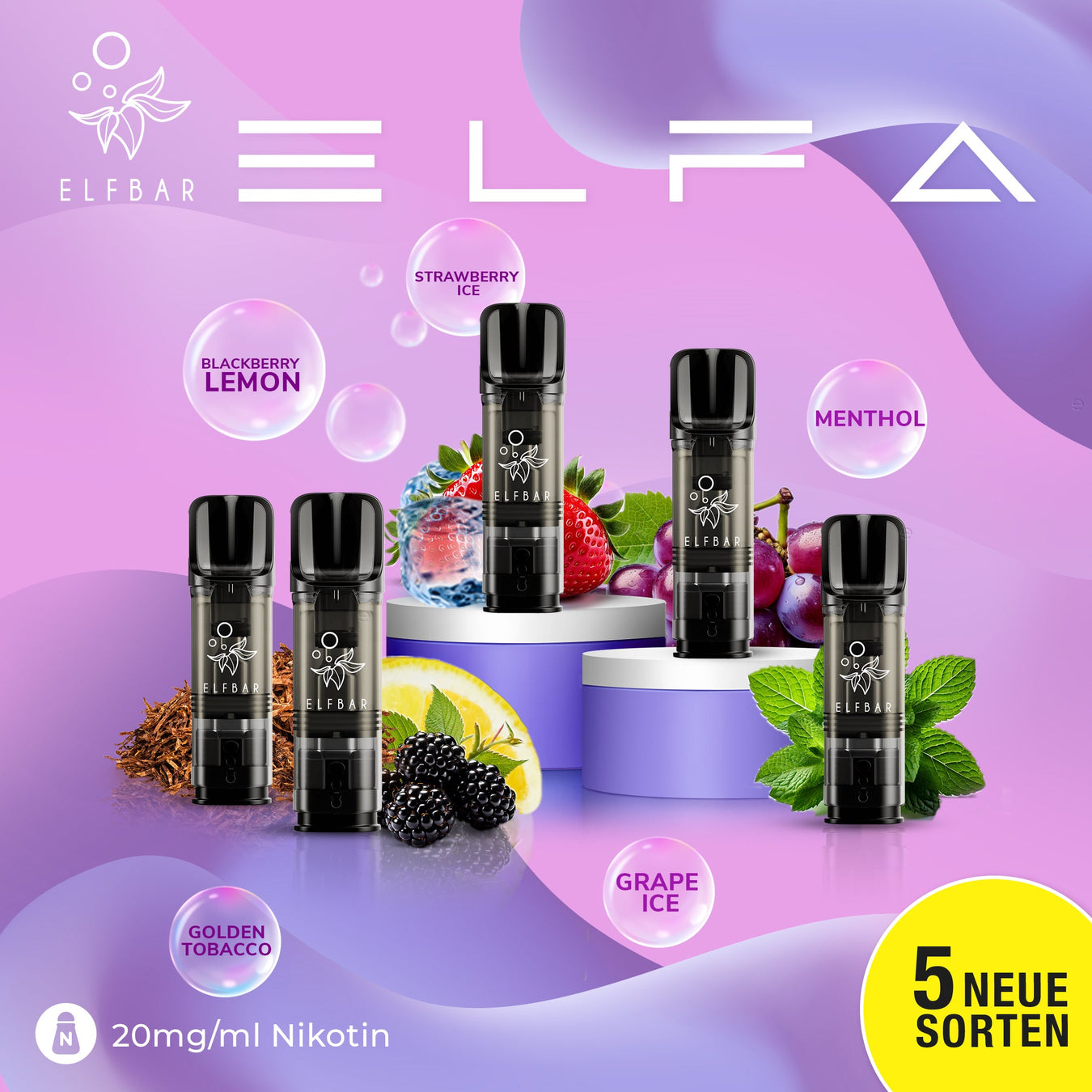
ELFA Prefilled Pod Apple Peach It is a good choice for most smokers. It provides quick and satisfying cravings. As the renowned Cochrane Library A comprehensive analysis found that nicotine-containing e-cigarettes are an effective means of smoking cessation.
Step 3: Decoupling nicotine consumption from habit
One of the cleverest strategies is to separate nicotine consumption from the mere hand-to-mouth habit. Many smokers miss not only the nicotine, but also the ritual itself.
-
The two-device method: Use a device with a nicotine-containing pod (z.B. Use a 20 mg/ml device specifically when you have a strong craving. For all other times – habit, boredom, ritual – keep a second, nicotine-free device ready.
ELFBAR 800 Blue Razz Lemonade (nicotine free) This is perfectly suited for this purpose. It allows you to give in to the urge to hold something and take a drag without further increasing your nicotine levels.
This method helps you to consume more consciously and to learn to distinguish between genuine nicotine cravings and mere habit.

4. Observe progress and adjust the dose.
Dual consumption is a dynamic phase. Pay close attention to your body's signals. When you notice that the urge to smoke a cigarette is diminishing, you've reached an important milestone. Gradually reduce the number of cigarettes you smoke daily, while using your e-cigarette as a safety net.
Besides the health aspects, it's also worth considering... Cost comparison between vaping and smoking.
Once you have fully switched to vaping and are comfortable with it, the next step can be to reduce the nicotine strength.Many users switch from 20 mg/ml to a lower concentration after some time, or increasingly vape as described above. nicotine-free. You can find a detailed guide to choosing the appropriate concentration in our article “Nicotine salt strength: How to choose the right one?“.
5. Classification from a scientific perspective
It is important to properly assess the role of e-cigarettes in the context of public health. Leading institutions such as the Federal Institute for Risk Assessment (BfR) This confirms that, according to current scientific knowledge, e-cigarettes are likely significantly less harmful to health than conventional tobacco cigarettes when used in a comparable manner. They represent a harm reduction alternative for adult smokers.
At the same time, the BfR emphasizes that e-cigarettes are not a risk-free product and should not be in the hands of children, adolescents, or non-smokers. Responsible use is therefore essential.
Your path to a successful balance
Dual consumption doesn't have to be a phase of uncontrolled nicotine use. With the right strategy, it can become a bridge that safely leads you from smoking to a complete switch to a less harmful alternative. The core principles are simple, yet effective:
- Replace, not add: Use the e-cigarette specifically as a replacement for individual cigarettes.
- Choose the right device: Beginner-friendly pod systems best mimic smoking and make control easier.
- Separate habit from need: Use nicotine-free vapes for the ritual and nicotine-containing ones for the craving.
By following this advice and listening to your body, you can master the transition phase without being slowed down by unwanted side effects and lay the foundation for a smoke-free life.
Important NOTE: This article is for informational purposes only and does not constitute medical advice. It is not intended to replace professional advice from a doctor or qualified medical professional. If you have pre-existing medical conditions or concerns about your nicotine use, please consult a doctor.
References
- Federal Institute for Risk Assessment (BfR): Questions and answers about e-cigarettes
- Cochrane Library: Electronic cigarettes for smoking cessation
- Federal Ministry of Justice: Tobacco Products Act (TabakerzG)