Long-term costs: The expenses after one year of vaping
How much do you really spend on vaping in a year? This question is on many people's minds, especially those just starting out or considering switching systems. While disposable e-cigarettes are appealing due to their low initial price, the costs can add up over time. This article provides a detailed annual cost analysis for the average user, comparing the expenses of disposable vapes with those of a refillable pod system. We break down the numbers, uncover hidden costs, and give you a solid foundation for making an informed financial decision.
The cost of convenience: Disposable e-cigarettes under scrutiny
Disposable vapes, such as the popular
Anyone traveling should also be aware of the Vaping at German airports inform.
Calculating the annual costs for disposable vapes
To understand the long-term costs, we need to start with daily consumption. The manufacturer's specification is "up to 800
We define two typical user profiles:
- Moderate user: approximately 120
puffs per day. - Heavy user: approximately 250
puffs per day.
Scenario 1: Moderate user
- Daily consumption: 120
puffs /600puffs per device = 0.2 devices - Annual consumption: 0.2 devices/day × 365 days = 73 devices
- Estimated annual costs: 73 devices × €8.99/device = €656.27
Scenario 2: Heavy User
- Daily consumption: 250
puffs /600puffs per device ≈ 0.42 devices - Annual consumption: 0.42 devices/day × 365 days ≈ 153 devices
- Estimated annual costs: 153 devices × €8.99/device = €1,375.47
These figures clearly show that the initial savings from regular consumption are quickly eaten up by ongoing costs. A major price driver is the tobacco tax. As reported by German customs As explained, a tax is levied on every milliliter of e-liquid. This tax is included in the price of products legally sold in Germany, such as...
Hidden costs and considerations
Aside from the purchase price itself, there are no direct hidden costs, but the price per puff is inherently high. Each purchase includes all the hardware (battery, housing, coil) that is only used for the included 2 ml of e-liquid. This not only leads to higher costs but also to more waste, the proper disposal of which is required according to [relevant regulations/guidelines]. Battery Act (BattG) This must be done at retailers or municipal collection points.
The investment: Cost structure of refillable pod systems
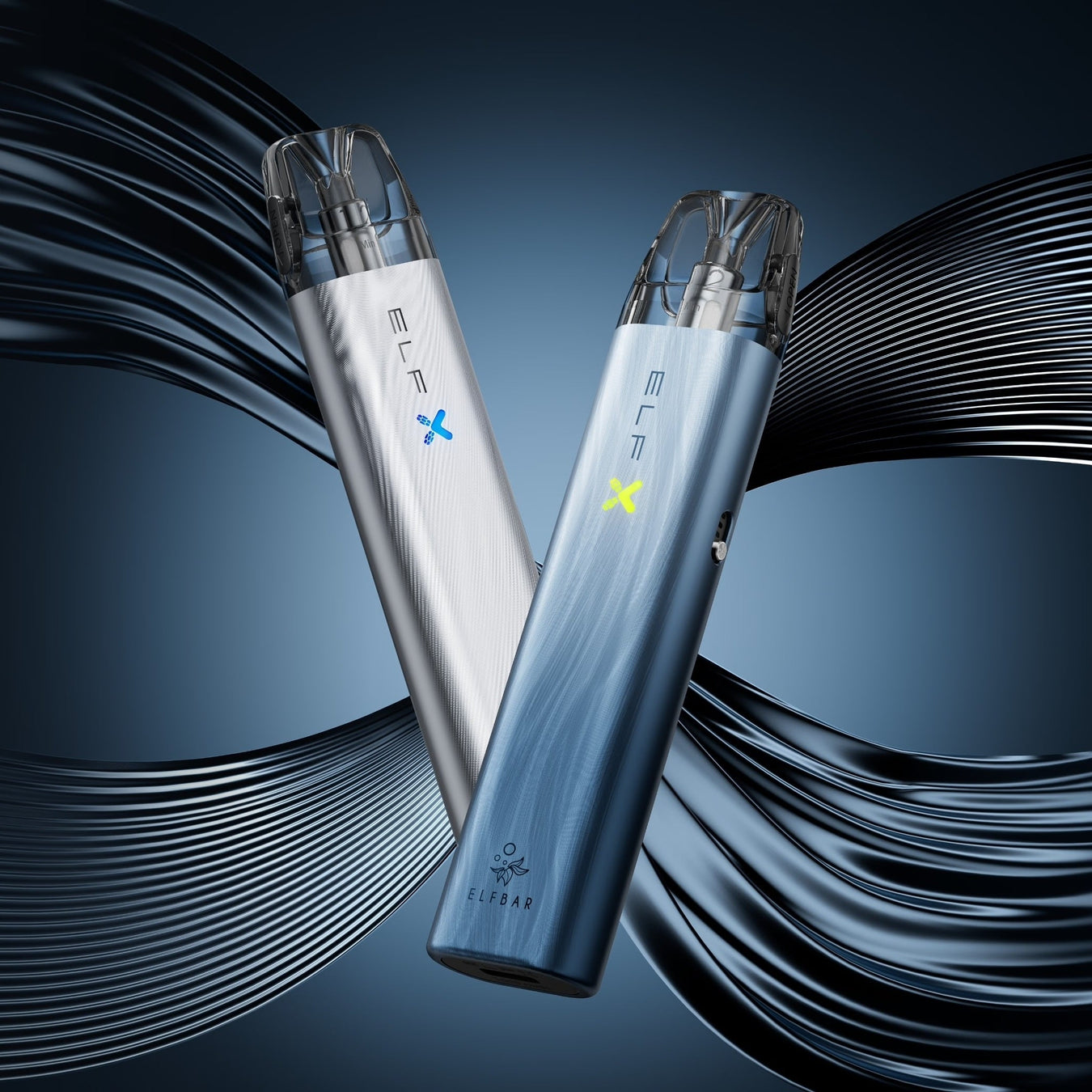
Refillable systems, such as the
Calculation of annual costs for refillable systems
The calculation is slightly different here. We have one-time purchase costs for the device and ongoing costs for the consumables (pods).
Assumptions:
- Initial investment: approximately €15 for one
ELFA Starter kit. - Ongoing costs: Approximately €7.99 for a 2-pack
ELFA Pods. Each pod contains 2 ml of liquid and also delivers approximately 600 [units of measurement].puffs .
Scenario 1: Moderate user
- Initial investment: €15.00
- Annual pod requirement: 73 pods (see calculation above)
- Pod pack requirements: 73/2 ≈ 37 Packs
- Annual cost of pods: 37 packs × €7.99/pack = €295.63
- Total annual costs: €15.00 + €295.63 = €310.63
Scenario 2: Heavy User
- Initial investment: €15.00
- Annual pod requirement: 153 pods (see calculation above)
- Pod pack requirements: 153/2 ≈ 77 Packs
- Annual cost of pods: 77 packs × €7.99/pack = €615.23
- Total annual costs: €15.00 + €615.23 = €630.23
Even when taking into account occasional “hidden costs” such as a replacement charging cable (USB-C) or the rare replacement of an entire device, the savings are obvious.
Direct comparison: One year of vaping in numbers
Comparing the total annual costs reveals the true savings potential of refillable systems for regular users. The following table summarizes our calculations and shows how quickly the higher initial investment pays for itself.
| User profile | Annual costs (one-way) | Annual costs (refillable) | Annual savings |
|---|---|---|---|
| Moderate user (120 | €656.27 | €310.63 | €345.64 (approx. 53%) |
| Heavy user (250 | €1,375.47 | €630.23 | €745.24 (approx. 54%) |

Pro tip: When is it worth switching?
A good rule of thumb from practical experience: If your annual expenses for disposable vapes exceed the sum of the initial investment for a refillable device plus the cost of a year's supply of pods or e-liquids by approximately 20%, switching makes financial sense. As our analysis shows, this point is reached for almost all daily users after just a few months.
Myth debunked: "Disposable vapes are cheaper"
A common misconception is that disposable e-cigarettes are always the cheaper option due to their low unit price. This is a classic case of short-sightedness that ignores long-term reality. As our cost analysis clearly shows, this assumption only applies to a very small user group: people who vape very rarely, for example, only a few times a month.
For anyone who vapes daily – even with moderate consumption – this cost advantage quickly reverses. The ongoing costs of constantly buying new devices far exceed the cost of replacement pods or e-liquids. Investing in a rechargeable system is not an expense, but a cost-control measure that pays off significantly over the course of a year.
Beyond the price: What else matters
Finances are a crucial factor, but not the only one. When comparing systems, you should also consider other aspects.
- Environmental aspect: Refillable systems significantly reduce waste. Instead of disposing of an entire device daily or every few days, only empty liquid pods and packaging material are generated. This aligns with efforts toward sustainability and the proper disposal of electronics, as promoted by institutions such as... EAR Foundation is monitored in Germany.
- User experience: While disposable vapes offer maximum simplicity, refillable systems often allow for greater versatility.
Flavour svielfa Features such as adjustable airflow are also included. Pod systems typically have a longer battery life and require less frequent charging than disposable devices that are discarded after a single use. - Safety and legality: Regardless of the system, it is crucial to obtain only genuine products from trusted sources. Purchasing products without a German tax stamp is illegal and carries significant risks. As industry associations like the VdeH (Association of e-cigarette retailers) We warn that the black market is full of counterfeit products that do not meet legal safety standards and may contain potentially dangerous ingredients. This is a topic we also addressed in our article about... Ingredients of e-liquids illuminate.
Key findings
The decision between disposable and refillable vapes ultimately depends on your usage habits and priorities. However, our detailed cost analysis paints a clear picture:
- For casual users: If you only vape occasionally, the convenience of a disposable e-cigarette may justify the higher cost per puff.
- For regular users: For anyone who vapes daily, a refillable Pod system On an annual basis, this is by far the cheaper alternative. The initial investment often pays for itself within just a few months.
- Significant savings: The more intensive the usage, the greater the savings potential. Heavy users can save over €700 per year by switching to a refillable system.
- More than just money: Refillable systems are not only kinder to your wallet, but also to the environment, as they produce significantly less waste.
Ultimately, it's about making an informed choice. While the low purchase price of disposable vapes is tempting, the refillable system wins hands down when it comes to the long-term costs over a year.
Disclaimer: This article is for informational purposes only. The calculations presented here are based on assumptions and averages and may differ from your individual expenses. The content does not constitute medical advice. If you are considering vaping as a means of quitting smoking, please consult a doctor or qualified healthcare professional, especially if you have any pre-existing health conditions.
References
- German Customs - Information on tobacco tax on tobacco substitutes: https://www.zoll.de/DE/Fachthemen/Steuern/Verbrauchsteuern/Tabaksteuer/Steuergegenstand/Tabakwaren/tabakwaren_node.html
- Federal Ministry for the Environment, Nature Conservation, Nuclear Safety and Consumer Protection (BMUV) - Battery Act (BattG): https://www.bmuv.de/gesetz/batteriegesetz
- Foundation for the Register of Waste Electrical and Electronic Equipment (EAR): https://www.stiftung-ear.de/
- Association of e-cigarette retailers (VdeH) - Market data: https://vd-eh.de/marktdaten/