Refillable Pods vs. Disposable: Which is Cheaper?
Refillable pods vs. disposable: Which is cheaper?
Many vapers face the same question: Are refillable pod systems really worth it compared to disposable vapes – or is that just theory?
In this article, we systematically break down the costs of both options. We calculate with realistic puff counts, include device prices, pod/coil replacements, and e-liquid costs, and show when a refillable system becomes financially worthwhile.
1. How can one meaningfully compare the costs?
1.1 Why “price per device” is misleading
At first glance, disposable vapes seem inexpensive: one device, one price, done. Refillable pods, on the other hand, require the initial purchase of a device. plus Ongoing costs for pods and liquid.
For a fair assessment, however, the following counts Cost per puff. This is also the perspective that has become established in the trade, because it reflects actual consumption.
A proven area of practice:
- MTL (mouth-to-lung) setups usually produce 150–300
puffs per ml Liquid. - Manufacturer specifications for disposable vapes are often optimistic. In practice, user reports from communities like this one show... E-smoking forum, that a Reality correction of approximately 0.6–0.8 The advertised number of trains is reasonable.
1.2 The basic formula: Cost per move
For refillable systems, I recommend the following approach per month:
Cost per puff = (device share per month + pod/coil costs per month + liquid costs per month)/
puffs per month
This allows for very Making different setups comparable – from the occasional vaper to the heavy user.
1.3 Regulatory framework: Why 2 ml and 20 mg/ml are important
In Germany and the EU, laws place strict limits on legal products:
- The EU Tobacco Products Directive limits the Tank size of refillable systems reduced to 2 ml and the Nicotine concentration set to 20 mg/ml (EU TPD).
- The German Tobacco Products Act adopts these guidelines and additionally defines precise requirements for ingredients and packaging (BMEL Tobacco Products Act).
For you, this means: If you use legal, registered products, tank volumes and nicotine strengths are comparable – a big advantage if you Realistically assess costs and consumption want.
2. Disposable vapes: Convenient, but expensive in the long run
2.1 Typical cost structure of disposable devices
Disposable vapes have a simple cost model:
- One-time purchase price per disposable item
- Fixed amount of liquid (legally limited to a maximum of 2 ml)
- Built-in battery, disposed of after use.
Let's take a typical example:
- Price per disposable item: €8.00
- Liquid quantity: 2 ml
- Real
puffs : approximately 400puffs (instead of the advertised 600–700, reality factor ~0.7)
Cost per one-way train ≈ €8.00/400 ≈ €0.02 = 2 cents
Those who daily 400
- Monthly consumption: 30 disposable devices
- Monthly costs: 30 × €8.00 = €240
2.2 Hidden Costs: Environment and Disposal
Each disposable vape contains:
- a lithium-ion battery
- electronics
- plastic and metal parts
According to German Battery Act Retailers are obliged to take back used batteries and dispose of them properly (BMUV BattGIn practice, disposable vapes still frequently end up in the general waste. This increases disposal costs for municipalities and burdens the environment.
This won't directly appear on your bill, but on a societal level, it's a significant factor. additional, indirect costs, which are significantly lower with refillable systems.
2.3 Black Market Trap: Seemingly cheap giant disposable devices
Large disposable devices containing several thousand [units of use] are repeatedly mentioned on platforms and forums.
Legal products, on the other hand, are subject to clear regulations. Tobacco Products Act and the EU TPD. The supposed "savings" of extremely large disposable vapes often come with significant legal risks and a lack of tax and quality control.
3. Refillable Pod Systems: Cost Factors in Detail
3.1 What all belongs in the invoice?
Refillable Pod systems You need to factor in these components:
- Base unit (battery/body)
- One-time purchase
- Lifespan usually many months to years
- Pods or coils
- They need to be replaced regularly depending on usage.
- Durability depends heavily on liquid sweetness, draw style, and performance.
- E-Liquid
- Ongoing consumption
- Price depends heavily on bottle size and brand (practical area) 0.25–0.75 €/ml)
A realistic average value for standard-Liquids is often at 0.30–0.50 €/ml.
3.2 Practical experience regarding pod/coil durability
Based on the experience of frequent vapers and discussions in communities such as the E-smoking forum and Steamers' meeting The following areas can be derived:
- Coils hold approximately 1–4 weeks, depending on
- very sweet liquids → more like 1 week
- Moderately sweet, MTL at low power → up to 4 weeks
- Pods (with integrated coil) usually 2–12 fillings, before the
Flavour significantly decreases.
This range is large, but it explains why user experiences vary so much. For cost calculations, I like to use a... conservative center.
3.3 Cost comparison Tangible: Disposable vs. refillable pod system
The following table compares a typical disposable scenario with a refillable pod system. Assumptions are listed below.
| parameter | Disposable vape | Refillable pod system |
|---|---|---|
| Purchase of basic unit | €0 | €15 (spread over 6 months → €2.50/month) |
| Price per unit of use | €8.00 per one-way trip | €3.50 per 10ml bottle of liquid |
| Liquid quantity per unit | 2 ml | 10 ml |
| Realistic | 200 | 200 |
| 400 | 2,000 | |
| Price per train | €0.02 (2 cents) | €3.50/2,000 ≈ €0.00175 (0.175 cents) |
| Pod/coil costs per month | – | €3.00 (1 pod/coil per month) |
| 400 | 400 | |
| 12,000 | 12,000 | |
| Monthly equipment costs | €0 | €2.50 |
| Monthly liquid costs | €240 | €3.50 × 6 bottles = €21.00 |
| Monthly pod/coil costs | €0 | €3.00 |
| Total costs per month | €240 | €26.50 |
| Cost per train in the example | 2.00 cents | ≈ 0.22 cents |
Assumptions:
- Disposable: €8.00 per device, actual 400
puffs . - Pod system: 10ml liquid costs €3.50, coil/POD costs €3.00/month, device €15 is depreciated over 6 months.
- 200
puffs /ml as a realistic average.
Our analysis shows: In this scenario, refillable pods are approximately 9 times cheaper per train as disposable vapes.
4. Three typical user scenarios – when is it worth switching?
4.1 Occasional steamers: under 500 puffs per day
Profile:
- 100–500
puffs per day - Liquids with medium nicotine strength (e.g. 10–20 mg/ml for nicotine salt)
One-way scenario:
- 200
puffs /ml → 100–500puffs This corresponds to 0.5–2.5 ml of liquid per day. - That's 0.25–1.25 disposable devices per day.
- Monthly costs: approx. €60–240.
Refillable pod system:
- Same puff consumption, liquid from the bottle.
- At €0.35/ml, this results in €10.50–€52.50 Liquid costs per month.
- Plus approx. €2.50 device fee + €3.00 pod/coil → €16–58.
Result:
For occasional vapers, switching to a refillable system is worthwhile. usually within 2–6 weeks. The savings typically amount to the range 50–80% of previous single-use issues.
4.2 Everyday users: 500–1,000 puffs per day
Profile:
- This corresponds to approximately 1-2 packs of cigarettes in terms of usage intensity.
One-way scenario:
- 500–1,000
puffs /day → 2.5–5 ml liquid → 1.25–2.5 disposable devices - Monthly: approx.€300–600.
Refillable pod system:
- Liquid consumption: 37.5–75 ml/month
- Liquid costs (€0.35/ml): €13–26
- Device costs (€2.50) + Pod/Coil (€5–8 due to higher wear and tear) → 20–36 € in total.
Result:
The costs often decrease here by over 90%. For this user group, the financial advantage of a refillable pod system is particularly clear.
4.3 Heavy users: over 1,000 puffs per day
Profile:
- Heavy consumption, often former heavy smokers
- Requires a reliable battery and regular coil changes.
One-way scenario:
- 1,000+
puffs /day → 5+ ml liquid → at least 2.5 disposable devices/day - Monthly: €600 and more.
Refillable pod system:
- Liquid consumption: 150+ ml/month
- Liquid costs (€0.30/ml for larger bottles): approx. €45
- Pod/coil costs: 10–15 €/month (more frequent changes)
- Device: €2.50–€5 per month (possibly faster wear and tear)
Result:
Even with conservative calculations, the total monthly costs are usually under €70. Here, savings from over €500 per month realistic.
5. Step-by-step: How to calculate your personal vaping costs
Use this checklist to analyze your own situation.
Step 1: puffs roughly determine per day
- On a typical day, count the
puffs or estimate based on the number of your disposable devices. - Example: 1 disposable item with real 400
puffs n per day → approx. 400puffs /Day.
Step 2: Calculate your current one-way monthly costs
- One-way price × devices per day = daily costs
- Daily costs × 30 = monthly costs
Step 3: Choose the appropriate nicotine strength for your pod system
Many users are switching to refillable systems. slightly higher nicotine strengths, so that they wouldn't be much more
According to statements from Federal Institute for Risk Assessment evaluates BfR The maximum nicotine concentration of 20 mg/ml is a regulatory limit to restrict the potential for addiction. This limit is not a must, but a limit – especially for intensive users, lower strengths can be useful to control consumption.
Rule of thumb:
- If you use many disposable vapes with 20 mg/ml and switch to 10 mg/ml, you will usually more
puffs needed to achieve the same effect. - Conversely, a moderately higher strength can ensure that you overall less liquid and thus you'll have lower costs.
Step 4: Estimate liquid consumption and costs
puffs per day ÷ 200 = ml per day (at 200puffs n/ml)- ml per day × 30 = ml per month
- ml per month × price per ml = liquid costs per month
Step 5: Include a proportionate share of the pod/coil and device costs.
- Estimate how often you will change pods or coils (e.g. 1× per month with moderate use, 2–4× with heavy use).
- Divide the device price by a realistic usage period (e.g. 6–12 months).
Step 6: Compare results
Place your calculated costs side by side:
- One-way monthly costs
- Monthly costs for refillable pod system
In the vast majority of sound business calculations, the refillable system comes out significantly cheaper.
6. Mythbusting: Common misconceptions about refillable pod systems
Myth 1: "Disposable is cheaper because the device itself costs nothing."
The purchase price of the device is indeed eliminated with disposable devices. However, you do pay for that. every single ml of liquid with an extremely high surcharge, including permanently installed battery, housing and disposal.
Our cost models above show that even if you very generously calculate the cost of the device purchase and pod wear, the Cost per puff for refillable pods is usually only 10–30% of the one-way price.
Myth 2: "Refillable systems are complicated and constantly break down."
Modern pod systems are deliberately kept simple:
- Insert the pods, fill them, pull – that's usually all it takes.
- Batteries have protective circuits; if handled properly, devices last for many months.
Reports from user forums such as the Steamers' meeting show: The most common problems (e.g., "burnt"
- too high performance level
- Too sweet liquids with MTL coils
- Pods/coils are changed too late.
Those who pay attention to these points will have a very robust setup for everyday use.
Myth 3: "I don't save anything because I get much more e-liquid with pod systems."
It's true that some users initially use the device more often after switching. This is usually a Transition phase, The nicotine strength and inhalation technique are not yet optimally adjusted.
Three adjustment options help:
- Adjust nicotine strength (do not choose too low a setting).
- Smoother train technique (MTL, not “like a shisha”).
- Liquid
Flavour choose, that satisfies, so that the "catch-up effect" does not occur.
If these points are met, consumption usually stabilizes quickly – and with it, cost savings.
7. Specific product examples: From disposable to refillable pod systems
To make the transition more tangible, it helps to look at specific setups.
7.1 Getting started: Base unit + pre-filled pods
Those who come from disposable vapes often want Change as little as possible:
- No manual filling required
- Similar
Flavour intensity - Compact, lightweight device
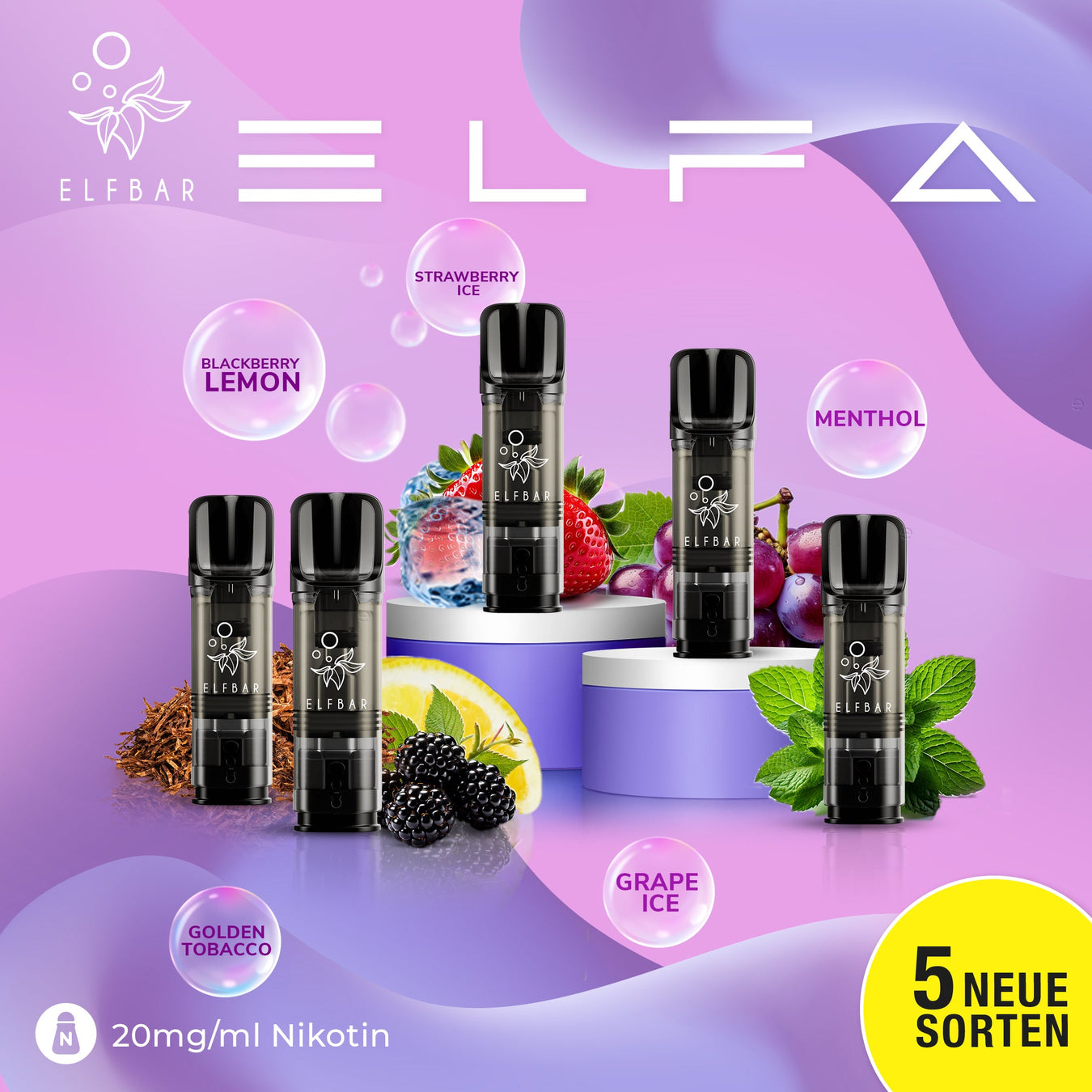
One option is a system with separate base unit and pre-filled pods, for example, the
Cost logic:
- Basic unit (one-time use)
- Pods in 2×2-ml units
- The price per ml is within the regular range.
elfa all significantly below a disposable device, because the battery and casing are reused multiple times.
7.2. Cost-effective switching without nicotine
For users who
Here, the nicotine aspect is eliminated, but the cost logic remains the same: a basic device is purchased once, with recurring, cheaper pods instead of complete disposable devices.
7.3 Design variant with the same cost principle
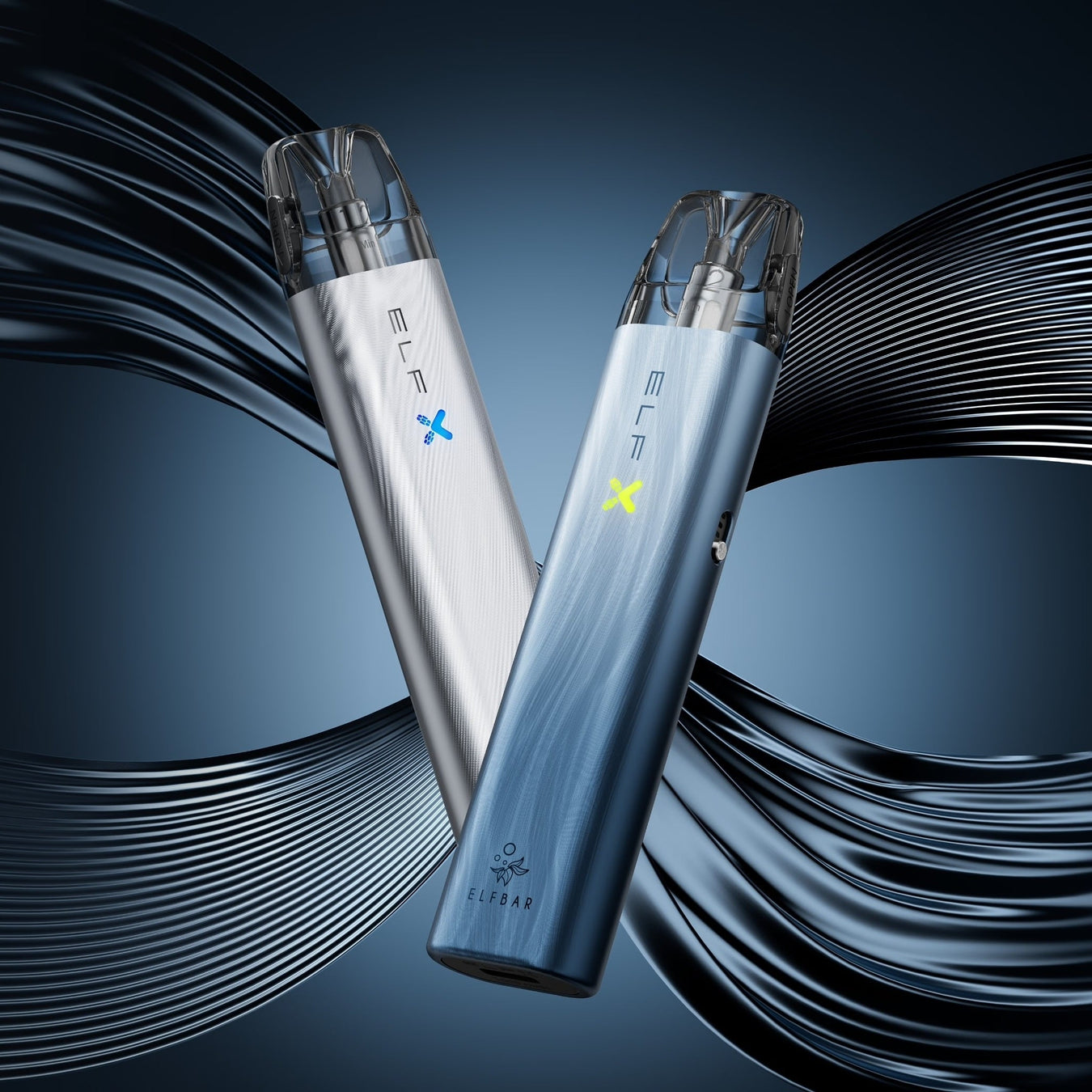
Those who value design might, for example, choose a special body like the
Important for cost accounting: The ongoing costs result from pods and liquid, not primarily from the appearance of the device. Even a slightly more expensive designer device usually pays for itself within a few weeks compared to permanent disposable purchases.
8. Environmental and disposal aspects: The “second price”
8.1 WEEE registration and battery take-back
Electronic devices with batteries are subject to regulations in Germany. WEEE registration obligation. In the foundation's directory EAR You can check whether a manufacturer is properly registered.
This is a strong signal that the provider is maintaining its Disposal and recycling obligations takes it seriously. Disposable vapes from unregistered brands are often not disposed of correctly.
8.2 Waste volume: Single-use vs. refillable systems
Refillable systems drastically reduce the amount of waste:
- Instead of 30 disposable devices per month, only a few pods/coils and liquid bottles are used.
- The battery of the base unit lasts for many months.
Industry reports such as the VdeH Industry Report They point out that the proportion of improperly disposed single-use devices has increased in recent years. This is a growing problem for municipal waste management.
Those who opt for refillable systems significantly reduce their contribution to this mountain of waste – an advantage that goes beyond simply saving money.
9. Important practical tips to keep the costs of your pod system low
-
Keep wattage moderate
- Excessive power significantly reduces the lifespan of coils.
- Follow the manufacturer's recommendations for your pod/coil.
-
Not too sweet liquids for everyday use
- Heavily sweetened liquids caramelize faster on the coil → more frequent changes are necessary.
-
Change pods/coils in a timely manner
- If the
Flavour If the surface becomes flat or scratchy, the pod/coil is usually "worn out". - Prolonged vaping not only harms the
Flavour , but also the cost balance, because you waste liquid in a bad coil.
- If the
-
Choose the appropriate nicotine strength
- Too low a strength → you puff much more often, consuming more liquid.
- Too high a strength → unpleasant scratching and a feeling of overdose.
-
Maintain device
- Clean contacts occasionally with a dry cloth.
- Protect the device from drops and extreme temperatures.
10. Key takeaways: When are refillable pods cheaper?
- Cost per train are the decisive factor – not the individual price of a device.
- Under realistic assumptions, the cost per puff for refillable pod systems is... typically only in 10–30% the cost of disposable vapes.
- Occasional vapers often recoup the cost of a pod system within a certain timeframe. 2–6 weeks, Even faster for everyday and heavy users.
- Refillable systems generate significantly less electronic waste and are better integrated into existing disposal and take-back systems (BattG, WEEE).
- The biggest mistakes that negate savings are: Too low a nicotine strength, unnecessarily high power output, and overly sweet e-liquids..
If you your
Note/Disclaimer
This article is for informational purposes only and does not replace medical advice. E-cigarettes and nicotine-containing products are not risk-free and can be addictive. If you have health questions, pre-existing medical conditions, or wish to quit smoking/vaping, please consult a doctor or a qualified health professional.