On vacation with an e-cigarette: laws abroad
Using e-cigarettes on vacation: Laws abroad
Anyone taking their e-cigarette on vacation will quickly face practical questions: Am I allowed to take my device on the plane, how many e-liquids are permitted, and where is vaping prohibited or even punishable abroad? This guide combines practical experience with the most important legal information to help you travel with peace of mind and avoid unpleasant surprises.
We focus on three core areas: import and export regulations (including customs and taxes), national laws on the possession and consumption of e-cigarettes, and specific rules of conduct on public transport and in public spaces. In doing so, we draw on, among other things, German law – for example, the... Tobacco Products Act (TabakerzG) and the EU-wide valid Tobacco Products Directive (TPD) – as a reference frame and show where other countries are stricter or more lenient.

1. Understand the legal basics – before you book
1.1 Why German and EU law is important as a reference
In Germany, there are clear regulations for e-cigarettes regarding device size, nicotine strength, and labeling. Tobacco Products Act (TabakerzG) This includes implementing the EU Tobacco Products Directive (TPD). This is particularly relevant for travelers:
- Tanks and pods for nicotine-containing liquids must have a maximum capacity of 2 ml.
- Nicotine liquids may contain a maximum of 20 mg/ml of nicotine.
- Packaging must be labelled with clear warnings and accompanying information.
These regulations serve as a minimum standard within the EU. Many holiday destinations – especially within Europe – adhere to them. Those using products approved and correctly labeled in Germany are generally on the safe side when traveling within the EU, as long as any specific national regulations are observed.
1.2 Differences between product safety, taxes and consumer law
For your vacation, it is helpful to distinguish between three areas of law:
- Product safety: Which devices and e-liquids are even allowed to be sold? Within the EU, this is governed by the TPD (Tobacco Products Directive) and national laws such as the Tobacco Products Act. Products that comply with these regulations are, for example, certified according to ISO standards such as the aerosol testing machine according to [standard name missing]. ISO 20768 testable, which enables reproducible quality assurance.
- taxation: Many countries levy special excise taxes on e-liquids. In Germany, this is regulated by the... Tobacco Tax Act (TabakStG), This provides for tiered tax rates per milliliter (e.g., €0.16 per ml, increasing to €0.32). This becomes relevant for travelers when importing larger quantities.
- Consumer law: Where is vaping permitted, must indoor spaces remain smoke-free, and are e-cigarettes treated the same as tobacco smoke? These rules vary widely around the world – from near-equal treatment with tobacco to total bans.
1.3 Customs and tax limits: What does this mean for travelers?
The German customs authorities provide information on zoll.de Regarding duty-free allowances and tax stamps for tobacco products and related products. E-liquids containing nicotine are subject to import restrictions and taxation if certain volumes are exceeded or if they originate from non-EU countries.
Experience shows that on typical holiday trips with few devices and a moderate number of small liquid bottles (e.g., less than 200 ml in total), additional taxes are rarely levied as long as all products are obviously intended for personal use.However, anyone bringing larger quantities quickly enters a category that customs officials may interpret as commercial activity. In such cases, not only are back payments due, but also fines are possible.
2. Taking an e-cigarette on a plane: A practical guide
2.1 Basic rules of the airlines
Almost all airlines strictly prohibit vaping on board and treat violations similarly to smoking a tobacco cigarette. The crew can issue warnings, relocate passengers, or, in extreme cases, initiate fines and police action.
However, relatively uniform basic rules apply to transport:
- E-cigarettes, battery carriers and batteries belong in hand luggage., Do not pack it in checked baggage. This reduces the risk of battery damage and complies with the safety regulations of many airlines.
- Liquids up to 100 ml per bottle are allowed in the cabin, provided they fit into the usual 1-liter liquid bag.
- Larger bottles should be packed in the suitcase, provided they are legal in the destination country.
Experienced frequent flyers report that e-cigarettes in checked baggage are inspected or confiscated significantly more often – especially loose batteries. Carry-on luggage plus a transparent bag has proven to be the most reliable and safest option in practice.
2.2 How to pack your e-cigarette for travel
Pressure fluctuations in the cabin cause slight leakage in many devices. Pre-filled pods or disposable devices with a tank opening are particularly affected. A tried-and-tested packing routine looks like this:
- Turn off the device or activate the safety function (e.g., 5 clicks on the fire button, if available).
- Place pods and devices upright in a small zip-top bag., so that any leaking liquid is not distributed in the hand luggage.
- Liquid bottles should be as full and tightly sealed as possible. transport them, as half-full bottles are more likely to release gases due to air pressure.
- Spare batteries only in protective boxes transport to avoid short circuits.
Those who frequently travel with pod systems benefit from pre-filled pods that hold exactly 2 ml and are approved for use in the EU. These significantly reduce the risk of leaks compared to self-filled, only partially sealed tanks.
2.3 Checklist: E-cigarette in hand luggage
| Point | Recommendation | Practical benefits |
|---|---|---|
| Device | Only in hand luggage, switched off | Protection against battery damage and check-in conflicts |
| Liquids | Max. 100 ml per bottle in 1-L bags | Meets security checkpoints, fewer discussions |
| Pods/Tanks | Store as full and upright as possible in a zip-top bag. | Minimizes leakage due to pressure differences |
| Batteries | Carry-on only, in a protective case | Reduces short-circuit and fire risk |
| Use on board | Strictly forbidden, even in the restroom | Avoids heavy fines and flight bans |
3. National laws abroad: A comparison of three types of travel
Global regulations regarding vaping can be roughly divided into three categories. This structure helps with travel planning and shows how differently e-cigarettes are handled.
3.1 Countries with regulated but permitted vaping (e.g. EU member states)
Many European countries follow the TPD and have established e-cigarettes as a separate product category.Examples include France, Spain, and Italy. Typical characteristics of these countries are:
- The sale of nicotine-containing liquids is permitted, often with a 20 mg limit.
- Vaping is usually treated like smoking in public spaces.
- There are clear age limits and labeling requirements.
For travelers from Germany, this means: Anyone carrying products approved in Germany can generally use them as long as local smoking bans are respected. BfR statements on e-cigarettes They emphasize that e-cigarettes have a significantly lower level of harmful substances compared to tobacco cigarettes; many EU member states take this assessment into account and allow regulated sales instead of bans. However, this is not a free pass – violations of smoking bans will continue to be punished.
Besides air travel, road traffic is also important: Find out how to Safe vaping in the car.
3.2 Countries with partial bans or nicotine restrictions
Some travel destinations allow e-cigarettes, but severely restrict nicotine in particular. Common patterns:
- Sale of nicotine-free liquids is permitted; nicotine is only available by prescription or not at all.
- Private import of small quantities of nicotine liquid for personal use is tolerated, but not clearly regulated by law.
- Strict advertising bans and restrictions on public use.
In such countries, many tourists have a good experience with this, nicotine-free liquids Take e-cigarettes with you and – if legal – obtain information locally on how to procure nicotine-containing products. In some countries, e-cigarettes are also classified as medicinal products; here, unauthorized importation can lead not only to confiscation but also to criminal prosecution.
3.3 Countries with far-reaching bans
There are countries where the sale, possession, or even use of e-cigarettes is prohibited. The reasons range from considerations related to youth policy to public health concerns.
Typical risks in such countries:
- Confiscation of devices and liquids upon entry.
- Heavy fines for use in public.
- In individual cases, criminal prosecution may occur.
A three-step approach has proven effective in practice:
- Check official government or embassy websites before traveling., not just blogs.
- In case of unclear legal situation, in case of doubt without e-cigarette enter the country or switch to nicotine-free alternatives.
- On site Ask the hotel reception or your host, how the rules are handled; local experience is often crucial here.
4. Vaping abroad: Public spaces, hotels and public transport
4.1 Public spaces: Is smoking the same as vaping?
A common misconception is: "What applies to smoking automatically applies to vaping – or not." In practice, it's more complicated.
- In many countries, e-cigarettes are sold in the explicitly mentioned non-smoking protection laws and equated with tobacco smoke.
- In other countries, specific regulations are lacking, and authorities base their enforcement on smoking bans.
The safest rule of thumb is: You shouldn't vape where smoking is prohibited., Unless specific zones are explicitly designated as open to the public. This applies particularly to public transport, train stations, and shopping centers.Guests who visibly act considerately – i.e., do not smoke in queues, elevators or narrow alleys – experience significantly fewer conflicts with the police or security forces in practice.
4.2 Restaurants, bars and hotels
Restaurants and hotels have the right to set their own rules and can permit or prohibit vaping on their premises, regardless of the minimum legal requirements. Common scenarios:
- Strict smoking and vaping ban Indoors, smoking areas outdoors.
- Separate smoking areas in bars or casinos where vaping is tolerated or expressly permitted.
- Individual hotel rules, For example, vaping is allowed at the window, but not in communal areas.
Proven practical approach:
- First on Pay attention to the signs: Many hotels use pictograms to indicate a smoking and vaping ban.
- When in doubt just ask, Instead of simply vaping, a polite inquiry at reception or with the service staff will prevent misunderstandings.
- Be considerate of other guests – even where vaping is permitted.
4.3 Bus, train and taxi – international experiences
In Germany, e-cigarettes are treated like tobacco on trains, buses, and in most train stations. Details can be found in the guide to... Vaping on the bus & Train. Abroad, the picture is similar, but not identical.
Experiences of frequent travelers:
- In many major cities (e.g. London, Paris, Madrid) there is Vaping ban in subways and train stations, some of these announcements explicitly mention e-cigarettes.
- In some countries, the ban in taxis is handled differently – some drivers allow vaping with the window open, others strictly prohibit it.
- In tourist regions, violations are sanctioned in different ways: from verbal warnings to substantial fines.
It makes sense to to ask the traveler, Before using an e-cigarette – especially in taxis or ride-sharing services. Vaping should be the standard practice on buses and trains.
5. Import and export: Customs, taxes and counterfeiting risks
5.1 Personal needs vs. commercial quantities
The distinction between private travel needs and commercial imports is crucial for many travelers. Tobacco Tax Act Although it primarily regulates taxation within Germany, customs practice is based on volume and purpose.
Analyses from the retail sector show: Who more than approximately 200–300 ml of nicotine-containing liquid Anyone bringing a dozen disposable devices across the border is significantly more likely to have customs suspect commercial intent. In such cases, it is routinely checked whether the goods have been taxed and whether they comply with national product safety standards.
Should something happen on your journey: Here you will find help if the Disposable e-cigarettes leak.
5.2 Tax stamps and official markings
On the customs information pages about Tax stamps and smuggling prevention It is explained that tobacco products and related products are often marked with tax stamps. These small marks or imprints indicate that the corresponding tax has been paid.
For travelers, this means:
- Products without a recognizable tax mark from certain countries of origin can raise suspicion during inspections.
- Original packaging and Purchase receipts In hand luggage, they help to prove legal origin and private use.
- Anyone who buys extremely cheap products at markets or from street vendors takes a considerable risk – both legally and in terms of health.
The industry report of Association of e-cigarette retailers (VdeH) For years, this has pointed to a growing black market that includes not only tax evasion but also products without quality control. Therefore, it is advisable for travelers to stick to regulated shops with clear proof of origin.
5.3 Recognizing counterfeits – practical experience
With the popularity of disposable e-cigarettes, the number of counterfeit products has also increased. Typical warning signs:
- Missing or incorrect warnings and missing German or English package inserts.
- Unusually low prices, far below the usual market prices in the country of origin.
- Lack of a way to verify serial number or security code online.
Many manufacturers offer their own online verification pages where codes on the packaging can be checked. It's worth taking a screenshot or bookmarking these pages before your trip so you can quickly verify any questionable products on site.
6. Device configuration for vacation: Disposable vs. pod system
6.1 Disposable e-cigarette for short trips
For weekend trips or short breaks, many experienced vapers opt for compact disposable devices with a 2ml tank and integrated battery. They are lightweight, require no charger, and comply with EU regulations regarding tank size and nicotine strength. Furthermore, they eliminate the risk of leaking refill bottles in luggage.
For example, someone planning a beach holiday with many day trips will benefit from devices that up to approximately 800 trains They are portable and can be easily stored in jackets or handbags. When planning your trip, you should allow plenty of fuel: In practical use, daily consumption figures of 200–300 trains, depending on the intensity.
An example of such a travel device is the
6.2 Pod system for longer stays
Flexibility plays a more important role in trips lasting several weeks. rechargeable pod systems with replaceable, pre-filled pods.
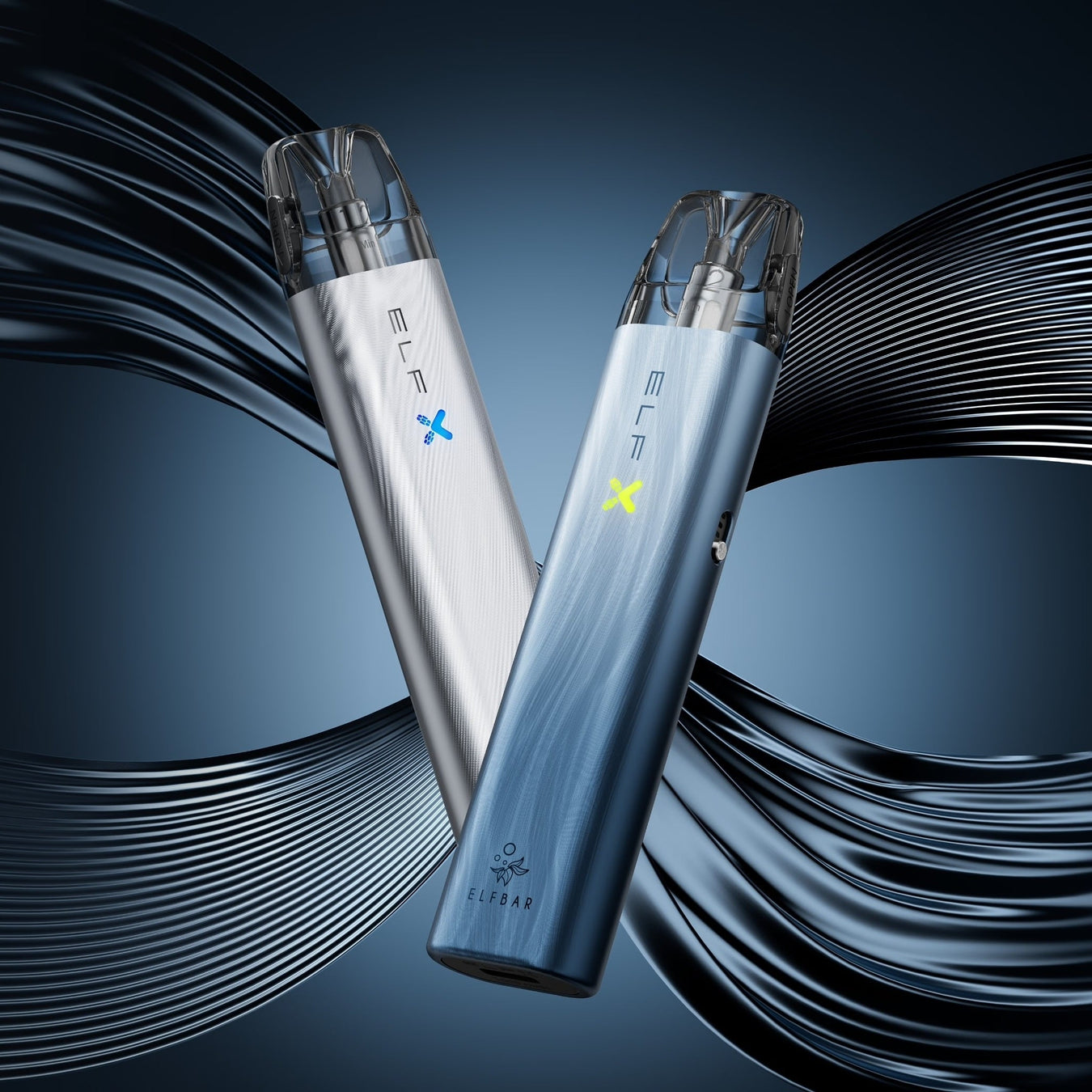
A separate base unit with an integrated battery – like the ELFA Base Unit Navy Blue – can be easily charged via USB-C in a hotel or rental car. In combination with pre-filled pods such as the ELFA Prefilled Pod Berry Snoow (2 x 2 ml, mesh coil) reduces the amount of open liquids in your luggage while remaining flexible in terms of flavors.
Such systems are particularly practical in countries with strict trade restrictions: You travel with a manageable number of EU-compliant pods and do not have to buy local liquids of unclear origin on site.
6.3 Technical aspects: Mesh coils, nicotine salt and draw behavior
Mesh coils (fine metal mesh as a heating element) ensure more even vaporization and more intense flavor.In combination with nicotine salt liquids with 20 mg/ml nicotine, the following are generally possible: fewer trains per day This allows them to meet the same nicotine needs compared to free nicotine bases. For travel, this means: less consumption, fewer units to carry.
For a more in-depth analysis, it is worth taking a look at our article on the Advantages of Mesh Coils, The article explains in detail how the coils work and their flavor advantages. Anyone wanting to know how mesh coils function technically in pod systems will find the information in the article. How does a mesh coil work in a pod system? additional background information.
7. Health classification and youth protection in the travel context
7.1 Risk assessment compared to tobacco cigarettes
The health assessment of e-cigarettes is complex in the scientific community, but some key points are well-documented. Federal Institute for Risk Assessment (BfR) It points out that e-cigarettes release significantly fewer harmful and potentially harmful substances compared to tobacco cigarettes. However, it also emphasizes that health risks, particularly with long-term use, cannot be ruled out.
A systematic overview of Cochrane Library concludes that nicotine-containing e-cigarettes are harmful to adult smokers with a higher probability Nicotine replacement therapies such as patches or gum can help people quit smoking. However, this data refers to smokers, not non-smokers or young people.
For a relaxed start to your holiday, we explain how to... How to properly inhale from an e-cigarette.
For holiday planning, this means: Anyone using e-cigarettes should primarily understand them as an alternative to tobacco smoking – and not as a “leisure gadget” that is shared in groups or with minors.
7.2 Youth protection: Responsibility also abroad
Studies like the DEBRA study Studies show that the majority of e-cigarette users in Germany are adult smokers or former smokers. This supports the position of many associations that e-cigarettes should be used responsibly as a tool for harm reduction.
For travelers, however, it is not only their own motivation that counts, but also the influence of setting an example:
- In almost all holiday destinations, the sale of nicotine-containing products to minors is prohibited.
- Many hotels and resorts have their own policies that restrict consumption in the presence of children.
Even though local controls vary in strictness, consistent enforcement is recommended. Self-restraint: E-cigarettes should be used by adults, and consumption should not take place in settings where children could obviously imitate them.
8. Typical mistakes when vaping abroad – and how to avoid them
8.1 Common Misunderstandings
Myth 1: "If smoking is allowed, I can vape anywhere."
In practice, some countries allow smoking outdoors but explicitly prohibit e-cigarettes in certain areas (e.g., shopping malls, train stations). Conversely, some places have designated vaping areas, even though smoking is generally more restricted. Therefore, you should not exclusively geared towards smokers, but pay attention to the local signage and ask if necessary.
Myth 2: “Nobody checks small quantities – so they are automatically legal.”“
In fact, tourists with minimal luggage are rarely checked. However, this does not mean that import regulations for e-liquids do not apply. During inspections, even individual bottles without proper labeling or tax stamps can be flagged and confiscated.
8.2 Practical Sources of Error
Conversations with frequent travelers and specialist retailers repeatedly reveal similar problems:
- Device in checked baggage: If batteries are checked more frequently, they can be damaged or even discarded entirely.
- Leaking pods due to pressure differences: Prevention is achieved by storing the product upright in zip-top bags.
- Unclear local bans: Easily avoided by looking at hotel or airport signs and asking a few questions.
- Missing purchase receipts: They make it more difficult to prove that the products are legal and intended for personal use.
Those who are aware of these pitfalls and act proactively significantly reduce the risk of stressful moments during their vacation.
9. Quick check before your trip: Your personal vaping checklist
Finally, here's a compact checklist that you can go through before every trip abroad with an e-cigarette:
-
Destination country research
- Check official government and embassy websites regarding the legal status of e-cigarettes.
- Note down specific rules regarding nicotine, flavors, and import quantities.
-
Equipment and liquid planning
- For short trips: Plan on disposable devices with a 2-ml tank and approximately 800 puffs.
- For longer stays: Calculate the required number of pod systems plus the appropriate number of pre-filled pods.
-
Flight preparation
- Devices and batteries should be placed in hand luggage, switched off and well protected.
- Liquids in 100ml bottles in a 1L bag, spare bottles in the suitcase.
-
Customs and documentation
- Carry purchase receipts and, if available, authenticity cards in your hand luggage.
- Pay attention to official tax stamps and full warning notices.
-
Behavior on site
- Be discreet in public spaces and on public transport, and pay attention to signs.
- If in doubt, ask for permission briefly at the hotel, restaurant or taxi.
- Do not give e-cigarettes to minors or share them.
Those who consistently implement these five steps will travel with significantly more safety and can use e-cigarettes on vacation without taking unnecessary risks.
Important information and disclaimer
The legal situation and enforcement practices regarding e-cigarettes are constantly changing. The information in this article is based on publicly available sources such as the Tobacco Products Act, dem Tobacco Tax Act, Statements from BfR as well as international studies (including Cochrane Library and DEBRA study).
This article does not replace individual legal or health advice. For binding information on the legal situation in your destination country, please contact the relevant authorities or legal professionals. Medical advice should be sought before using e-cigarettes in the case of health-related questions, and especially if you have pre-existing medical conditions.
Sources and further links
- Tobacco Products Act (TabakerzG)
- Tobacco Tax Act (TabakStG)
- EU Tobacco Products Directive (TPD)
- Federal Institute for Risk Assessment – E-cigarettes
- Cochrane Library – Systematic reviews of e-cigarettes
- DEBRA study – German survey institute on smoking behavior
- VdeH industry report – market data for e-cigarettes
- Customs – Information on duty-free allowances
- ISO 20768 – Test methods for e-cigarette aerosols
- Vaping on the bus & Rail: What is allowed in Germany?
- Advantages of mesh coils for intense e-liquid flavor
- How does a mesh coil work in your pod system?