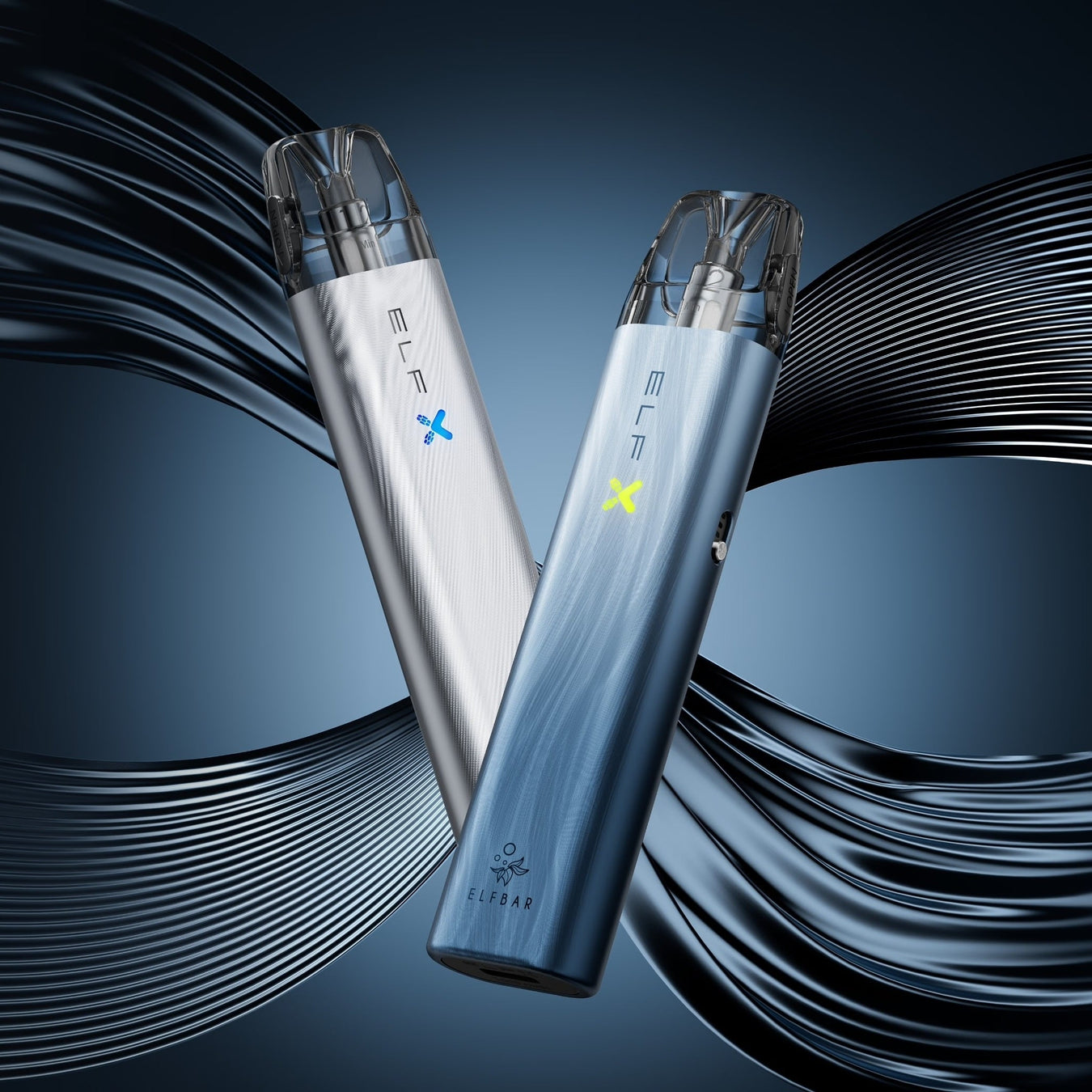
Can you use an e-cigarette while driving?
Is it legal to use an e-cigarette while driving?
Many drivers ask themselves the same question: Is vaping allowed in the car – and are there different rules if children are passengers? This guide summarizes the current legal situation in Germany, puts it into perspective with regard to road safety, and provides practical tips on how adult vapers can use their e-cigarettes responsibly in the car.
First of all: There is currently no specific "e-cigarette law for cars" in Germany. Legally, the general regulations of the Road Traffic Act (StVO) regarding distraction, as well as the protection of non-smokers for children and young people in certain situations, primarily apply. In addition, drivers should be aware of the regulations under tobacco law (e.g., regarding nicotine strength according to the German Federal Ministry of Food and Agriculture). EU Tobacco Products Directive) and tax regulations in order to use only legal, correctly taxed products.
In practice, this means that not everything that is formally permitted is also sensible in road traffic. A brief, distracted glance at an e-cigarette can be enough to overlook a dangerous situation – many experienced drivers know this from their own experience.

1. Legal basis: E-cigarettes and driving in Germany
1.1 Is there an explicit prohibition?
There is currently no explicit federal law that generally prohibits vaping while driving. Neither the Road Traffic Regulations (StVO) nor German tobacco law (Tobacco Products Act – Tobacco Products Act) contain a prohibition sign only for e-cigarettes in cars.
Those who use a plane instead of a car can find information here about Vaping at German airports.
But that means no free pass: The police assess vaping according to the general distraction rules of the German Road Traffic Regulations (StVO). Anyone who is so preoccupied with their device while driving that they neglect the necessary care risks serious injury or death. Warning fines or, in the case of an accident, even penalties.
1.2 Distraction according to the German Road Traffic Regulations (StVO): Why this is crucial for vapers
The German Road Traffic Regulations (StVO) require every driver to maintain constant control of their vehicle and avoid any avoidable distractions. This is the same standard that applies to using a smartphone or handling other objects in the car.
In practice, driver safety trainers report that three typical distraction moments repeatedly lead to dangerous situations:
- Reaching for the e-cigarette in the footwell, on the passenger seat or in a deep pocket
- adjusting power levels or airflow on complex devices
- the hectic reaction to malfunctions (e.g. Liquid in the mouth, (flashing LED)
The simple rule of thumb that has proven its worth: Anything that takes more than 1-2 seconds of attention doesn't belong in the car – it belongs at the side of the road.
1.3 Children in cars: Protection of non-smokers and societal expectations
For smoking traditional cigarettes in cars with minors, some German states have concrete plans to ban it, and some have already implemented state laws. For e-cigarettes, a legal gray area still exists in many regions, while at the same time, societal pressure is growing to protect children from tobacco and nicotine vapors.
The representative DEBRA study shows that e-cigarettes in Germany are predominantly used by adult consumers who want to reduce or stop their cigarette consumption.This target group is under particular scrutiny: The public expects adults to act with special responsibility in the presence of children.
One practical consequence: Many experts recommend, When traveling with children, either refrain from vaping altogether or use only nicotine-free products. and to ventilate regularly.
 \n
\n2. Safety risks: What is actually dangerous about vaping while driving?
2.1 The greatest danger is distraction – not the steam itself.
Experienced driving instructors and long-time vapers agree: The greatest risk does not come from the aerosol itself, but from the short-term attention span, which the device requests.
Typical scenarios from practice:
- The driver attempts to add new liquid while driving and overlooks a braking maneuver in front of him.
- A pod cartridge isn't seated correctly, it's gurgling – the driver looks down for several seconds to check.
- In heavy city traffic, someone tries to quickly activate the "turbo mode" of their e-cigarette and drifts unnoticed into the neighboring lane.
Internal evaluations of driver training courses show that already 2-3 seconds of looking away At 100 km/h, this equates to a "blind driving" distance of over 50 meters. For the level of danger, it makes practically no difference whether someone is looking at their smartphone or at the... Pod system fumbles – the distraction has an immediate effect.
2.2 Obstructed visibility due to large steam clouds
Another point that many drivers underestimate is the impaired visibility caused by dense vapor clouds. Particularly powerful sub-ohm devices can completely obscure the windshield for short periods, especially in cold weather and with the windows closed.
This is not only risky for the driver. Other road users, such as motorcyclists or cyclists next to the car, can also be confused if thick steam suddenly escapes from a side window.
A sensible strategy for driving:
- no extremely high performance ranges or "cloud chasing" in the car
- preferred compact, lower-powered pod systems or disposable devices to use
- Open the window a crack and exhale the steam away from the driver's area.
2.3 Children on board: Nicotine, aerosols and residues
The question "Am I allowed to vape when children are riding along?" is not only a legal question, but also a question of conscience.
The federal institutes regularly compare the risks of e-cigarette use to those of smoking. Federal Institute for Risk Assessment (BfR) points out that the health risks of e-cigarettes usually significantly lower is better than tobacco smoke, but at the same time not risk-free. Experts particularly recommend a Maximum possible exposure restriction.
When driving a car, other factors come into play:
- Lower volume: The vehicle interior is a relatively small, enclosed space.
- Residues: Aerosols can accumulate on seats, belts and surfaces.
- Control: Children (especially toddlers) can find devices and put them in their mouths.
Practical recommendation: Anyone who regularly travels with children should... Either don't vape at all or use nicotine-free pods and liquids., such as nicotine-free disposable e-cigarettes or prefilled pods.The device should be kept out of the reach of children and removed from the car after the journey.
3. Legal framework surrounding the device: What indirectly becomes important in the car
3.1 EU-TPD, Tobacco Products Act and legal product parameters
Even if the EU Tobacco Products Directive While not specifically referring to driving, it sets important technical and content-related limits for e-cigarettes that also apply in cars:
- maximum nicotine concentration of 20 mg/ml
- maximum filling quantity of 2 ml per disposable cartridge or tank for nicotine-containing liquids
- mandatory ingredient disclosure and warnings
The German Tobacco Products Act (TabakerzG) It implements these regulations and, among other things, prohibits the placing on the market of devices that exceed these limits. This is indirectly relevant for drivers: Anyone using conspicuous, oversized disposable devices in their car may be driving in a way that increases their risk. outside the legal framework.
Practical example: Disposable products with 5,000 or more [unclear text] repeatedly appear on online platforms.
3.2 Taxes, tax stamps and customs: Why legality also counts in the car
Since 2022, e-liquids have been subject to a special consumption tax according to the... Tobacco Tax Act (TabakStG) The tax will increase gradually from €0.16 per milliliter to €0.32 per milliliter. Products legally sold in Germany are taxed and labeled accordingly.
The customs administration emphasizes on its information pages that it is specifically targeting and confiscating illegal, untaxed e-cigarettes and e-liquids. Further information can be found at [website address]. zoll.de in connection with tax stamps and the fight against smuggling.
For drivers, this means: Anyone who is stopped during a traffic control and Obviously unmarked or oversized devices Anyone carrying such a contraption must expect that the inspection will extend not only to their fitness to drive, but also to the origin of the product.
3.3 Environmental and disposal issues: Don't let disposable devices "die" in the car
The question of disposal is not purely an environmental issue, but also a safety and image issue. Disposable e-cigarettes They are legally considered electrical appliances and contain batteries, which are subject to the Battery Act (Battery) fall.
Retailers are obligated to take back used batteries; the take-back process is managed centrally by the foundation. ear organized, with which manufacturers and distributors are registered. In practice, this means: Empty disposable devices do not belong in the glove compartment or in the general waste, but in the take-back systems of retailers.
Experience shows that several "almost empty" disposable devices quickly accumulate in cars. It's better to collect these at home and dispose of them regularly at collection points – this reduces fire risks in the vehicle and emphasizes responsible use of technology.
4. Practical guide: How to use e-cigarettes in the car as safely as possible
4.1 Decision Check: Vaping while driving or a short break?
The following table helps to quickly assess typical everyday situations.
| situation | Recommendation | Reason |
|---|---|---|
| Traffic jam on the motorway, vehicle is stationary, engine is running | Short | The environment is manageable, no complex driving maneuvers are required, and distractions remain low. |
| Stop-and-go traffic in the city, pedestrian crossings, intersections | It's best not to vape. | Complex traffic situations, frequent braking maneuvers and shoulder checks – any distraction increases the risk. |
| Country road with 100 km/h speed limit and overtaking maneuvers | Only vape when all settings are complete and your eyes remain on the road. | At 100 km/h, 2 seconds of distraction corresponds to driving blind for 50 m; no handling of the device. |
| Driving with small children in the back seat | Avoid vaping completely if possible, or wait until the next scheduled stop. | Children are particularly vulnerable, and the restlessness in the car creates additional stress. |
| Night drive in the rain | No vaping | The combination of poor visibility, reflections, and fatigue requires maximum attention. |
Experience shows: Those who consistently follow the principle "Stop instead of fumbling" This approach significantly reduces his risk in critical situations.
4.2 Device category: Which e-cigarettes are suitable for use in the car?
They generally prove their worth in cars. compact pod systems and disposable e-cigarettes with moderate power. They produce smaller, less visible vapor clouds and require less configuration.
Typical advantages of this device class:
- No or minimal setup required (no menu, no wattage selection)
- moderate steam output, less obstruction of view
- Easy one-handed operation possible without thinking
Those who value both legal compliance and practical everyday usability look for 2ml e-liquid capacities, nicotine strengths within EU limits, and mesh coil technology for efficient vaporization at low wattage. Compact disposable models like the [example missing] are a good example.
For journeys with children or particularly sensitive passengers, nicotine-free options are recommended, such as...
4.3 The 10-point checklist for safe vaping in the car
The following points are taken from driving training and the experiences of experienced steamers and can be directly implemented in everyday life:
- Do not change any settings while driving. You can adjust the power, airflow, and modes before starting your ride.
- Store the device safely. Use a stable cup holder or a separate compartment; no loose devices on the seat or in your lap.
- One-handed operation only, without looking. If you cannot operate the device safely by feel, do not vape while driving.
- Stop immediately at the first sign of any "problem". Leakage, unusual noises, or flashing LEDs? Put the device down and use the nearest safe place to hold it.
- Get the steam out of your sight. As you exhale, turn your head slightly and open a window a crack.
- Children on board = extra caution. Avoid vaping if possible, otherwise only use nicotine-free products and ensure very good ventilation.
- No improvised mounts. No suction cup mounts on the windshield or constructions that restrict the field of vision.
- Use only intact cables and chargers. Discard USB-C cables with visible damage; do not use cheap adapters in the cigarette lighter.
- Check for leaks before driving. Briefly check pods and disposable devices for moisture to avoid wet, slippery surfaces.
- Stressful situations = steam break. In case of traffic jams, aggression in traffic or fatigue, it is better to stop briefly than to vape additionally.
5. Device configuration, storage and maintenance in the vehicle
5.1 Safe storage: Where the e-cigarette belongs in the car – and where it doesn't.
Most incidents in vehicles occur when drivers reach for a dropped device or slide between seat elements. Therefore:
- Easily accessible, fixed location (e.g. cup holders, center console)
- if possible Zippered compartment or box for replacement pods and devices
- Do not store items in open jacket pockets on the passenger seat, where they can slip down during braking.
Those who travel with multiple devices should keep them clearly separated (e.g., one box for nicotine-containing products and one for nicotine-free products) to avoid confusion.
5.2 Charging in the car: What to consider with USB-C
Many modern pod systems and compact devices use USB-C. Charging via the 12V socket or USB port is possible in the car – but only under strict safety guidelines:
- Use only tested and intact cables. Frayed edges or creases are grounds for exclusion.
- Pay attention to the adapter's power output. Multi-adapters and extremely cheap chargers can be unstable.
- Do not use the device while charging. This reduces thermal stress and mechanical strain.
- Do not charge in extreme temperatures. If the interior gets very hot in summer or in very low temperatures, it is better to wait until the vehicle has cooled down.
Temperatures inside vehicles can easily exceed 60°C in summer. Electronic devices, batteries, and liquid reservoirs should therefore not be left in the car for extended periods.
5.3 Leaks and Contamination: Cleanliness is Safety
Experience shows that even a few milliliters of leaking liquid can make a surface slippery. While this isn't a catastrophe in itself, it can lead to uncontrolled movements in critical situations (e.g., if a driver instinctively reaches for the device).
Important measures:
- Before starting your journey, briefly check the pods and tanks for external moisture.
- In case of a leak, clean immediately with a cloth and continue driving with the vehicle ventilated.
- Regularly maintain devices and check seals; for pod systems, the tips in the guide will help. "E-liquid leak in the pod? Here's how to fix the problem".
Those who regularly use the same devices usually know their "problem cases" very well. These should definitely not be used as "car devices".
6. Behavior during checks and typical misunderstandings
6.1 How police and law enforcement classify vaping in cars
Drivers' experiences show that police officers often view vaping in cars similarly to smoking: The decisive factor is the degree of distraction. Anyone who appears highly preoccupied while driving, produces large clouds of steam, or drives in a serpentine pattern should expect to be stopped by the police.
Important:
- Stay calm, put the device away, open a window.
- If asked, explain objectively that it is a E-cigarette it.
- Have packaging readily available that shows the product complies with German regulations (nicotine content, fill volume).
Those who are legal, after Tobacco Products Act Using approved products makes it easier for the control bodies to correctly assess the situation.
6.2 Typical misunderstandings – and how to clear them up
Misconception 1: "E-cigarettes are completely prohibited in cars."
That's not quite right. There's currently no nationwide total ban. The crucial factor is whether the driver is distracted or endangers other road users.
Misconception 2: "None of this applies to nicotine-free e-cigarettes."
Even nicotine-free devices can obstruct vision or cause distraction. The driver remains responsible for operating their vehicle safely at all times.
Misconception 3: "If the device was purchased abroad, German law does not apply."
Yes. As soon as the vehicle and driver are in Germany, German traffic and tobacco tax laws apply. Products that, for example, violate the fill quantity limits of the EU-TPD violated or failed to pay taxes Tobacco Tax Act Payments made in this country are problematic – regardless of where they were made.
7. Select products carefully: Discreet and responsible options
7.1 Criteria for a “car-compatible” setup
The combination of practical experience and regulation has resulted in a clear set of requirements:
- Compact design: Fits securely into cupholders or small compartments.
- Moderate power and steam output: Avoid obstructing the view.
- Easy to use: Ideally, no menus, few controls.
- Transparent tank/level indicator: Controllable remaining stock without opening.
- Legal parameters: 2ml tank, nicotine up to 20mg/ml, TPD-compliant packaging.
7.2 Examples of discrete devices under German regulations
Disposable e-cigarettes with a 2ml capacity and mesh coils are a good option for many drivers looking for a simple, discreet device. A typical example is the
Those who consciously wish to abstain from nicotine will find alternatives such as the
For users who prefer pod systems, pre-filled, nicotine-free pods are suitable – for example, the
When using such devices in a car, all the precautions described above still apply, in particular the prohibition against fiddling with the devices during complex driving situations.
Key findings and practical recommendations
- There are currently no general nationwide ban, The use of e-cigarettes while driving is a concern. The crucial question is whether vaping leads to distraction or danger.
- Children in cars deserve special protection. BfR recommend reducing the exposure of minors to vapors and aerosols as much as possible.
- Legal, after EU-TPD and Tobacco Products Act Compliant products are also advantageous during traffic controls.
- Compact pod systems and disposable e-cigarettes with moderate power, mesh coils and small filling volume are particularly suitable for use in the car, but do not replace the obligation to pay attention.
- The simple rule “Stop instead of fumbling“is, in case of doubt, the most important contribution to one's own safety and the safety of other road users.
FAQ: Frequently asked questions about vaping in cars
Is vaping allowed in cars in Germany?
Yes, there is currently no explicit nationwide ban. However, vaping must not cause you to violate traffic laws or endanger others. Distractions or accidents can result in fines and other consequences.
Is it okay to vape when there are children in the car?
Legally, there is (currently) no uniform, nationwide ban in Germany specifically for e-cigarettes in cars with children. However, from a health and ethical perspective, it is recommended either to abstain from vaping altogether or to use only nicotine-free products and ensure good ventilation.
Will I get points on my driving record in Flensburg if I have an accident while vaping?
If it is determined that vaping contributed to the distraction and thus to the accident, warnings, fines and, depending on the severity of the violation, penalty points and further measures may follow.
Are large disposable devices with more than 2 ml of liquid allowed in the car if I bought them abroad?
Once you are in Germany, German tobacco law and EU TPD regulations apply. Disposable devices containing more than 2 ml of nicotine-containing liquid are generally not permitted for sale here, regardless of where they were purchased.
What is the safest way to store my e-cigarette in my car?
Use cupholders or compartments where the device fits securely and won't fly around during braking. Do not leave e-cigarettes in the car permanently, especially in extreme heat or cold.
Can the police confiscate my e-cigarette during a traffic stop?
If there is suspicion that the products are illegal or untaxed (e.g., oversized disposable devices without proper labeling), the police or customs authorities can take further action. The risk is significantly lower for TPD-compliant, taxed devices.
Health and safety information
This article is for general information purposes only. It does not replace medical, legal, or other professional advice. Anyone with pre-existing medical conditions, who is pregnant, or who is taking medication should discuss the use of e-cigarettes and vaping while driving with a doctor or other qualified professional. For questions regarding specific legal consequences or individual traffic situations, consulting a lawyer or other qualified professional is advisable.
Sources
- EU Tobacco Products Directive (2014/40/EU)
- Tobacco Products Act (TabakerzG)
- Tobacco Tax Act (TabakStG)
- Federal Institute for Risk Assessment – E-cigarettes
- DEBRA study – German survey on smoking behavior
- Customs – Information on tobacco products and e-cigarettes
- Battery Act (BattG)
- ear Foundation – WEEE Register
- E-liquid leak in the pod? Here's how to fix the problem.