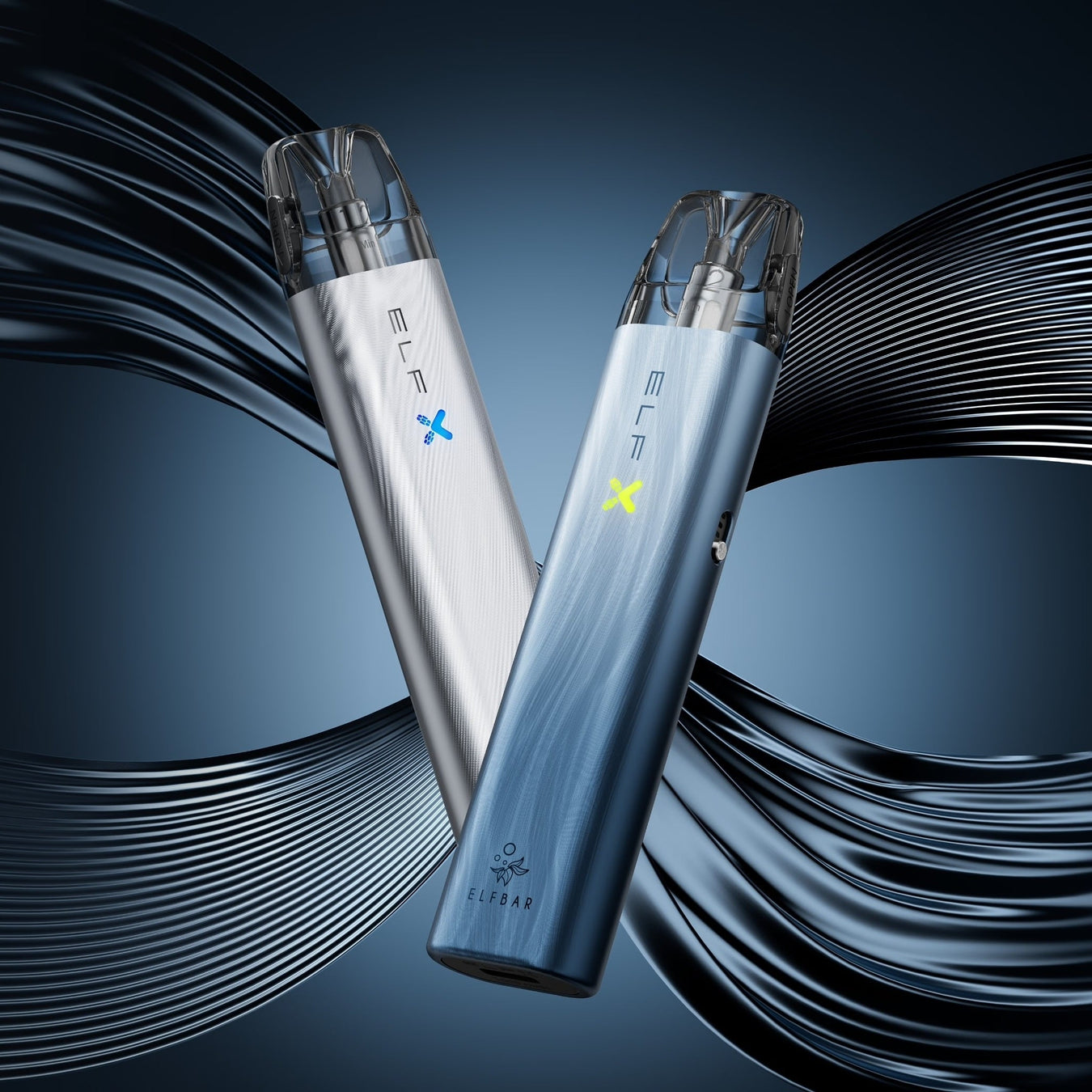
Vaping laws: A comparison of the federal states
Vaping laws: A comparison of the German federal states
The rules for vaping in Germany are more complicated than many people think. Federal law regulates the general principles, but the specific implementation in public spaces often happens at the state and local levels, as well as through company rules. Those who travel frequently and vape in restaurants or at events are therefore constantly faced with the same question: "Am I allowed to vape here?"
This guide summarizes the most important legal regulations and shows how vaping in public differs in practice across the German federal states. The focus is on adult users who want to vape legally and without conflict while out and about.
1. Understanding the legal framework: What applies throughout Germany
Before examining differences between the federal states, it is worthwhile to look at the common ground. Three levels are crucial: EU law, federal law, and state-level smoking bans.
1.1 EU and federal law: technical limits and product specifications
At the product level, the same rules apply in all federal states:
- The EU Tobacco Products Directive (TPD) limits the nicotine concentration in e-liquids to 20 mg/ml and mandates warning labels and package inserts with instructions for use and risk information. These requirements have been fully implemented in Germany and apply to every e-cigarette notified under the TPD.
- The German Tobacco Products Act (BMEL Tobacco Products Act) sets, among other things, the Filling volume of disposable e-cigarettes limited to a maximum of 2 ml It is firm and prohibits certain ingredients as well as free distributions.
For you, this means: Whether you're in Bavaria, Berlin, or Schleswig-Holstein – technical specifications such as a maximum fill volume of 2 ml and 20 mg/ml nicotine are the same everywhere. Products that z.B. with 5,000
1.2 Taxes, disposal and registration: in the background, but relevant nationwide
Even topics you don't see every day have an impact on legal products:
- The Tobacco tax on e-liquids according to Tobacco Tax Act (TabakStG) The price increased gradually – from €0.16 per ml to €0.32 per ml. This explains why legal products have become more expensive in recent years.
- Manufacturers and distributors of devices with batteries must comply with the Battery Act (BMUV BattGOffer take-back and disposal options. Reputable brands indicate collection points and accept old devices.
- About the EAR Foundation It is possible to check whether a manufacturer is registered according to the German Electrical and Electronic Equipment Act (ElektroG)/WEEE regulations. An entry in the... EAR directory shows that the product has been properly registered for the return of electronic waste.
Especially with disposable e-cigarettes, it's worth paying attention to these details. They indicate whether you're holding a legitimate or potentially smuggled product.
1.3 Protection of non-smokers: Why federal states even play a role
Vaping itself is not defined as "smoking" in the Tobacco Products Act. At the same time, many legislators... E-cigarettes are the same as traditional tobacco products. The State smoking bans to regulate whether smoking or vaping is permitted in the indoor areas of restaurants, government offices, schools or hospitals.
For an intensive
The consequence: While product specifications are identical everywhere, countries – and often municipalities as well – decide whether you are allowed to vape in restaurants, train stations or at work.
2. Myth vs. Reality: Common Misconceptions about Vaping Laws
Before we delve into the individual federal states, it's worth clearing up a few common misconceptions. These myths are the cause of most conflicts in everyday life.
2.1 Myth 1: "Where smoking is prohibited, vaping is automatically allowed"
Many vapers assume that smoking bans only apply to tobacco cigarettes. In practice, however, numerous state laws explicitly equate e-cigarettes or are interpreted as such by courts and authorities. Even without explicit mention, operators decide on their own house rules – and these often simply state: "Non-smoking area = no vaping."
Reality: In most German states, you should expect that vaping will be treated like smoking in restaurants and other publicly accessible indoor spaces. Anyone relying solely on the word "smoking" risks problems with staff or law enforcement.
2.2 Myth 2: "Vaping is always allowed outdoors"
The second classic: "Nobody can touch me outside." Especially on covered bus stops, train platforms, stadium stands or outdoor terraces with wind protection This is a common misconception.
- Many state laws also define "covered bus stops" as smoke-free areas.
- Transport companies such as train and bus operators define additional restricted zones in their house rules.
- Football stadiums and event halls often have designated smoking areas; outside these areas, vaping is regularly prohibited.
Reality: Wherever many people are standing close together or where there is partial shelter, vaping is often restricted like smoking – even outdoors.
2.3 Myth 3: "The police immediately hand out high fines"
In everyday practice, users and retailers report a different experience:
- In many situations, speak first. Security, Service
ice forces or personnel to politely ask someone to stop vaping. - Only those who ignore or refuse this request risk being banned from the premises or having the police called in.
Practical experience: In most cases, the conflict ends at level 1: You stop vaping or go to the designated area. State law provides the basis for fines – but how rigorously these are enforced depends heavily on local practice.
3. Comparison by federal state: Patterns instead of detailed paragraphs
A complete reprint of every single state regulation would be beyond the scope of this document and is hardly helpful for everyday use. What vapers really need are... Patterns of behavior: Where are the rules particularly strict, and where are they more flexible? And in which situations is special caution necessary?
Note: The following classifications summarize typical regulatory models and experiences. For specific legal questions or penalty notices, individual legal advice is always necessary.
3.1 Strict public smoking ban (z.B. Bavaria, North Rhine-Westphalia, Saarland)
This group traditionally advocates for far-reaching smoking bans in indoor spaces.
Characteristic features:
- Smoke and therefore often also Vaping is prohibited in almost all restaurants, Bars and nightclubs, with only a few exceptions.
- Public buildings, schools, daycare centers, government offices, hospitals: smoke-free throughout, vaping generally only permitted in designated areas.
- Smoking is only permitted in designated areas on public transport and at train stations – house rules usually treat vaping the same.
What does that mean for you on the road?
- When visiting pubs or restaurants, plan for guaranteed breaks in the outdoor area.
- Be aware that vaping may be prohibited even in partially enclosed outdoor areas (conservatories, covered beer gardens).
- Low-power devices with little visible steam emission reduce conflicts, but do not replace compliance with the rules.
3.2 Moderate non-smoking protection with exceptions (z.B. Berlin, Hamburg, Saxony)
Other countries allow smoking – and therefore occasionally vaping – in designated areas under strict conditions.
Typical patterns:
- Smoking or e-cigarette lounges In larger catering establishments, this is possible if they are structurally separated and appropriately marked.
- Small corner pubs or specialty bars use exceptions to allow smoking; vaping is often permitted there as well.
- Public buildings, schools, and hospitals remain strictly smoke-free, often with clearly designated outdoor areas.
Practical consequences:
- In large cities, you are more likely to find locations that explicitly allow vaping – but only in clearly marked areas.
- At the same time, shopping centers, food courts and cultural institutions with very strict house rules exist in the same cities.
- Those who travel a lot should always have a plan B: z.B. a short walk to the next designated area.
3.3 Federal patchwork regarding municipalities and special areas
Regardless of the federal state, additional differences arise due to municipal statutes and operator regulations:
- Cities and municipalities sometimes define Smoke-free zones in parks, playgrounds or pedestrian zones.
- Transport companies and trade fair organizers create their own rules of use for stops, exhibition grounds and event areas.
- Universities and large employers have campus policies that sometimes go beyond state law.
In practice, this means that two cities in the same federal state can have very different rules for the same context (z.B. have a park bench or street festival.
4. Everyday situations in a comparison of the federal states
Instead of looking at legal paragraphs, examining typical scenarios provides more clarity. The following table summarizes how vaping is usually handled in common settings – with typical differences between "stricter" and "more moderate" federal states.
4.1. Comparison table: Where is vaping mostly allowed or prohibited?
| Situation/Location | Strict countries (z.B. BY, NRW, SL) | More moderate countries (z.B. BE, HH, SN) | Practical tip for all federal states |
|---|---|---|---|
| Restaurant/Cafe interior | Mostly prohibited, rare exceptions | Often prohibited, occasionally a separate lounge is possible | Always ask the server; pay attention to signs. |
| Bar/Club | Mostly prohibited; a few smoking clubs exist with restrictions. | Smoking areas or clubs are permitted in some locations. | Check online beforehand or ask by phone. |
| hotel room | Depending on the hotel, there is often a strict no-smoking AND no-vaping policy. | Some rooms are designated smoking rooms; vaping is often still unwelcome. | Read the booking conditions; if in doubt, only vape at the window with permission. |
| Office/Workplace | Usually regulated by company agreement, rather strict | Similarly strict, occasionally company-owned steam rooms | See internal guidelines or the works council; ask if anything is unclear. |
| Public administration, university, school | Generally smoke-free; vaping outdoors in defined zones. | Also smoke-free, clearly marked outdoor areas. | Vaping is only permitted in designated areas. |
| Public transport (bus, tram, subway) | Forbidden, even at most covered bus stops | Banned, with stricter controls in some major cities. | Vaping is only permitted outside the bus stop area. |
| Train stations, platforms | Only in smoking areas, vaping is usually treated the same. | Same principle; in smaller train stations, often a general ban. | Pay attention to floor markings; read the operator's house rules. |
| Stadium/Major event | Smoking is usually permitted in designated areas; outside of these areas it is often prohibited. | Similarly, in some stages there are more designated areas. | Ask the folder before you vape |
| Public Parks/Playgrounds | Municipal bans are common in playgrounds; parks are sometimes more liberal. | Similar situation; local regulations are decisive | Check signage; do not vape near children. |
This table shows: The biggest differences You see it less in the legal text itself than in the interplay of state law, municipal rules and house rules.
4.2 Case studies: Three typical travel scenarios
Scenario 1: Business trip from Munich (BY) to Berlin (BE)
- Munich has a strict non-smoking law. In the city center, many beer gardens are smoke-free or have clearly separated areas.
- There are only a few clearly marked smoking areas at the airport and main train station.
- In Berlin, on the other hand, you'll find some bars with designated smoking or e-cigarette rooms – but also shopping centers with absolute smoking and vaping bans.
Best Practice
Scenario 2: Weekend trip to Hamburg with concert attendance
- The Hanseatic city follows a moderate model, but implements strict smoking bans in public facilities.
- Many event organizers on the Reeperbahn completely prohibit vaping indoors, but tolerate it in marked outdoor areas.
Best Practice
Scenario 3: Commuting during rush hour in North Rhine-Westphalia
- In S-Bahn and regional trains
puffs Vaping is prohibited just like smoking, including in most covered bus stops. - Many commuters underestimate how visibly dense steam is in full
puffs n affects others.
Best Practice
5. Device s & Setups for conflict-free vaping on the go
Laws define, where You are allowed to vape – your device also decides, how noticeable you are involved. Especially in public spaces, it's worth taking a look at compact, inconspicuous solutions.
5.1 Why compact pod systems have advantages in public spaces
From a retailer's perspective, three clear advantages of small pod systems and moderate disposable devices are evident in everyday use:
- Reduced steam generation: MTL (mouth-to-lung) setups and lower wattages produce less visible vapor. This noticeably reduces complaints from bystanders. Many operators react particularly when large clouds of vapor linger in a room.
- Portability: A device with a 500–850 mAh battery fits comfortably in a trouser pocket and, with moderate usage, is sufficient for a typical workday or city trip. Our retail analyses show that users with a 500 mAh pod battery can easily get through the day in 70–80% of everyday scenarios.
- Fast USB-C charging: Modern systems can be almost fully recharged in 30–60 minutes – ideal if you only have short breaks on your laptop or power bank while traveling.
5.2 Specific device strategies by usage type
Depending on how you vape on the go, different setups will work best:
-
Day trip or city break:
A slim pod system with approximately 500 mAh, z.B. a basic device such as theELFA Base unit Navy Blue, combined with 1-2 spare pods. This way you remain discreet, have enough reserves and are quickly ready to use again thanks to USB-C. -
Longer business trip (2-3 days):
A more powerful pod system with approximately 850 mAh, like theELFA MASTER Dusty Pink It offers more buffer without being bulky. Thanks to its MTL design, the vapor production remains moderate – ideal for hotel stays and train journeys with many changes. -
Occasional vaping at events:
For users who only vape sporadically, a compact disposable e-cigarette is suitable with nicotine-free option. Products like theELFBAR 800 BlackberryIce (nicotine-free) or theELFBAR 800 Blueberry (nicotine-free) They combine a discreet size with significantly reduced odor compared to tobacco cigarettes.You can find more information in our article on Vape strength: Nicotine content compared to cigarettes.
5.3 Discreet travel: Practical checklist
The following points have proven useful time and again in everyday life when traveling across state borders:
- Bring original packaging or proof of age – especially with younger vapers, it can be helpful to be able to prove that you are of legal age if asked.
- Have a USB-C cable with you – Many conflicts arise when the battery is empty and users frantically search for charging options.
- Transport replacement pods or disposable devices in an odor-proof bag. – this way you can avoid complaints in hotel rooms, offices or carpools.
- Focus on small, MTL-oriented setups – Large sub-ohm clouds can quickly become provocative in public spaces, even where vaping is permitted.
6. Behavior in public spaces: De-escalation instead of discussion
Regardless of the federal state, your behavior is the most important factor in whether a situation remains calm or escalates.
6.1 The 3-step strategy for on the go
In practice, the following simple procedure has proven effective:
- Recognize: Before the first train, briefly check: Are there any warning signs? Are children or obviously sensitive individuals sitting nearby? Is the area covered or enclosed?
- Questions: Just ask the staff at the restaurant or bar.
puffs You can be a steward or server at events.ice Address the forces before you steam. - React: If you are asked to stop vaping or to move to a different area, do so immediately and without discussion.
Retailer feedback shows that those who adhere to these three steps reduce everyday conflicts by well over 80%.
6.2 Dealing with house rules and inspections
Many vapers underestimate the importance of house rules. Even if a state law doesn't explicitly mention e-cigarettes, the operator can still set the following rules:
- Complete ban on steam throughout the entire building
- Permission only in certain zones or lounges,
- Combination of smoking and vaping bans in outdoor areas such as terraces or entrance areas.
Transport companies and event organizers often announce their rules in the General Terms and Conditions and on information boards. At train stations, customs and tax law also plays a role: information from the Customs Administration This shows how strongly the focus is on imports of taxable tobacco and tobacco substitutes. Products without tax markings or with excessive tank volume are particularly noticeable here.
6.3 De-escalation in an emergency
If, despite precautions, an inspection or complaint occurs, the following steps have proven effective in practice:
- Put the device away immediately. and signal that you are following the rules.
- Stay calm – Emotional arguments usually make the situation worse.
- Briefly explain, that you use electronic cigarettes, and ask if there is a designated area.
- In case of threatened banning from the premises: Accept the decision and leave the scene. Any subsequent legal action should be handled by a lawyer, if necessary.
7.How health and youth protection assessments are incorporated into the rules
In addition to non-smoking regulations, health assessments and youth studies play a major role in shaping state laws.
7.1 Risk assessment of e-cigarettes
The Federal Institute for Risk Assessment (BfR) In its statements on e-cigarettes, the [organization name] concludes that the health risk of e-cigarettes for adult smokers is "significantly lower" than that of tobacco cigarettes, but at the same time points to remaining uncertainties and inherent risks. The statements are available on the [organization name]'s e-cigarette topic page. BfR, serve as an important basis:
- State and federal politicians use these ratings to justify youth protection measures and advertising restrictions.
- Authorities regularly emphasize that e-cigarettes are not a healthy lifestyle product, but a lower-risk alternative for adult smokers.
7.2 Usage patterns in Germany
The DEBRA study The institute regularly examines tobacco and nicotine consumption patterns in Germany. Published data shows that e-cigarettes are primarily used by It is used by adults who want to reduce or quit smoking.. The publicly available reports on debra-study.info show:
- The largest proportion of regular e-cigarette users is found in the age groups over 25 years.
- Young people use e-cigarettes significantly less often on a regular basis, although occasional trial periods do occur.
This data supports the course taken by many federal states: strict youth protection and advertising restrictions, combined with a pragmatic recognition of the lower risk compared to tobacco cigarettes.
7.3 Legal Market versus Black Market
The industry report of Association of E-Cigarette Retailers (VdeH) This indicates a growing black market segment. The publicly available market data on vd-eh.de It is becoming clear that smuggled products with excessive fill quantities and missing tax markings are increasingly putting pressure on the legal industry.
For you as a user, this has two consequences:
- Health: Illegal products lack TPD compliance, laboratory certificates, and proper ingredient declarations.
- Legally: Possession and use of such products can cause problems during checks – especially at borders or train stations – particularly when dealing with untaxed goods.
8. Safe travel across state borders: Decision tree for everyday life
To make it easier for you to find your way around, you can use this simple decision tree as a guide – regardless of which federal state you are currently in.
- Are you in an enclosed space or a covered area?
- Yes → First check if smoking is allowed. If smoking is prohibited, you shouldn't vape either.
- No → Proceed to step 2.
- Is this an area with many people (bus stop, train platform, queue, stadium)?
- Yes → Look out for signs and house rules, Serv
ice Ask staff. Do not vape where there are prohibition signs. - No → Proceed to step 3.
- Yes → Look out for signs and house rules, Serv
- Are there children or particularly sensitive individuals in the immediate vicinity?
- Yes → Keep your distance out of consideration or choose a different location.
- No → Proceed to step 4.
- Do you see any designated smoking or vaping areas?
- Yes → Only vape there.
- No → Quick test: If you're unsure, as if it were a non-smoking area – so it's better not to vape or to ask briefly.
Experience has shown that these four steps drastically reduce the risk of violations and conflicts – regardless of whether you are in the north, south, east or west of Germany.
9. Further resources and practical guides
For specific situations, additional reading is recommended:
- Those who frequently travel by bus and train will find helpful information in our guide. "Vaping on the bus" & Rail: What is allowed in Germany? Specific information on transport companies and station rules.
- For the office and home office
ice The article brings "Vaping at the workplace: Rights and obligations for vapers" Structure in company agreements and house rules. - If you're traveling with pod systems, the guide will help you. “Traveling with the Pod System: What you need to know”, to plan the appropriate combination of equipment and accessories.
Important notice (disclaimer)
This article is for general information purposes only and does not replace individual legal advice. Laws, statutes, and house rules are subject to change and may be interpreted differently depending on the state, municipality, and operator. For specific legal questions, especially those relating to fines, criminal charges, or employment law consequences, you should always consult a qualified lawyer.