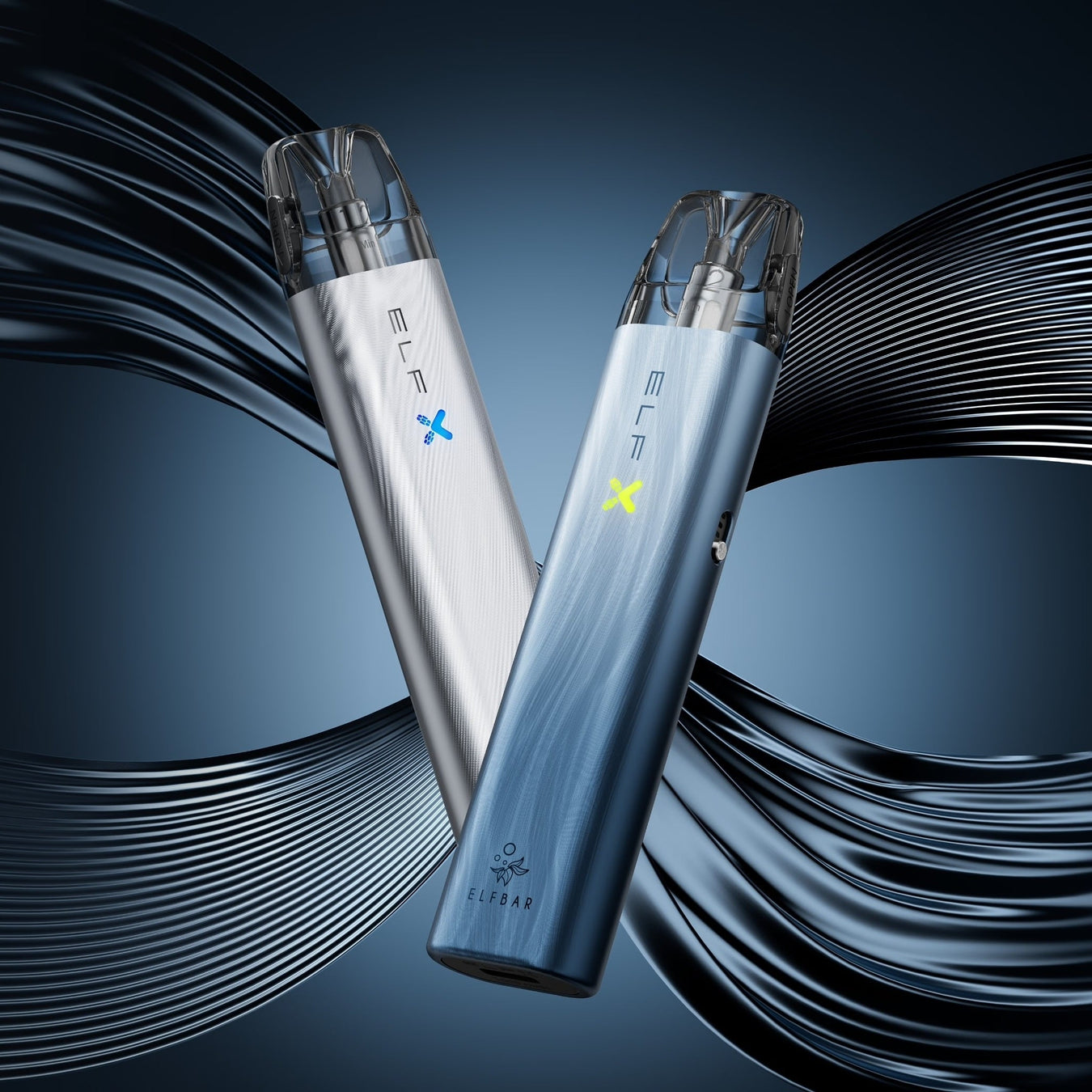
How vaping can change consumption patterns – and what you should pay attention to

Many people quickly realize after switching to vaping that it's not just the product that changes, but also the rhythm. A cigarette usually has a clear beginning and end. An e-cigarette, on the other hand, can be readily available all day. This is precisely what often changes consumption patterns.
This should be discussed objectively. Not every frequent puff automatically means "more addiction." But the easier availability can lead to consumption being less conscious and more fragmented into small, everyday situations: a puff at the desk, one on the phone, one in between. Those who don't notice this can easily lose track.
Why vaping can feel different in everyday life
Smoking often involves external boundaries: you go outside, light up, and are done in a few minutes. Vaping eliminates many of these boundaries. This can be convenient, but it can also lead to taking fewer real breaks. Instead of fewer, more focused moments of consumption, many smaller ones occur.
This isn't proof that vaping is "worse." It's more a matter of behavior. Some adult users experience it as a relief, others as a loss of control. Both are possible.
The lack of natural stop signals
A tobacco cigarette burns down. That's a clear end. An e-cigarette doesn't offer a comparable moment. You inhale, put the device down, pick it up again – without anything signaling that a session is over. That sounds trivial, but it has consequences for consumption patterns.
Without a clear end, there's no incentive to consciously decide: Do I really want another puff right now? Instead, vaping becomes a kind of background activity. Similar to endless scrolling on a smartphone, there's no point at which the device automatically says: Stop. This responsibility lies entirely with the user – and that's precisely what makes it more challenging than many initially think.
Nicotine strength alone does not explain the pattern.
The use can be characterized by a high nicotine strength. The actual absorption is altered by the device, puff duration, and frequency. Nicotine salt liquids They should also not be immediately confused with "easily controllable". BfR emphasizes that e-cigarettes are not harmless.
Therefore, anyone who feels like they are constantly glued to their device should question not only their concentration but also their entire pattern: When do I reach for it? Out of habit, stress, boredom, or a genuine nicotine craving?
Habit and addiction are not the same thing
In everyday language, the terms are often used interchangeably, but they describe different things. A habit is a learned behavioral pattern: You reach for your e-cigarette because you always do – after eating, while waiting, during breaks. It feels familiar, but you could also do without it without experiencing withdrawal symptoms.
Addiction progresses further. It manifests itself in the unpleasant physical or psychological reactions that occur when abstaining: restlessness, irritability, the feeling of not being able to function properly without nicotine. The transition between the two is fluid, and that's precisely what makes it complicated. A habit can develop into an addiction over weeks and months without one noticing the moment when it tips.
Therefore, it's worthwhile to consciously test this occasionally: What happens if I put the device away for half a day? Is it uncomfortable but manageable – or does it feel like something essential is missing? The answer to this is more honest than any self-diagnosis in your head.
How to recognize problematic routines
- The device is constantly in hand: You reach for it without consciously thinking about it.
- There are no longer any clear moments of consumption: Individual sessions become many short interruptions.
- Certain situations automatically trigger a move: such as phone calls, screen work, or waiting.
- You lose track of your consumption: Pods, liquids, or disposable devices run out faster than you'd think.
Such patterns are not a diagnosis. However, they are a useful reason to observe one's own behavior more consciously.
Other clues that are easily overlooked
Not all problematic routines are obvious. Sometimes they manifest themselves more subtly:
- The device travels everywhere with you: From the desk to the bathroom, from the sofa to the bed. There's no place it isn't.
- Breaks become restless without vaping: As soon as there is nothing to do – waiting at the traffic light, commercial break, loading screen – the hand automatically goes to the device.
- It's hard to stop in the evenings: You continue vaping even though you wanted to sleep. The device is next to your pillow.
- The thought of empty batteries or empty pods causes unease: Not because the product is expensive, but because the thought of not being able to vape causes stress.
None of these points is dramatic on its own. But if several of them apply simultaneously, it's a sign that the usage is taking up more space than one might realize.
Something one would rather not say
Statements like these are not reliable:
- "At the workplace, the number of trains always increases by 40 to 100 percent."
- "A two-hour rule works reliably for everyone."
- "Using nicotine salt automatically saves you money and you still puff less often."
- "Certain 'puffing figures' in marketing can be neatly transferred to everyday life."
Such statements appear data-driven, but are far too general in everyday life. Anyone who truly wants to understand their consumption needs less artificial precision and more honest observation.
How the social environment influences consumption
Consumer behavior doesn't develop in a vacuum. If friends vape, your own use quickly feels normal – regardless of how much you actually use. The same applies in the workplace: if colleagues regularly use vaping, it lowers your own inhibitions.
This isn't a moral judgment. It's a psychological effect that's worth being aware of. In groups where vaping is common, there's often a lack of external feedback. Nobody says, "You just took another drag." And if they do, it's usually perceived as an intrusion.
Typical situations in which the social context has an effect
- Smoking break with colleagues: Those who go along will end up vaping along – even if they didn't actually feel like it.
- Evenings with friends: When others are vaping, you automatically reach for your own device. Vaping becomes part of the social ritual.
-
Homeoff
ice : Here, social pressure is absent, as are any external limitations. Without colleagues who could see you, the last inhibition disappears.
It's not about avoiding your surroundings.But it helps to be aware of the situations in which one's consumption is driven more by society than by genuine desire.
Which is more sensible in everyday life
- Define clear usage scenarios: Don't keep pulling on it in between.
- Do not keep the device permanently visible: That alone reduces automatic usage for some people.
- Consciously monitor consumption: Not to monitor oneself, but to recognize patterns.
- Clarify the goal: Is it about quitting smoking completely, reducing nicotine, or just having more control?
Concrete strategies for everyday life
General tips are easy to write down, but difficult to implement. Therefore, here are a few approaches that are a bit more tangible:
- Fixed "steam times" instead of constant availability: For example, only after meals, during lunch breaks, and in the evening after work. In between, the device stays in a bag or drawer.
- One day a week without: Not a complete abstinence, but a test. Someone who can easily go a day without their device has a different relationship to it than someone who gets restless after just an hour.
- Choose alternative actions consciously: In moments when reaching for the device comes purely from boredom, a glass of water, a short walk, or simply asking yourself, "Do I really want to do this right now?" can help.
- Document consumption, but without obligation: Once a week, note down how many pods or how much liquid you have used. Not as a control mechanism, but as a guideline.
If the ultimate goal is to quit smoking, the most important question remains whether tobacco will be completely replaced. The current Cochrane overview This shows that nicotine-containing e-cigarettes can help adult smokers quit. However, this is not a license for unconscious, continuous use.
Legal framework in Germany
In Germany, legal nicotine-containing products are subject to, among other things, a certain regulation. upper limit of 20 mg/ml nicotine. Warning labels and product safety are also regulated. These rules are important, but they don't solve the everyday problem of habit. A legal product can still be part of an unconscious usage pattern.
The product shape also changes behavior.
Disposable devices, refillable systems, and pods don't feel the same in everyday use. A device that's always charged and ready to use is often used differently than a product that requires more effort. Those who want more control shouldn't just focus on the
If you Disposable devices When using a device, disposal should also be considered. Devices with batteries must not be disposed of with household waste. Information on returns is available from [source missing]. Federal Ministry for the Environment.
Conclusion
Vaping can change consumption patterns because it's often more readily available than smoking. For some, this is helpful; for others, it's a new kind of habit. Anyone who wants to write about this seriously shouldn't invent artificial percentages. The more meaningful question is: Do I use it consciously—or do I just reach for the device automatically? That's where true control begins.
A notice: This article is for general information purposes only. Nicotine is addictive. Anyone who feels they can barely control their consumption should consider seeking professional help.