Temperature control (TC) for Pod Mods: How to do it correctly
The pursuit of the perfect move – without burnt bits
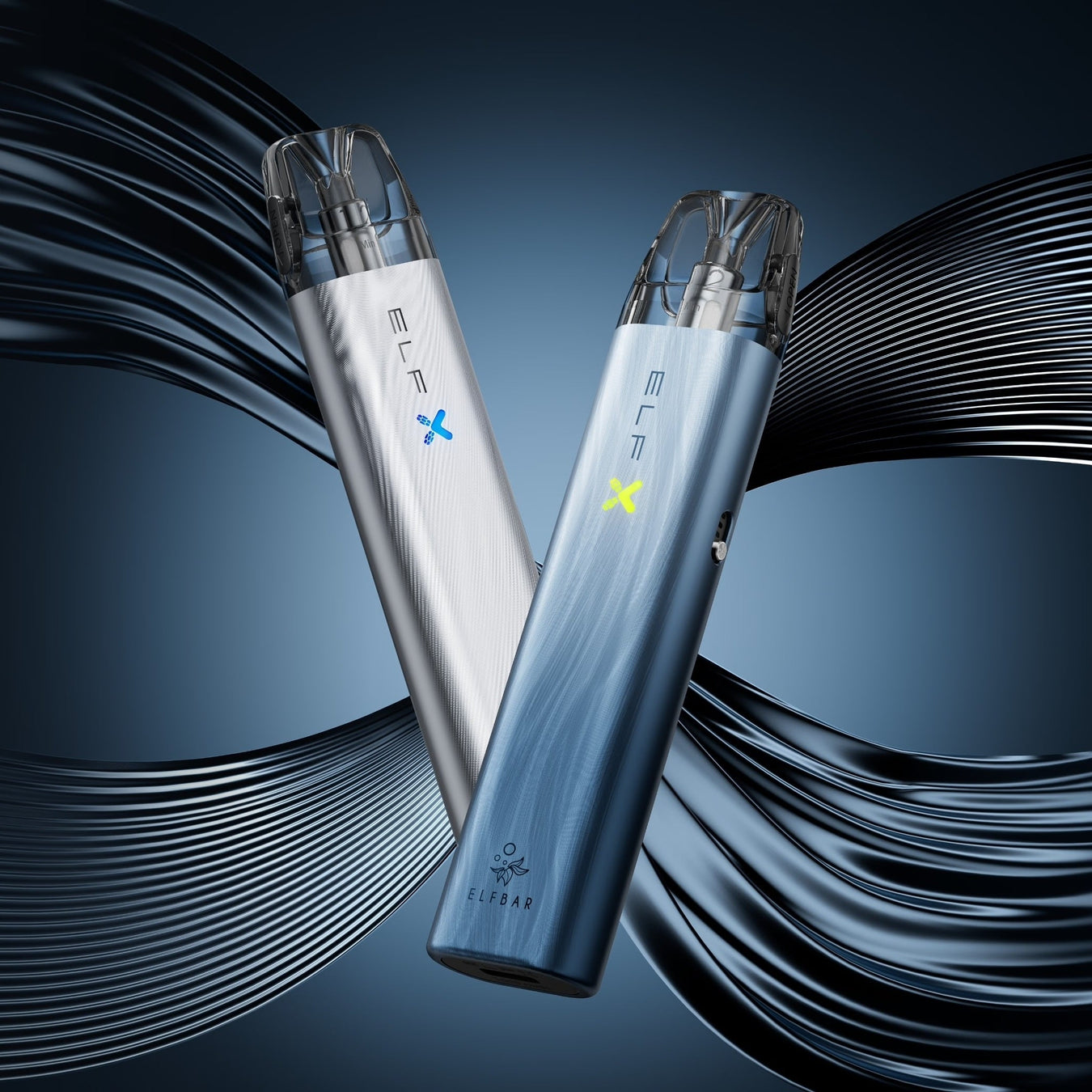
In this technical guide, we delve deep into how temperature control works in pod systems. We explain why room temperature resistance ("cold resistance") is the most important value for your setup, which materials are essential, and how modern devices like the
The physics behind the perfect move: How TC works
To master temperature control, we need to understand what's happening inside the pod. Unlike wattage mode, which delivers a constant power supply (regardless of whether there's e-liquid present or not), The TC mode works like a smart thermostat..
The principle is based on the Temperature coefficient of resistance (TCR). Certain metals predictably change their electrical resistance as they heat up. The chip in the battery holder measures this change in resistance thousands of times per second. If the wire reaches the set temperature limit (e.g., 210°C), the chip immediately reduces the power output.
Why is this important for pod users?
- No dry hits: If the wick runs dry, the coil temperature rises sharply. In TC mode, the chip detects this immediately and stops the firing ("Temp Protection"). before the cotton burns.
-
Consistent
Flavour : Longerpuffs They usually get hotter and more intense towards the end. TC keeps the temperature stable, so the first second tastes the same as the fifth. - Battery efficiency: Only as much energy is consumed as is needed to maintain the temperature.
Requirements: The right material
Not every pod is TC-compatible. The crucial factor is the material of the heating coil.
-
Stainless steel (SS316L): The gold standard for pod systems. Stainless steel is responsive,
Flavour Neutral and safe. It works in both wattage and TC modes. - Nickel (Ni200) & Titanium (Ti): These materials must They must be operated in TC mode, as they can form harmful oxides when overheated. However, they are rarely found in modern pod systems.
- Kanthal (FeCrAl) & Ni80: Most standard coils (including many mesh coils) are made of these alloys. Their resistance hardly changes with heat and are therefore not TC-compatible.
Expert warning: Many mesh coils consist of complex metal braids.. Our tests often show that these structures produce uneven temperature gradients. For true temperature control, we recommend simple round wires (single-strand SS316). If you prefer mesh, variable wattage (VW) mode is usually the more precise choice.

Step-by-step: TC setup for advanced users
If you have a device that supports TC (or are using an RBA pod with SS316 winding), follow this protocol for maximum precision.
1.The "Cold Resistance" is measured and locked.
This is the most common mistake: The resistance must be measured at room temperature.
- Insert the pod when it has completely cooled down.
- Read the resistance (e.g. 0.85 Ω).
- Locks (Curls) You can find this value in the menu.
- Why? A difference of just 0.05 Ω due to residual heat can cause the chip to completely miscalculate the temperature and ruin the vaping experience.
2. Adjust power and preheat
In TC mode, the wattage only serves as a "gas pedal" to reach the desired temperature.
- Rule of thumb for pods: Set the power (watts) about 10–20% higher than in normal watt mode, but don't overdo it.
- Soft Preheat: For small coil masses (like in 0.8 Ω pods), we recommend a gentle start-up. Too much power (hard preheat) can cause the coil to heat up faster than the e-liquid can withstand. Liquid can flow in.
3. Finding the sweet spot: Temperature ranges
Start conservatively.
- 180°C – 200°C: Ideal for fruity e-liquids and nicotine salts. Cool tones are preserved.
- 200°C – 230°C: The standard range for most flavors and dense vapor.
- Above 240°C: This is where the cotton wool could be damaged (the risk of a "dry hit" increases). According to the Federal Institute for Risk Assessment (BfR) Excessive heating of liquids produces increased amounts of thermal degradation products; therefore, keep temperatures within a moderate range.
The alternative: Smart Wattage & Mesh technology
Not everyone wants to study physics just to vape. That's where modern high-end pods come in. Devices like the
The fine mesh of the ELFX pods heats up extremely evenly and offers a huge surface area. Combined with a fast response time (instant activation in 0.1 seconds), the e-liquid is vaporized so efficiently that temperature fluctuations are minimized.
Comparison: Classic TC vs. Modern Smart Pod System
| feature | Classic TC setup (SS316) | Modern smart pod (z.B. ELFX Pro) |
|---|---|---|
| Protection against dry hits | Active (chip regulates) | Passive (through Wicking) & Mesh design |
| Very high (linear) | High (due to rapid saturation) | |
| Setup costs | High (lock resistance, TCR) | Low (Plug) & (Play) |
| Proneness to errors | High (with incorrect calibration) | Very low |
For users who want control but want to avoid the hassle, a device with adjustable power and a display is often the best compromise.
Common errors and solutions (troubleshooting)
Even with the best hardware, problems can occur. Here are solutions for scenarios we frequently observe in practice.
Problem 1: "Temp Protection" activates immediately
- Cause: The resistor was not locked at room temperature or the connection to the pod is poor.
- Solution: Remove the pod, clean the contacts (a cotton swab with a little isopropyl alcohol works wonders), let it cool down, and recalibrate. A deviation from >A 5% change in cold resistance often indicates a defective pod.
Problem 2: Weak steam despite high temperature setting
- Cause: The power (watts) is set too low, or the TCR value is incorrect for the material (e.g., SS304 setting for SS316 wire).
- Solution: Increase the wattage in the TC menu. The chip needs enough power to reach the target temperature.
Problem 3: Flavour flattens out
- Cause: "Vaper's Tongue" or coil wear.
-
Solution: Many try to compensate for this with higher temperatures. This is wrong. If the
Flavour If the sound quality decreases with the usual settings, the coil is clogged. Replace the pod.
Safety and quality: What you need to pay attention to
Whether using temperature control or wattage mode, the quality of the e-liquid and the hardware is crucial. In Germany, e-cigarettes are subject to strict regulations.
- TPD compliance: Make sure your pods and liquids meet the specifications of the EU Tobacco Products Directive (TPD) This guarantees, among other things, purity standards for ingredients.
- Certified tests: Reputable manufacturers have their evaporation technology manufactured according to standards such as the ISO 20768 Check to ensure that the emitted aerosols are consistent.
- Health: According to the Cochrane Library E-cigarettes are an effective means of quitting smoking. A well-adjusted temperature control system can facilitate this switch, as it minimizes the risk of coughing caused by overheating.
Summary: Precision meets enjoyment
Temperature control is a powerful tool for tech enthusiasts who want to leave nothing to chance. However, it requires an understanding of physics and the right hardware. For most vapers, modern, power-controlled pod systems like the [device name] offer [option/solution].
Frequently Asked Questions (FAQ)
Can I use any pod in TC mode? No. Most standard pods use Kanthal or Ni80 coils, which are not temperature controllable. You need coils made of stainless steel (SS316), nickel, or titanium.
Why does my mod ask "New Coil/Old Coil"? The device has detected a change in resistance. If you have inserted a new pod, confirm with "New". If you have only briefly removed the same pod, select "Old" to avoid affecting the calibration.
Is TC safer than wattage mode? Potentially yes, as it effectively prevents the formation of harmful substances due to overheated liquid (e.g., when the tank is empty).However, modern wattage devices with "Dry Burn Protection" offer similar protection.