Traveling with the Pod System: What you need to know
Planning a flight with your refillable pod system and wondering what's allowed in your hand luggage, how to prevent leaks, and what to consider regarding batteries? This guide summarizes the most important rules and offers tried-and-tested practical tips for stress-free travel with your vape.
1. Legal framework: What is allowed when traveling with a pod system?
1.1. Why rules for e-cigarettes exist on airplanes
Airlines treat pod systems similarly to other electronic devices containing batteries and liquids: the concerns are fire and leakage risks. The EU Tobacco Products Directive limits the amount of nicotine in the e-liquid to... 20 mg/ml and sets clear requirements for packaging and warning labels; these requirements are in force in Germany Tobacco Products Act (TabakerzG) implemented.
Important: The Tobacco Products Act also specifies a maximum tank size of 2 ml This is fixed for refillable systems. The typical size of pods you find in regular stores is based on this. Larger Disposable devices with several thousand
1.2. Where your pod system belongs in the aircraft
Most airlines base their decisions on international air security rules:
- E-cigarette/Pod system: belongs in Hand luggage, not in the checked baggage.
- Loose batteries (e.g. 18650, 21700): also exclusively in hand luggage and with poles covered.
- E-liquids and pods: They are treated like other liquids (usually the 100 ml rule in the bag).
The details are in your airline's terms and conditions of carriage; check these before every flight.
1.3. Tax and customs aspects of travel
Tobacco taxes may come into play as soon as you transport e-liquid across national borders. The German Tobacco Tax Act (TabakStG) lays a Tax per milliliter of liquid fixed, which will be gradually increased to 2026 €0.32 per ml is expected to rise.
a) Entry into Germany
- Private individuals are allowed to bring in quantities that are customary for their own use.
- Customs officials view products from third countries critically if they lack tax stamps or if packaging is not in German.
- The information portal zoll.de explains under what circumstances tobacco products are subject to additional taxation or confiscated.
b) Travel within the EU
While there are no customs controls in the traditional sense within the EU, national tax and consumer protection laws still apply. Therefore, please be aware of this. Purchase receipts and Original packaging with tax and warning information on.
2. Preparation: How to make your pod system travel-ready
2.1. Select device type and setup for on the go
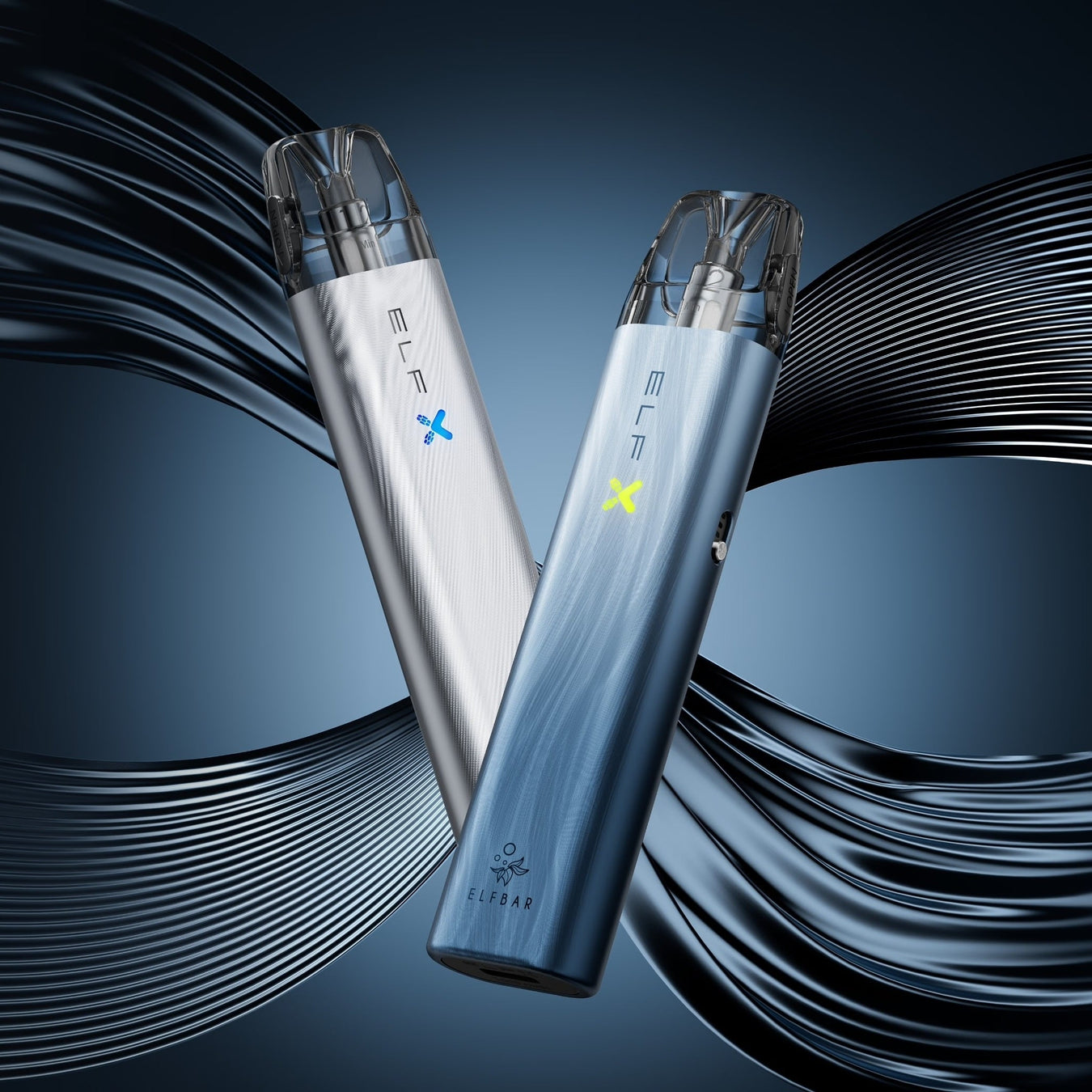
Compact pod systems with integrated electronics have proven their worth for travel. One example is the...
Here you will find a comprehensive guide to Vaping while traveling on trains, in hotels, and on airplanes.
When a more powerful battery makes sense:
- For long-haul flights or trade fair trips with limited charging options.
- If you are using MTL (mouth-to-lung) vaping all day and expect consistent performance.
2.2. Ideal fill level: Why 60–80% is the sweet spot
Experienced steamers and travel agents have been observing the same pattern for years: Thermal expansion is the main driver for leaking pods in the aircraft. If the cabin pressure in the aircraft increases, the liquid expands minimally – if the pod is filled to the brim, overpressure is created.
Practical experience shows:
- Pods that are on 60–80% filled, had about 80% fewer leaks as fully filled pods.
- Particularly sensitive are very thin liquids with a high PG (propylene glycol) content.
Specific recommendation:
- Fill your refillable pods the evening before or on the morning of your departure. approximately 3/4.
- Wipe away excess liquid from the pod and the e-liquid slot with a microfiber cloth.
- Carefully close the filling port.
2.3. Checklist: Packing the Pod System
The following list has proven useful in practice and significantly reduces typical travel problems:
| Point | What to do | Why it's important |
|---|---|---|
| 1 | Turn off the device or activate the lock function | Prevents accidental firing in the pocket |
| 2 | Fill pods only to 60–80% | Reduces leakage caused by pressure and temperature changes |
| 3 | Store pods with the mouthpiece facing upwards. | Minimizes the fluid pressure on the airflow |
| 4 | Place the pods in a hard, sealed box. | Protects against squeezing and leakage of liquid |
| 5 | Bring a spare pod or pre-filled pods. | Reserve in case of defects or |
| 6 | Store liquids in 100ml bags in your hand luggage. | Complies with airport security regulations |
| 7 | Batteries and power bank in hand luggage | A requirement of almost all airlines, added safety |
3. Practical advice on airplanes: How to prevent leaks and malfunctions
3.1. Pod handling during takeoff and landing
The critical moment is not cruising flight, but takeoff and landing, when pressure and temperature change rapidly. Three effective rules emerge from practical experience:
- Turn off or lock the device, as soon as you board the plane.
- Leave the pod in the device, but store it upright. – for example in a shirt pocket or a sturdy case.
- Do not pull, as long as the seatbelt signs are on; vaping is generally strictly prohibited on board.
Following this routine significantly reduces the likelihood of leaks and soiled bags.
3.2. Emergency kit for on the go
Many problems can be solved with just a few small items directly on the plane or at the gate. The following "travel toolkit" has proven useful:
- Microfiber cloth: to wipe away any spilled liquid.
- Small syringe or pipette (without needle): for clean refills to 60–80%.
- Replacement pod or pre-filled pod in original blister pack.
- USB-C cable and possibly a small power bank in hand luggage.
This allows, for example, 80–90% of typical travel cancellations (Dry hits, minor leaks, empty battery) fix directly.
3.3. Safety during battery transport
Lithium-ion batteries are a focus of air safety concerns because they can reach high temperatures in the event of a short circuit. This also applies to compact pod systems.
- Transport devices and batteries never loose in the pocket with keys or coins.
- Use Protective cases or vapor-proof cases.
- According to airline guidelines, power banks should generally be carried in the luggage compartment. Hand luggage.
The German Battery Act (BatteryFurthermore, retailers are obligated to take back used batteries. If you are planning longer stays, find out where you can properly dispose of defective devices and batteries at your destination.
4. Country-specific differences and documents
4.1. Why a nicotine-free backup pod makes sense
Although the EU Tobacco Products Directive sets uniform limits for nicotine and tank capacity, member states handle the use of e-cigarettes differently. Stricter countries or individual regions sometimes completely ban nicotine e-liquids, but tolerate others. nicotine-free Products.
Experienced travelers will do well with the following setup:
- Main device with nicotine pod, as long as this is permitted in the destination country.
- Nicotine-free backup pod, e.g. a
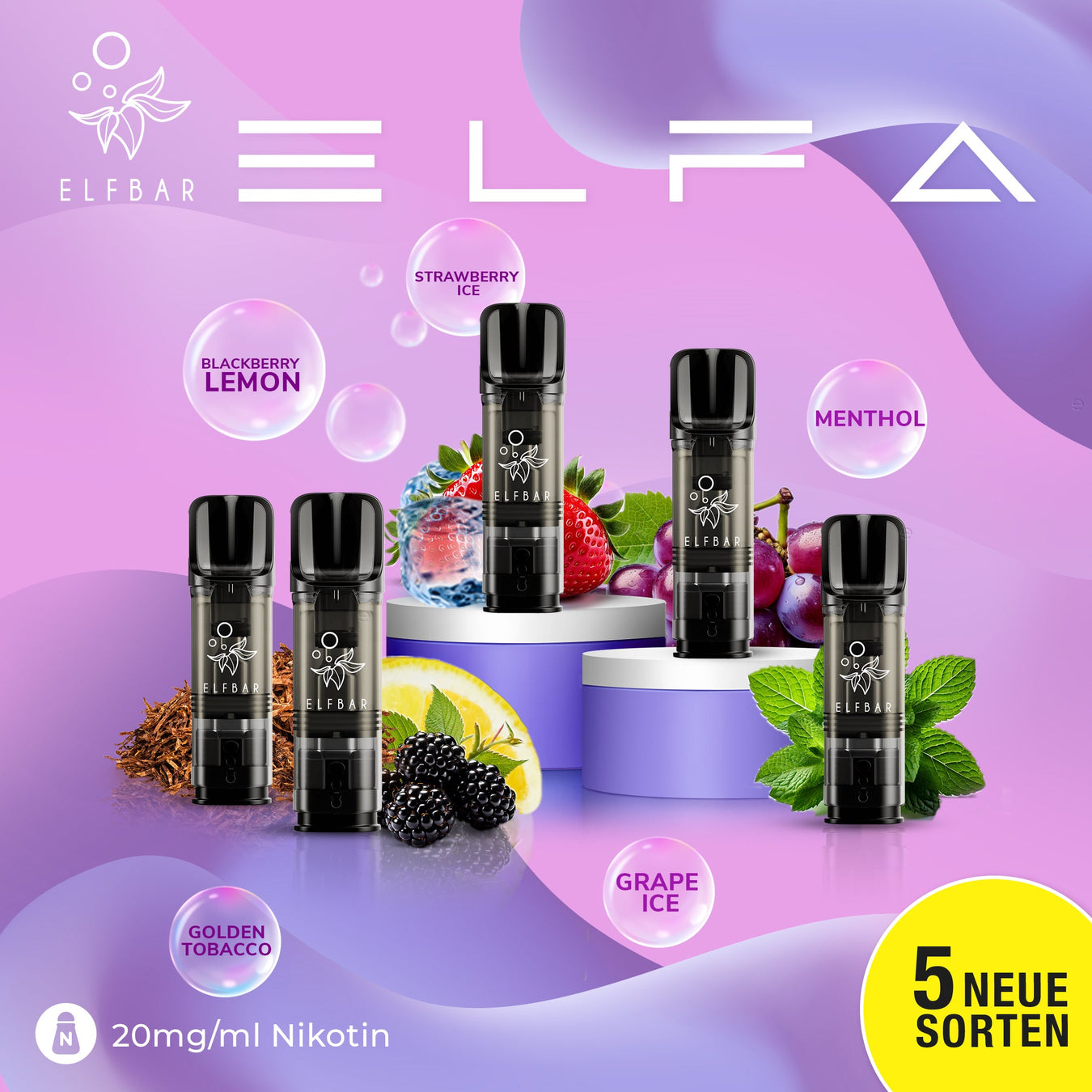
ELFA Prefilled Pod Apple Peach (nicotine free).
If you have to hand over your nicotine pod at the airport or during security checks, at least keep a functioning, nicotine-free setup.
4.2. Receipts, control symbols and warning notices
Two documents have proven useful when traveling:
- Proof of purchase (invoice, order confirmation) including date and dealer details.
- Original packaging including warnings, nicotine content and – if applicable – tax information.
This is particularly helpful in two situations:
- During inspections by customs authorities searching for illegally imported goods.
- Upon proof that the products are properly taxed and approved.
The industry report of the German e-cigarette trade (VdeHIt is estimated that the black market share has already reached significant double-digit percentages in some segments. The risk of inadvertently purchasing illegal goods is particularly high with products lacking German labeling.
4.3. Why “large” disposable devices are a risk
A common misconception is: "If I only use the device privately, large disposable vapes with several thousand [units of measurement] are not necessary."
According to the wording of the Tobacco Products Act But is that already the Placing on the market Products with tanks larger than 2 ml are prohibited – regardless of whether they are used privately. Devices containing significantly more liquid are frequently confiscated at airports and during targeted security checks.
For travelers, this means:
- Focus on refillable pods with a maximum filling volume of 2 ml.
- Pay attention to unambiguous Manufacturer identification, warnings and ingredient lists.
5. Typical mistakes and how to avoid them
5.1. Pre-departure checklist
A brief routine the evening before the trip prevents most problems:
- Clean the device (Wipe contact points and pod compartment dry).
- Check pods (Coil not worn out, no cracks in the pod).
- Fill pods only to 60–80% and store the mouthpiece facing upwards.
- Charge the battery to at least 70–80%.
- Pack a spare pod and possibly a nicotine-free pod..
- Place the liquid bottles in the 1-liter bag..
- Store receipts and packaging in the travel folder..
5.2. Common Misunderstandings
Myth 1: "E-cigarettes are better protected in checked baggage."
In fact, almost all airlines prohibit packing e-cigarettes in checked baggage because damaged batteries can overheat unnoticed in the cargo hold. Devices must be carried in hand luggage.
Myth 2: "When the pod is full, no air can get in – and therefore no liquid can get out."
In practice, the opposite is true: Fully filled pods are much more prone to leaking under pressure fluctuations because the expanding liquid has no "buffer space." A 60–80% fill level is a proven compromise.
Myth 3: "Without tax stamps, it's only half as expensive, nobody will notice."
The industry report of VdeH This points out that the German treasury is already losing hundreds of millions of euros due to untaxed e-cigarette products. Customs authorities are reacting accordingly. Anyone traveling with untaxed goods risks fines and confiscation.
6. Device selection for frequent travelers
6.1. What frequent travelers should consider when choosing a pod system
Conversations with frequent travelers and travel retailers reveal some must-have features:
- Integrated battery with 500–850 mAh: Enough time for a travel day.
- USB-C fast charging: Reloading during a short layover.
- Mesh coils: for uniform evaporation and constant
Flavour , even with frequent pulling. - Slim design and low weight: Fits in a shirt pocket or small case.
- Simple locking function: to prevent unintentional firing during transport.
A basic device like the
6.2. Comparison: Refillable pods vs. pre-filled pods when traveling
| feature | Refillable pods | Pre-filled pods |
|---|---|---|
| Flexibility in the liquid | Very high | Medium (predetermined varieties) |
| Effort required for refilling | Means (syringe/pipette recommended) | Very low |
| Risk of spills during filling | Higher | Lower |
| Packaging waste | Less (pod only) | A little more (blister pack, cardboard box) |
| Planning for travel | Flexible when buying additional liquid | Plannable if you pack enough pods |
In practice, many frequent travelers find a combination works well: a refillable pod for everyday use at their destination and a small supply of pre-filled pods as a clean reserve in their hand luggage.
7.Disposal and environmental aspects of travel
7.1. What to do with empty pods and defective devices?
Empty pods and devices do not belong in the regular hotel trash can. They contain electronics and usually a small battery.
In Germany, according to Battery Retailers accept used batteries free of charge. Many supermarkets and electronics stores offer collection boxes.
Similar principles apply abroad, even if the collection points are organized differently. Refer to the following guidelines:
- Never throw batteries in the regular trash.
- If possible, cover metal contacts with adhesive tape.
- Look for municipal collection points for small electrical appliances or batteries.
7.2. Why WEEE registration is a sign of trust
In Germany, manufacturers and importers of electronic devices must be registered in the directory of the "Stiftung EAR" (EAR Foundation). This information is stored in the database of the EAR Foundation You can check whether a brand name is properly registered. This is a strong indication that the supplier takes their disposal obligations seriously.
For travelers, this means that products from registered brands are generally better documented, have reliable warnings and clear disposal routes – even if you leave the device behind in your holiday destination at some point.
8. Key findings at a glance
- Law and Security: Pod systems must be carried in hand luggage; tanks larger than 2 ml are not permitted under German law.
- Leakage prevention: Only fill pods to 60–80%, Store them with the mouthpiece facing upwards and in a sturdy box.
- Battery and transport: Switch off or lock devices; transport batteries and power banks securely in hand luggage.
- Country-specific information: A nicotine-free backup pod and clean receipts increase your flexibility at borders and during checks.
- Device selection: Compact pod systems with integrated battery, mesh coils and USB-C are particularly suitable for frequent travelers.
- Environment: Use collection points and retailer take-back systems for empty pods and devices; WEEE registration is an important quality indicator.
With this combination of rules, checklists and practical tips, you can take your refillable pod system with you on your travels without worry – no wet bags, empty batteries or hassle at customs.
Note/Disclaimer:
This article is for informational purposes only and does not constitute legal or medical advice. Legal regulations and airline policies are subject to change and vary by country and airline. Before each trip, check your airline's current rules as well as the laws of your destination and transit countries, and seek advice from qualified professionals if you have any doubts. The use of products containing nicotine is intended for adult users only.