Choosing the right pod system for beginners
Getting started: Why a pod system is ideal for beginners
Do you want to move away from traditional cigarettes and are looking for an easy way to get started with vaping? Refillable pod systems are one of the simplest solutions: compact, lightweight, low-maintenance, and with clear limits due to EU and German law (e.g., max. 2 ml filling volume and 20 mg/ml nicotine according to EU-TPD).
This guide will show you step by step how to Choosing the right pod system for beginners – including battery size, handling, nicotine strength, and practical examples for specific device classes. Goal: After reading this, you will be able to make an informed purchase decision and avoid typical beginner mistakes.
Find out more here about Typical beginner mistakes when vaping, to avoid problems when starting.
Here you will find instructions on how to... How to properly set up a rechargeable vape.
1. How do refillable pod systems actually work?
1.1 The most important components explained briefly
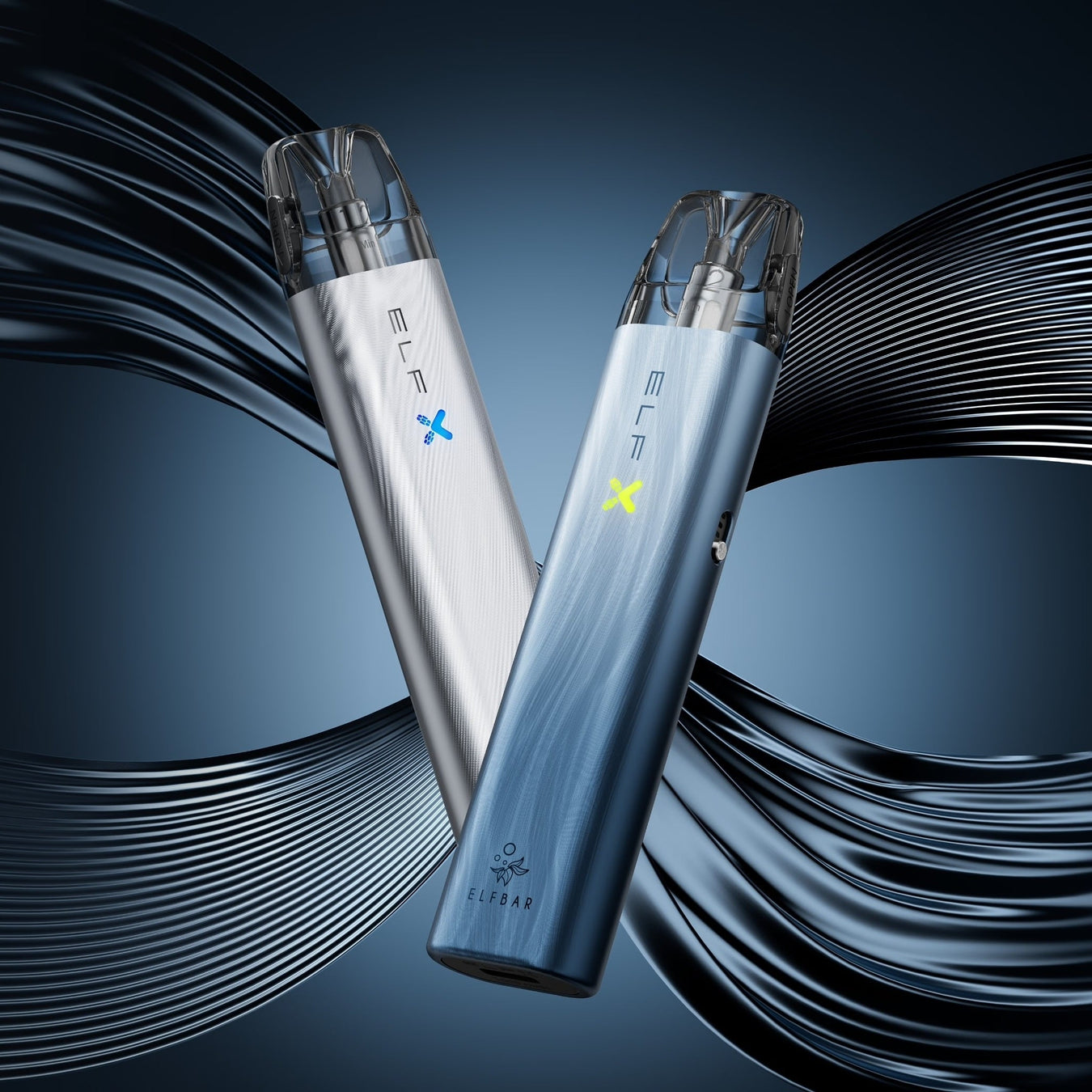
A pod system essentially consists of:
- Base unit (battery) – supplies the energy, charges via USB-C, and usually contains the electronics for protection functions.
- Pod (tank) – this is where the e-liquid is located; depending on the system, it can be refilled or is pre-filled.
- atomizer head/coil – heats the liquid and produces the vapor. Many modern pods use Mesh coils, a fine-mesh metal fabric for even heat and intense performance
Flavour .
Refillable pod systems for beginners These parts are combined in such a way that you have to worry about as little as possible: plug in the pod, pull, done.
1.2 Legal framework: Why 2 ml and 20 mg/ml are important
The EU Tobacco Products Directive (TPD) limits the filling quantity of cartridges and tanks to 2 ml and the nicotine strength 20 mg/ml. This is intended to prevent beginners from unintentionally ingesting extremely high amounts of nicotine.
Germany sets these requirements in Tobacco Products Act um. There you will find, among other things:
- the 2 ml limit for refillable tanks,
- Bans on certain ingredients,
- and the prohibition of giving away nicotine-containing products for free.
For you as a buyer, this means: A reputable Pod System These limits apply to the German market. Devices with extremely large fill volumes or a conspicuously high "puff count" are a warning sign that they are not intended for the legal market.
1.3 Myth vs. Reality: "The bigger, the better"
A common misconception is: More liquid volume and higher nicotine content are automatically better., because it needs to be refilled "less often". The data from the DEBRA study However, they show that most adult users control their consumption level more through the frequency of
Experience shows that a compact, TPD-compliant pod system is sufficient. most transfer passengers completely exhausted to meet their needs. Anyone attempting to circumvent this limit through illegal imports risks, according to... Customs information not only tax violations, but also product safety violations.
2. Battery capacity and runtime: How many mAh do you really need?
The battery capacity is measured in mAh (milliampere-hours) This is specified. It determines how long your device will last before you need to recharge it.
Our experience:
- 500 mAh are well suited for light to moderate daily use (e.g. some
puffs per hour). - approx. 850 mAh They are better suited to more intensive users who frequently use their device throughout the day.
2.1 Decision check: Which battery type suits your everyday life?
| User type | Daily profile | Recommended battery capacity | Practical example |
|---|---|---|---|
| Occasional vaper | A couple | approx. 500 mAh | Device briefly connected to USB-C in the evening, no bottleneck during the day |
| Switchers with regular needs | Several | 500–850 mAh | A full charge once a day is sufficient in most cases. |
| Heavy prior consumption | Very frequent use of the device, comparable to >20 cigarettes daily | 850 mAh and more | A backup pod or power bank is useful to avoid dropping below 20%. |
What's important is not just the capacity, but also... Your charging behavior. Ideally, fully charge the battery before first use and avoid regularly draining it completely. In practice, you will significantly extend its lifespan if you do this below approximately 20% remaining capacity reload.
2.2 Example: 500 mAh vs. 850 mAh in everyday use
User tests show that a typical pod system with a 500 mAh battery allows a moderate switcher to about a full day Usage at 9–12 W output power. An 850 mAh device of the same power class lasts longer in comparable scenarios. approximately 60–70% longer through.
Nevertheless, many beginners deliberately choose smaller devices because they are more compact and less conspicuous to carry. The crucial question, therefore, is whether you prefer an extra charge each day to carrying a slightly larger device in your bag.
3. Pods, coils and Flavour What makes a good beginner pod?
3.1 Mesh coils: Why they are useful for beginners
Many modern pod systems rely on Mesh coils. Instead of a single wire, a fine metal grid heats the Liquid. The advantages in everyday life:
- even heat distribution,
- more intense, “rounder”
Flavour , - Usually gentler vapor production at the same power range.
In practice, mesh coils deliver their full potential with moderate use. best
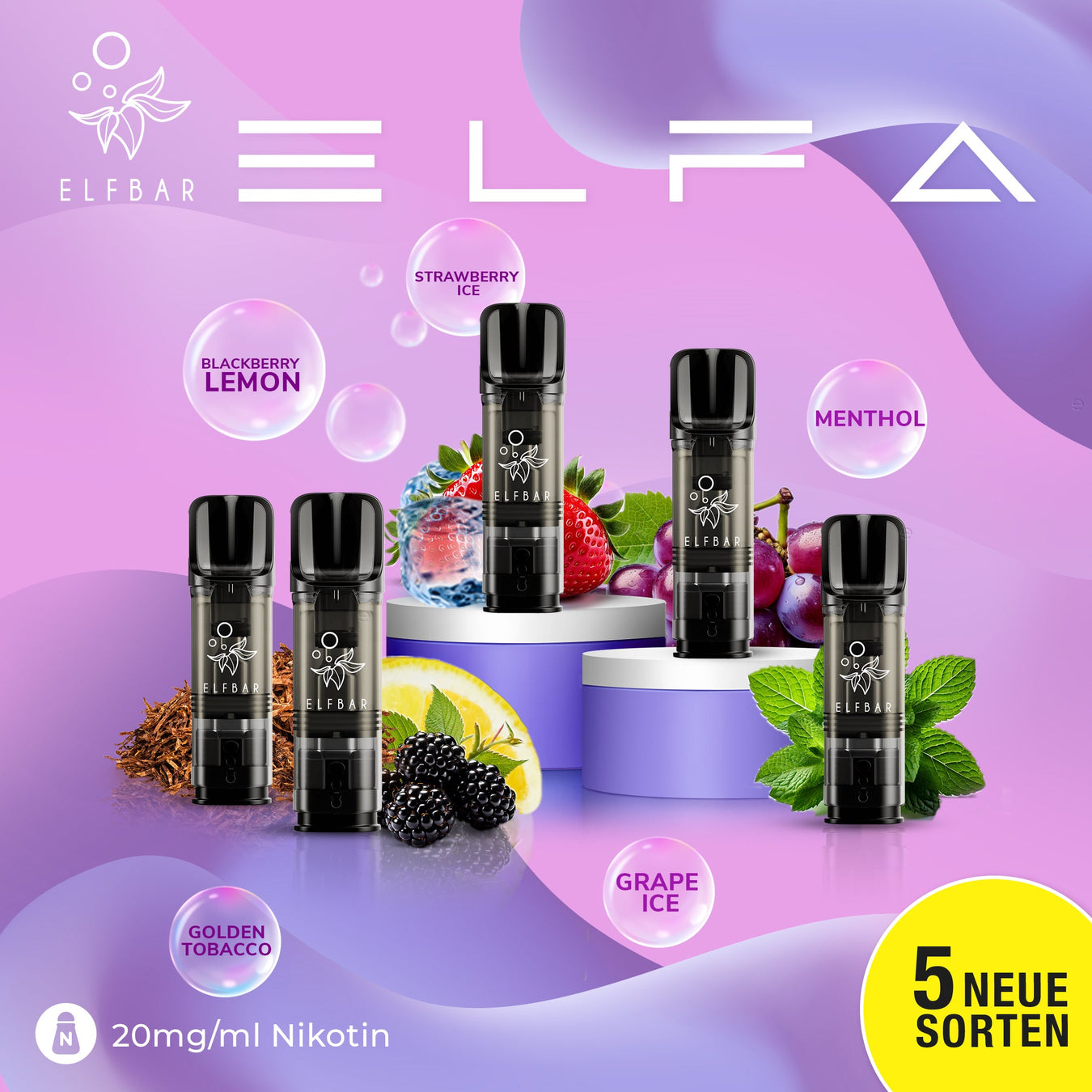
3.2 Pod types: pre-filled vs.refillable
Especially for beginners, the question arises: Pre-made pods or refillable?
| Pod type | Advantages | Disadvantages | Who is it suitable for? |
|---|---|---|---|
| Pre-filled pods | No refilling required, clean handling, optimally matched to the device | Users who desire maximum simplicity | |
| Refillable pods | Wide selection of e-liquids, cheaper in the long term, flexible nicotine content | A few more steps, risk of overfilling | Users who already have some experience or who specifically want to use certain liquids |
Many users switching from e-cigarettes start with pre-filled pods and later switch to refillable versions when they get the hang of it.
3.3 Coil lifespan: How to avoid costly mistakes
A common beginner mistake is this Under-priming: The pod is filled, used immediately – and the cotton around the coil is not yet completely saturated with e-liquid. The result is... “Dry Hits” (scratchy-burnt draw) and a significantly reduced coil lifespan.
Here's how to proceed correctly:
- Fill the pod to the mark, but not beyond.
- Pod Let it rest for 5–10 minutes, so that the cotton wool can soak up the moisture.
- Before you pull normally, 3–5 very gentle
puffs without great "strength" take.
In practice, this approach extends the average service life of the coil by 30–40%, because the cotton wool is evenly moistened from the start.
4. Choosing the nicotine strength: How much is sensible for beginners?
4.1 Framework through EU law
The EU TPD limits the nicotine concentration in liquids and pods to 20 mg/ml. This limit is chosen so that the nicotine peak in the blood remains in similar ranges to that of a classic cigarette, without exceeding them.
Important: This upper limit is not a "target value", but a Maximum limit. Many people switching to electric vehicles find driving with significantly lower values more relaxed.
4.2 Orientation based on previous consumption
A practical classification for nicotine salts, which are used in many pod systems, looks like this:
- approx. 10–15 mg/ml: A common starting point for switchers with light to moderate previous consumption.
- near 20 mg/ml: More suitable for heavy previous consumers who, for example, still feel a strong need at night.
In practice, it has proven effective to base the nicotine strength less on the "scratchy feeling" in the throat (throat hit) and primarily on whether:
- consumption does not get out of hand (device is constantly attached to the mouth),
- and the desire for previous habits decreases significantly over the course of the day.
4.3 What official bodies say about risks
The health risks associated with electronic cigarettes are being intensely debated. Federal Institute for Risk Assessment In its statements on e-cigarettes, it points out that the pollutant profile of the aerosols is "significantly reduced" compared to tobacco smoke, but at the same time makes it clear that long-term data is limited and that use should by no means be considered harmless. According to the assessment of BfR are e-cigarettes primarily for adult smokers, Those who switch completely are relevant.
Systematic overviews, such as those found in the Cochrane Library to be published, they come to the conclusion that Using nicotine-containing e-cigarettes increases the chances of successfully quitting smoking compared to traditional nicotine replacement products., if users consistently stick with the alternative product. However, these results refer to study-based settings, not to all forms of consumption.
5. Operation, Display & Protective features: What beginners really need
5.1 Draw-activated firing vs. fire button
Beginner-friendly pod systems either feature:
- one Automatic train control: Steam starts automatically as soon as you inhale from the mouthpiece.
- or a Fire button, which you hold down while pulling.
For many switchers, the automatic draw mechanism is more intuitive because it mimics the feeling of a traditional cigarette. It's important that you start with this. Don't pull too aggressively: Too much
5.2 Simple display – yes or no?
A small display can help beginners because it:
- the Battery level,
- the current power output in watts,
- and partly the Resistance of the inserted coil displays.
For absolute beginners, a colored LED indicator for battery status is often sufficient. However, those who want to better understand their usage patterns will benefit from a simple display with clearly readable numbers, for example, on a device with an 850 mAh battery and performance ranges of 9–12 W for classic pods and 15–18 W for more powerful versions.
5.3 Protective features you should pay attention to
Modern pod systems offer several safety features, e.g.:
- Short-circuit protection (Device switches off in case of defect),
- Overheating protection,
- Time limit per move (e.g. max. 8–10 seconds),
- Protection against deep discharge of the battery.
Such functions are based on industry standards such as the testing standard. ISO 20768, which defines, among other things, test conditions for e-cigarette aerosols. Devices that are tested by independent laboratories according to ISO-based procedures (e.g., by ASL Analytic Serv
6. Practical buying decision: Step-by-step to the right pod system
6.1 Decision checklist for your first purchase
Use this list before you click "Buy":
-
Check legal compliance
– Filling volume max. 2 ml per pod?
– Maximum nicotine strength 20 mg/ml?
– Reputable retailer in the German market, including age verification (e.g. via DHL Ident-Check according to DHL)? -
Select battery capacity
– Occasional users → approx. 500 mAh is sufficient.
– Heavier users → more likely towards 850 mAh. -
Determine pod type
– Maximum simplicity → pre-filled pods.
– More choices & Flexible nicotine content → refillable pods. -
Set nicotine strength
– Light consumption so far → usually 10–15 mg is a sensible starting point.
– Very heavy consumption → start in the upper permissible range. -
Review operating concept
– Automatic pull-start if you prefer “pull and go”.
– Fire button, if you deliberately want more control. -
Quality & Test reports
– Are there any indications of tests according to ISO standards or analyses by accredited laboratories such as ASL Analytic Service or toxicological assessments by institutes such as Dartsch Scientific?
6.2 Comparison of specific beginner setups
To make this more tangible, here are two typical beginner scenarios:
Scenario A – as small and simple as possible
- approx. 500 mAh battery, USB-C charging.
- Pre-filled mesh pods (2 ml, fixed nicotine strength, e.g. 20 mg/ml).
- No settings, just automatic train control.
Suitable for: Users who want to "unpack and get started", rarely use more than one pod per day and especially value a compact size.
Scenario B – a little more control and reserves
- Approximately 850 mAh battery with display.
- Compatible with pre-filled and refillable pods (e.g., 1.1 Ω standard pods and 0.8 Ω "Turbo" pods for a little more vapor).
- Displays battery level, power output, and charging progress.
Suitable for: Users who know they will use their device a lot, but don't want to deal with complex menus, but only want to read basic values.
One aspect that positively surprises many beginners: In both scenarios, the daily amount of e-liquid is typically in the range of 2–4 ml, which, in the case of TPD-compliant pods, involves a change of 1–2 pods per day This corresponds to significantly less than many initially expected.
6.3 Identifying legal products and avoiding fakes
User reports on review portals and forums show that problems such as leaking devices, "chemical"
How to recognize reputable products:
- Clear information on nicotine strength, ingredients and manufacturer.
- Tax-compliant products are subject to excise duty according to Tobacco Tax Act Extremely cheap imported goods without proper labeling are a warning sign.
- Opportunity to Authenticity check, e.g. via online verification codes, as with many brands via their own verification portals (e.g.
Elfbar Global Verify).
However, those who purchase goods without tax labeling or from dubious sources risk not only a loss of quality but also legal consequences and support a market that is not bound by youth protection or environmental regulations.
7. Typical beginner mistakes – and how to avoid them
7.1 Incorrect liquid for the pod system
A classic mistake is the combination of high VG-heavy liquids (very viscous) with a low-power MTL pod (Mouth-to-lung, i.e., inhaling like a cigarette). The result is wicking problems, a "dry" draw.
Better: For low-wattage MTL pods, liquids with a balanced viscosity (e.g., 50/50 blends) are suitable. If you are unsure, refer to the manufacturer's recommendations.
7.2 Too strong puffs at the beginning
Many people switching from vaping initially inhale just as intensely with a pod system as with a traditional cigarette. However, pod systems operate with a different airflow and lower temperature. Aggressive
- Draw liquid into the air channel (it bubbles or squirts),
- Overloading the coil and leading to faster wear.
Solution: Especially with new pods, the first 10-15
7.3 Storing pods incorrectly
Filled pods belong not In direct sunlight, on a radiator, or in a car during the summer heat. High temperatures cause flavorings and nicotine to break down faster and promote condensation – the
A practical rule of thumb: Store pods similarly to sensitive food products – in a cool, dry place, protected from direct sunlight.
8. Environment, Disposal and Responsibility
Pod systems contain electronics and usually a permanently installed battery. Therefore, empty base units should be replaced at the end of their lifespan. not in household waste.
After the German Battery Act Retailers are obligated to take back used batteries free of charge. (See the foundation's directory.) EAR You can check whether a manufacturer is properly registered for waste electrical and electronic equipment (WEEE).
Refillable pod systems generally have a smaller waste footprint per use than disposable products because you only need to buy replacement pods and e-liquids instead of disposing of entire devices. Properly returning old devices further reduces environmental impact.
Key insights for your election
- Compliance with regulations first: Ensure compliance with TPD and Tobacco Products Act (2 ml, 20 mg/ml, clear labeling).
- Tailor battery size to everyday use: Approximately 500 mAh for light use, 850 mAh for more intensive use.
- Mesh coils give
Flavour , but need care: Proper priming (wait 5–10 minutes, gentle start)puffs ) noticeably extends the lifespan. - Choose nicotine strength according to your cravings, not the maximum value: 10–15 mg is a sensible starting point for many; higher strengths only in cases of very heavy previous consumption.
- Avoid common mistakes: No excessively thick liquid, no excessive amounts.
puffs Initially, store the pods in a cool, dry place. - Keeping the environment and integrity in mind: Use legal channels, pay attention to tax identification numbers and take-back systems.
If you take these points into account, you will very likely find a pod system that reliably accompanies your everyday life and facilitates the switch to a significantly reduced-pollutant alternative, in line with the assessments of BfR and the studies in Cochrane Library supported – without overwhelming you with unnecessary technology.
FAQ: Frequently asked questions about pod systems for beginners
How long does a pod last before I need to change it?
With moderate use, mesh pods typically provide 7–14 days of good battery life.
Is a 500 mAh battery sufficient for a whole day?
For many switchers with moderate consumption, yes. If you consistently vape very frequently, a larger device or intermediate charging is recommended.
Should I start directly with a maximum dose of 20 mg/ml?
Not necessarily.More important than the maximum dose is that your cravings decrease steadily without you having to keep the device in your mouth constantly. Many people have more success starting in the 10–15 mg range.
Are e-cigarettes harmless?
No. Official bodies such as the BfR While they see a significantly reduced pollutant profile compared to tobacco smoke, they point to remaining risks and a lack of long-term data. E-cigarettes are an alternative for adult smokers, not a risk-free lifestyle product.
What do I do if my pod is gurgling or spitting?
Reduce your draw strength, check if the pod is overfilled, and wipe excess e-liquid from the mouthpiece. If that doesn't help, you may need to replace the coil.
Note: This article is for informational purposes only and does not replace medical advice. If you have pre-existing medical conditions, are taking medication, or are unsure whether using a pod system is suitable for you, please consult a doctor or qualified healthcare professional.