Find the right nicotine strength for your pod system
Finding the right nicotine strength for your pod system
Nicotine strength is the most important factor when switching from cigarettes to a refillable pod system. If the concentration is too low, you'll experience intense cravings for cigarettes or find yourself constantly puffing on the device. If it's too high, you'll feel unwell, nauseous, or get headaches.
This guide provides a practical roadmap: from assessing your current cigarette consumption and understanding the specifics of nicotine salts to offering concrete mg/ml recommendations for typical smoker types. The focus is on adults switching from cigarettes to e-cigarettes who use a regulated, refillable pod system in the EU.
1. Legal framework: Which nicotine strengths are actually permitted?
Before discussing recommendations, it is important to understand the limits set by the legislator.
1.1 Upper limit 20 mg/ml in the EU
The European Tobacco Products Directive stipulates that refillable e-liquids and nicotine-containing pods may contain a maximum of 20 mg/ml of nicotine. This limit is legally binding in Germany under the Tobacco Products Act (TabakerzG). The directive states that nicotine-containing liquids may have a nicotine concentration of no more than 20 mg/ml in order to... Abuse and overdoses to limit, while enabling adult smokers to receive adequate nicotine replacement, see EU TPD.
This means that products advertised with concentrations of 25, 40, or even more mg/ml are not permitted in regular German retail outlets. If you encounter such offers, you are very likely dealing with the grey or black market.
1.2 Fill quantity restrictions and tax
The BMEL Tobacco Products Act It also limits the filling quantity of refillable tanks in the EU to 2 ml and of refill containers to 10 ml. Large-volume Disposable devices with several thousand
In parallel, the Tobacco Tax Act (TabakStG), Since 2022, a special excise tax has been levied on e-cigarette liquids, which increases gradually (e.g., from €0.16/ml to €0.32/ml). This explains why reputable, taxed products are more expensive than supposed "bargain offers"—these are often untaxed and therefore illegal.
Practical relevance:
- Pay attention to products that are correctly declared for tax purposes: The higher price often reflects the nicotine tax.
- Ignore offers with more than 20 mg/ml nicotine or huge fill quantities – they violate EU and German law and are often accompanied by a lack of safety and quality controls.
2. Basics: How does nicotine work in the pod system?
2.1 Nicotine intake: Cigarette vs. Pod system
Traditional cigarettes deliver nicotine very quickly in high concentration. Many heavy smokers thus reach their target nicotine levels. 1-2 mg nicotine per cigarette. With pod systems, the nicotine dose per puff depends on several factors:
- Nicotine concentration in the liquid (mg/ml)
- Traction technology: MTL (Mouth-to-Lung, cigarette-like) vs. DL (Direct-Lung)
- Coil resistance and power (Watt)
- Duration and frequency of
puffs
Standardized aerosol tests according to ISO 20768 For example, they work with defined puff volumes (e.g., 55 ml per puff, 3 seconds) and intervals. This shows that even small changes in puff length or device settings significantly alter the nicotine dose per puff.In practice, pod systems show fluctuations of ±20–30% in the amount of nicotine absorbed, depending on how "heartily" someone inhales.
2.2 Nicotine salt vs. freebase – what does that mean for the strength?
Modern pod systems usually come with Nicotine salts (Nic Salts) for use. In this process, the nicotine is bound to an acid, lowering the pH value of the liquid. This has three consequences:
- Gentler train: High nicotine concentrations (e.g. 18–20 mg/ml) are significantly less scratchy in the throat than classic “freebase” nicotine.
- Faster recording: Many users report, and laboratory studies show, that nic salts work almost as quickly as a cigarette, which is important for switching.
- More stable perception: The "nicotine kick" is more controlled, which reduces feelings of overdose as long as one stays within the legal range of up to 20 mg/ml.
For you, this means: With nicotine salt, you can use higher mg/ml, especially in tight MTL pods, without your throat feeling scratchy – ideal if you are used to smoking many cigarettes.
2.3 Puff compensation: A typical stumbling block when switching
A common mistake during the transition is the following situation:
- You choose a liquid with, for example, 6 mg/ml.
- After a short time, you realize that the cigarette is missing.
- They start pulling for much longer and more frequently.
- The device gets warm, the
Flavour tips into the "burnt".
What's happening here is Puff compensation: Your body demands the familiar dose of nicotine, you try to get it through more
Step 1: Realistically assess your current cigarette consumption
To find the right nicotine strength, a simple but very reliable approach has proven effective: Start with your current cigarette consumption and then adjust accordingly.
3.1 Basic heuristic based on cigarettes per day
The following table is based on experience from specialist shops and advice on switching devices.
| Smoke profile per day | Typical target with pod system (Nic Salt) | First guideline value in mg/ml* |
|---|---|---|
| > 20 cigarettes | heavy smoker, high need | 18–20 mg/ml |
| 10–20 cigarettes | medium smoker | 12–18 mg/ml |
| < 10 cigarettes | occasional smoker | 6–12 mg/ml |
| Only rarely now | occasional vaping, "social vaping" | 0–6 mg/ml |
*Applies to tight MTL pod systems with nicotine salt.
These values are starting points, not rigid guidelines. It's important that you consciously observe how well the chosen strength replaces your cigarettes during the first 1-2 weeks.
3.2 Three typical career changer profiles from practice
Case 1: Heavy smokers (25–30 cigarettes/day)
A user who had been smoking strong cigarettes for years started with an MTL pod and 20 mg/ml nicotine salt. After a few days, he reported that he was able to switch completely to the pod system without experiencing any major withdrawal symptoms. After a month, he reduced the nicotine strength to 18 mg/ml without any increase in his risk of relapse.
Case 2: Average smoker (15 cigarettes/day)
One user chooses 12 mg/ml. During the first week, she still smokes several cigarettes. After switching to 16–18 mg/ml, the strong morning cravings disappear, and after two weeks she replaces all cigarettes with the pod system.
Case 3: Occasional smoker (5 cigarettes/day)
Someone who mainly smokes when going out starts with 6 mg/ml. This is sufficient to cover typical situations without creating a constant need to vape in everyday life. After a few weeks, they switch to 3 mg/ml and finally to 0 mg/ml.
Step 2: Consider the pod system, airflow, and coil.
Not every pod system "feels" the same, even with the same mg/ml dosage. Two technical factors are crucial: Airflow and Coil resistance.
4.1 MTL vs. DL – why the inhalation style influences nicotine strength
- MTL (Mouth-to-Lung): The draw is tighter, similar to a cigarette. The air volume per draw is smaller, the vapor production moderate, and the nicotine density per ml of vapor relatively high.
- DL (Direct Lung): Very open draw directly into the lungs. Large vapor volume, significantly more air – the nicotine density per ml of vapor is lower.
For MTL pods, this is usually sufficient. a lower nicotine strength, to achieve the same effect that you would only get with significantly higher mg/ml in a DL setup. For those switching from traditional vaping, an MTL pod is therefore the obvious, controlled choice.
4.2 Coil resistance and power
The coil resistance (in ohms) and the set power (watts) determine how much liquid is vaporized per puff.
- Higher resistance (e.g. 1.0–1.2 Ω) and low power (9–12 W): Ideal for nicotine salt with 12–20 mg/ml, cigarette-like draw, economical consumption.
- Low resistance (e.g. 0.6–0.8 Ω) and higher power (15–18 W): more steam, more intense
Flavour ; often, switchers here tend to use 6–12 mg/ml because a lot of liquid evaporates in a short time.
For example, when using a pod system with 1.1-ohm pods at 9–12 watts, users achieve a very stable saturation in practice with 12–18 mg/ml nicotine salt, without overheating or excessive e-liquid consumption. With 0.8-ohm pods at 15–18 watts, many prefer 6–12 mg/ml to compensate for the higher vapor production.
4.3 How to use your device appropriately
Two setups have proven effective for adult switchers:
-
Classic switch (cigarette → pod):
- MTL pod with approximately 1.0–1.2 Ω
- Nicotine salt 12–20 mg/ml
- Firm, cigarette-like draw
-
Downgrade after successful transition:
- Possibly switch to a slightly lower resistance (0.8 Ω) with a little more power.
- Reduction of nicotine strength to 6–12 mg/ml
It's important that the pod and e-liquid are compatible. Always use pods designed for the resistance and power range of your device, and only fill them with e-liquids whose nicotine and VG ratio are suitable.
Step 3: Test and fine-tune your nicotine strength
Even the best chart can't replace your own perception. What matters is how well the chosen nicotine strength replaces cigarettes in your daily life.
5.1 Two-week check: Does the pod system replace your cigarettes?
A simple self-test over 1-2 weeks has proven effective:
-
Choose starting point
Choose your starting strength according to the table in section 3. -
Cigarettes count
Note how many cigarettes you smoked before switching and how many remain during the test phase. -
Rate craving and satisfaction
Give yourself a daily grade (1–6) for:- Urge for a "real" cigarette
- Satisfaction immediately after vaping
-
Testing typical situations
Test how well the pod system works in your “critical” situations: in the morning after getting up, after eating, during breaks, and during stressful moments.
If you have replaced at least 80% of your cigarettes after two weeks and cravings remain at a low level (grade 1–2), your nicotine strength is well chosen.
5.2 When you should increase
One Increase by 3–6 mg/ml This is useful if you observe the following patterns:
- They still regularly reach for a cigarette, even though they actually want to switch.
- They pull on their pod very frequently or for very long periods of time.
- The device gets warm, the
Flavour Occasionally it turns into something burnt.
In such cases, experience shows that a moderate increase in nicotine strength leads to a significant decrease in cigarette consumption and a normalization of vaping behavior in 70–80% of cases.
5.3 When you should reduce
You should have a reduction think about it when:
- They after a few
puffs becomes dizzy or restless. - You feel "overdosed" (nausea, palpitations, headaches) – without any other cause.
- They vape significantly more than they previously smoked, even though they cope well with stress.
Then reduce the nicotine strength in small increments (e.g., from 18 to 12 mg/ml). Observe for at least a week whether cravings increase. If the cravings become strong again, the reduction was too drastic – return to the previous level.
6. Long-term strategy: Gradually reduce nicotine.
Many people switching from cigarettes want to gradually reduce their nicotine intake after successfully quitting. Studies suggest that e-cigarettes can help with this.
A comprehensive analysis in the Cochrane Library The study concludes that nicotine-containing e-cigarettes significantly increase the long-term abstinence rate compared to nicotine replacement products such as patches or gum. The study population consisted primarily of adult smokers who wanted to quit and were followed for several months. Important: This data refers to regulated devices and e-liquids, not illegal products.
6.1 Realistic Reduction Plan
In practice, the following rule of thumb works well:
- Every 2–4 weeks the nicotine strength by 3–6 mg/ml reduce.
- Only reduce if you have in the last 7 days:
- did not have a strong relapse to cigarettes,
- Cravings were well under control,
- not permanently "stuck" to the pod.
An example of a smoking trajectory for a former 20-cigarette smoker:
- Month 1–2: 18–20 mg/ml
- Months 3–4: 12 mg/ml
- Months 5–6: 6 mg/ml
- From month 7: 3 mg/ml or 0 mg/ml (if desired)
The pace varies from person to person. Some people stick with a moderate nicotine strength long-term, as long as they have completely quit tobacco cigarettes. From a harm reduction perspective, this is plausible: The German Federal Institute for Risk Assessment (BfR) states in its assessments of e-cigarettes that the exposure to harmful substances is significantly reduced compared to tobacco smoke, as long as the products used are regulated (see [reference]). BfR Statements.
6.2 Who should be careful
The reduction strategy outlined here is aimed at healthy, adult smokers without relevant pre-existing conditions. If you have cardiovascular disease, serious lung disease, are pregnant, or have other health risks, you should definitely discuss switching to smoking and reducing your nicotine intake with a doctor.
The DEBRA study This shows that the vast majority of e-cigarette users in Germany are current or former adult smokers. This confirms that e-cigarettes are primarily used as a tool for quitting or reducing smoking – not as a lifestyle product. The strategies described here are intended precisely for this group.
7. Common myths and mistakes regarding nicotine strength
7.1 Myth: "The less nicotine, the healthier."
A common misconception is that it's always "healthier" to start with very low nicotine levels. In practice, this often leads to dissatisfaction among new smokers, causing them to vape much more frequently and eventually return to cigarettes.
From a damage mitigation perspective, it makes more sense to first sufficient nicotine The goal is to use this time to consistently replace cigarettes, and only then gradually reduce consumption. Starting too low prolongs the phase in which smoking and vaping occur simultaneously – and this is precisely where the greatest health risks lie.
7.2 Mistake: Mixing nicotine salt and freebase e-liquid indiscriminately
Another common mistake is mixing differently composed e-liquids in the same pod (e.g., freebase + nicotine salt) without knowing how this will affect throat hit, viscosity, and coil performance. This can lead to unpredictable effects and a shortened coil lifespan.
A structured approach is better:
- Choose one Nicotine type in the pod.
- Always test changes (strength, variety) consciously and individually.
7.3 Mistake: False expectations of refillable pod systems
A common myth surrounding refillable pod systems is: "The larger the pod, the stronger the effect." In reality, this limits the Tobacco Products Act The tank size is set to 2 ml. However, the effect depends primarily on nicotine strength, inhalation technique and coil – not on the tank volume.
Another misconception: "If the pod tastes burnt, I need less nicotine." In practice, the opposite is often true: Too little nicotine leads to puff compensation, overheating of the coil, and thus to a burnt taste.
8. Practical checklist: 5 steps to the right nicotine strength
Use this compact checklist to systematically find or adjust your nicotine strength.
-
Determine smoke profile
- How many cigarettes per day? How many of these are "essential" (in the morning, after meals)?
-
Select starting strength
-
20 cigarettes: 18–20 mg/ml nic salt (MTL)
- 10–20 cigarettes: 12–18 mg/ml nic salt (MTL)
- < 10 cigarettes: 6–12 mg/ml nic salt (MTL)
-
-
Check pod setup
- MTL pod with approximately 1.0–1.2 Ω for high nicotine strengths.
- Airflow is rather tight, cigarette-like draw.
-
Test for two weeks
- Monitor cigarette quantity, cravings, and satisfaction.
- The device must not get permanently hot; continuous sucking is not permitted.
-
Fine-tuning
- For severe craving or puff compensation: +3–6 mg/ml.
- In case of discomfort or clear overdose: -3–6 mg/ml.
- After a stable transition: reduce slowly every 2-4 weeks.
9. Suitable pod systems for switching: what to look out for?
When choosing a new refillable pod system for switching, ergonomics, battery capacity and performance range play a role in addition to nicotine strength.
Important criteria:
- Easy to use: No complicated menu, clear insertion and replacement of the pods.
- Sufficient battery power: For typical switchers, a capacity of 500–850 mAh has proven effective – enough for a workday when using MTL.
- Performance range suitable for your pod type: For 1.1-ohm pods, a range of 9–12 watts is usually sufficient; for 0.8-ohm pods, 15–18 watts is recommended.
- Compatibility: Make sure your device is compatible with pre-filled and/or refillable pods from the same series to flexibly experiment with nicotine strengths and flavors.
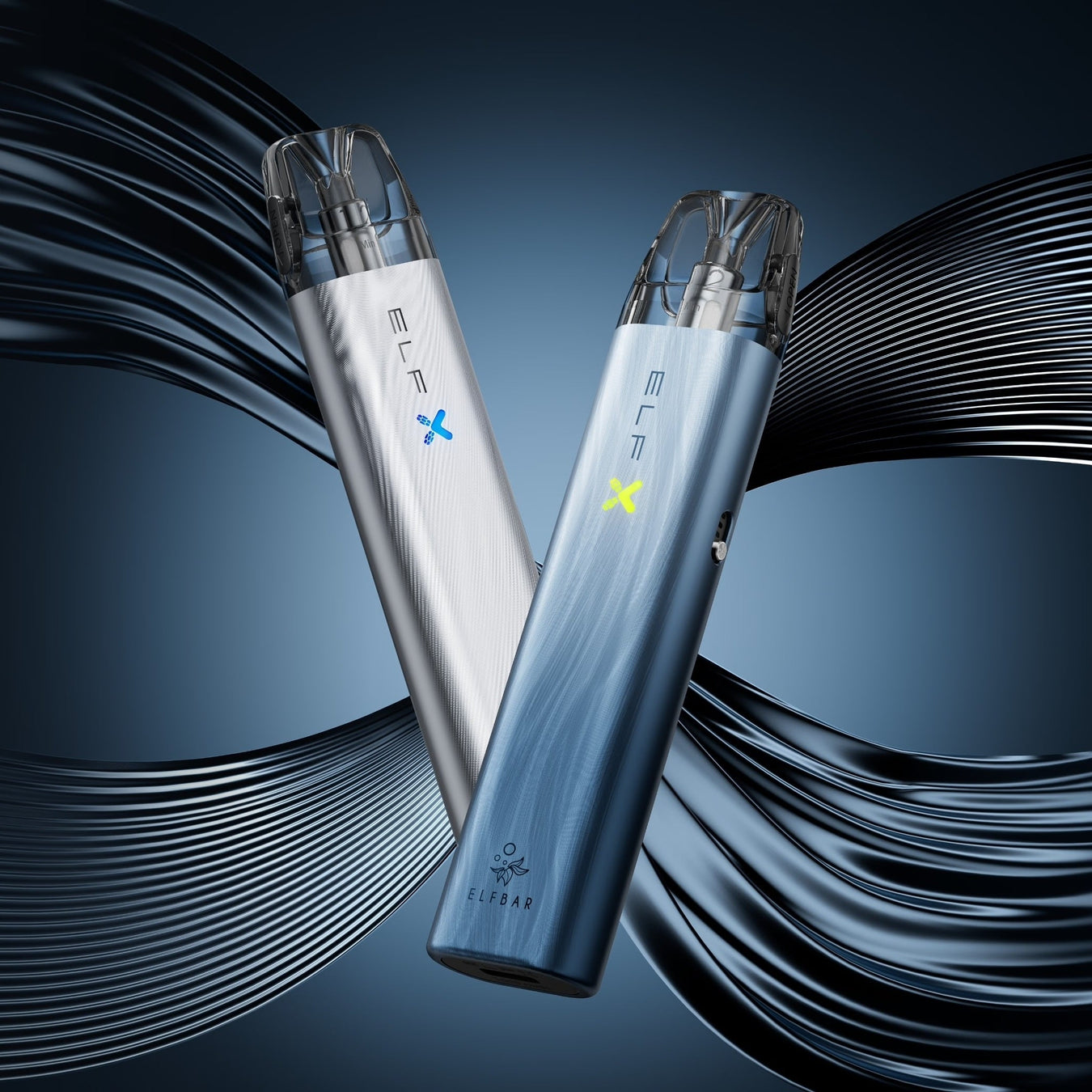
An example of a device tailored for switchers, featuring a color display and adjustable power, is the
If you prefer a simpler design, compact battery carriers without a display are an interesting option, such as the...
10. Important information on health, responsibility and product selection
E-cigarettes are not harmless consumer goods and are intended exclusively for adult nicotine users. Scientific statements such as those of the Federal Institute for Risk Assessment emphasize that while regulated e-cigarettes contain significantly fewer harmful substances than tobacco smoke, they are not considered completely risk-free.
At the same time, market and usage data, for example from the VdeH Industry Report and the DEBRA study, that the vast majority of e-cigarette users are adult current or former smokers.This results in a clear responsibility:
- No addressing of minors,
- no marketing as a lifestyle or trend product,
- clear information about risks and correct application.
When buying, also pay attention to:
- Regulated products: Max. 20 mg/ml nicotine, clear labeling, German warnings.
- Tax and customs compliance: Offers with unrealistically low prices, missing taxes, or extremely high nicotine strengths indicate black market goods, which should also be avoided. Zoll.de regularly warns.
Concluding thoughts and key messages
Finding the right nicotine strength for your pod system is not a guessing game, but a structured process:
- Start by making a realistic assessment of your previous cigarette consumption.
- Choose your starting strength based on proven guidelines and opt for a tight MTL pod system.
- During the first two weeks, carefully observe how well the pod system replaces your cigarettes.
- Adjust the strength up or down in moderate 3-6 mg increments, rather than uncontrollably extending the draw duration.
- If the switch to nicotine is successful, reduce the nicotine content at your own pace – or remain at a moderate strength as long as you stay smoke-free.
This approach combines two goals: maximum chance of successfully quitting tobacco cigarettes and controlled, informed use of your refillable pod system.
FAQ: Frequently asked questions about nicotine strength in the pod system
How quickly can I reduce my dose from 20 mg/ml to 0 mg/ml?
This depends heavily on your starting point. For many former heavy smokers, a period of 6–12 months is realistic to gradually reduce blood sugar from 18–20 mg/ml to 0–3 mg/ml. Stability is more important than speed: it's better to stay at a certain level a little longer if it means remaining smoke-free.
I use 6 mg/ml and still have strong cravings – is that normal?
Yes, especially if you previously smoked significantly more than 10 cigarettes a day. In many cases, increasing the dose to 12 mg/ml significantly improves saturation without making the draw unpleasant, provided you are using a mouth-to-lung (MTL) pod system with nicotine salts.
Why is the nicotine strength in my pod lower than what's stated on disposable e-cigarettes?
Many disposable e-cigarette products from outside the EU advertise extremely high nicotine strengths exceeding 20 mg/ml. These are not legal for sale in Germany. Regulations such as the EU TPD limit nicotine to 20 mg/ml – a range which, based on experience, is sufficient for adult smokers using the MTL pod system to replace cigarettes.
Is nicotine salt more dangerous than freebase nicotine?
Currently, there is no evidence that nicotine salts are inherently "more dangerous" at the same nicotine dose. However, they do allow for a smoother inhalation of higher nicotine strengths. It is important to adhere to the limits permitted in the EU and to use regulated products with transparent ingredients.
Can I use the same nicotine strength in every device?
No. A strength that's ideal in a tight MTL pod might be too strong in a very open, high-powered system. Always adjust the nicotine strength to your vaping technique, coil resistance, and the power output of your device.
Medical note
This article is for informational purposes only and does not replace medical advice.Nicotine-containing products are not suitable for non-smokers, young people, pregnant women, or people with certain pre-existing medical conditions. If you have health questions or are unsure whether switching to e-cigarettes is right for you, consult a doctor or a qualified health counseling center.