Switching: From cigarettes to nicotine salt vapes
Switching: From cigarettes to nicotine salt vapes
Switching from tobacco cigarettes to nicotine salt vapes is the first realistic step away from daily smoking for many smokers. This guide explains how nicotine salts work, why they often make the switch easier, and how to structure your personal plan from your first puff to later nicotine reduction.
Nicotine products are always associated with health risks. At the same time, independent institutions such as the Federal Institute for Risk Assessment (BfR), The article states that the level of harmful substances in e-cigarette aerosols is significantly reduced compared to cigarette smoke, provided that devices and e-liquids comply with European regulations. This article addresses precisely this point: It is aimed at adult smokers who are looking for a significantly less harmful alternative to cigarettes and want to approach this alternative in a structured manner.
Here you will find a detailed Comparison between disposable vapes and cigarettes.
1. Why nicotine salt vapes can make switching easier
1.1 What distinguishes nicotine salt from “normal” nicotine
Classic e-liquids use so-called "freebase nicotine." This is present in a form that, at higher strengths (e.g., 18–20 mg/ml), often produces a very harsh, scratchy throat hit. Many people switching from traditional cigarettes find this unpleasant, especially if they are used to deep inhalations.
Nicotine in nicotine salt e-liquids is chemically bound to an organic acid (e.g., benzoic acid). This lowers the pH of the e-liquid and results in a smoother draw with the same nicotine strength. In practical terms, this means you can vape 20 mg/ml without experiencing throat irritation – yet nicotine absorption remains fast and effective.
Aha moment from practice: Many heavy smokers report that they cough immediately with 12 mg freebase liquids, but after a few uses with 20 mg nicotine salt in a pod system.
1.2 Rapid nicotine effect – similar to cigarettes
When smoking, nicotine is absorbed into the bloodstream via the lungs within seconds. This "kick" is one of the main reasons why it's so hard to break the habit of smoking cigarettes. Nicotine salts come closer to this profile than many classic e-liquids because they vaporize efficiently even at moderate temperatures and are readily absorbed through the lungs.
Systematic overviews in the Cochrane Library Studies show that adult smokers using nicotine-containing e-cigarettes are, on average, more likely to quit smoking than those using traditional nicotine replacement products. For many users, this is precisely what they are looking for. Reliable control of nicotine cravings the key to not falling back into cigarettes.
1.3 Smooth draw, high nicotine level: Why this is important for switchers
A common mistake when switching: You select a Liquid with too low a nicotine strength, Because "high nicotine content" sounds off-putting. The result: The craving remains, people constantly puff on their e-cigarette and ultimately reach for a cigarette again.
Nicotine salt e-liquids allow the use of nicotine strengths up to the EU maximum of 20 mg/ml without the draw becoming too harsh. EU Tobacco Products Directive (TPD) This upper limit is explicitly set to prevent overdosing while simultaneously ensuring a sufficient nicotine supply for heavy smokers. When used correctly, nicotine salts thus enable a clear, controlled start – instead of aimless experimentation with many different e-liquids.
2.Legal framework: What is allowed in Germany
2.1 Nicotine strength and fill quantity
To make the switch, it's important to understand why some products are available in Germany and others are not. The German Tobacco Products Act (TabakerzG) implements EU regulations and stipulates, among other things:
- Maximum 20 mg/ml nicotine in refillable liquids and pre-filled pods.
- Maximum fill volume of 2 ml per pre-filled tank or disposable device.
Oversized e-cigarettes with significantly more liquid or extremely high nicotine strengths, advertised abroad, are therefore not legal for sale in Germany. For you as a new vaper, this is a protective mechanism: you are operating within clearly defined limits designed to prevent excessively high nicotine intake in a short period of time.
2.2 Taxes, prices and why “too cheap” devices are a warning sign
The German tobacco tax was increased with the Tobacco Tax Act (TabakStG) The tax has also been extended to e-liquid: The tax rate is increasing gradually from €0.16/ml to €0.32/ml. This has a direct impact on the final price. A very cheap product can therefore be an indication that no tax has been paid – and that the product may not meet safety and quality standards.
The customs administration provides information on zoll.de Detailed information on tax stamps and anti-smuggling controls is available. In practical terms, this means: only buy nicotine salt vapes from retailers based in the EU who display correct warnings and tax information and guarantee genuine products.
2.3 Environmental and waste disposal obligations
Many people switching from traditional cigarettes start with disposable e-cigarettes or pre-filled pods because these are particularly easy to use. However, these products fall under electrical and battery regulations. Retailers must register with the foundation. EAR be registered and take care of proper disposal. In addition, the Battery Act (BattG) Retailers accepting old batteries for recycling.
For you as a user, this means: Do not throw disposable vapes and pods in the household waste. Use collection points at retailers or municipal recycling centers. This way, you combine a successful switch with responsible resource management.
3. Assess your own needs: Which nicotine strength is suitable for beginners?
3.1 From cigarettes per day to nicotine salt strength
A tried and tested approach is to translate your daily cigarette consumption into a suitable nicotine salt strength. The following table serves as a guide for beginners:
| Cigarettes per day | Recommended starting strength nicotine salt | Practical assessment |
|---|---|---|
| 0–5 | approx. 10 mg/ml | For occasional smokers, medium strength is often sufficient to curb spontaneous urges. |
| 6–15 | 10–20 mg/ml | For 10-12 cigarettes/day, 10-12 mg is a good starting dose; closer to 15 cigarettes, it's better to start with around 20 mg. |
| > 15 | 20 mg/ml | Heavy smokers usually benefit from maximum strength during the initial phase to avoid withdrawal symptoms. |
These values are based on practical experience and are not medical advice. Your subjective experience is crucial: if you still crave a cigarette despite vaping regularly, the starting dose was usually too low.
3.2 Why “too little nicotine” is often more dangerous than “a little too much”
Many smokers are wary of high nicotine levels and therefore choose a very low strength.The result is often a day full of withdrawal symptoms: nervousness, difficulty concentrating, and the urge to smoke "just one" cigarette. In practice, too little nicotine leads to relapse far more frequently than a slightly too high strength.
With nicotine salt vapes, an overdose typically manifests as nausea, headache, or dizziness if too much is vaped in a short period of time. In this case, it helps to stop immediately, drink water, and next time either use a lower strength or plan shorter puff sessions.
3.3 Myth: "20 mg/ml is automatically too strong"
A common misconception is: "20 mg/ml – that's extremely high, I'll never need that." In fact, many heavy smokers use 20 mg/ml nicotine salt in the initial phase to control cravings during the first few weeks. The crucial factor is how you use the device.
With MTL pod systems (mouth-to-lung, moderate vapor), 20 mg/ml is distributed across many small particles.
4. Choosing the right device for switching to nicotine salt
4.1 Why disposable vapes can be useful for the first few days
Many people switching from smoking want to test whether vaping is even an option for them. Disposable vapes with nicotine salt e-liquid offer an easy solution: unpack, inhale, and you're done. Good devices for those switching from smoking use mesh coils (fine metal mesh) that vaporize the e-liquid evenly, providing an intense and consistent vapor.
One example is the

If you want to try nicotine-free immediately, you can choose a variant with 0 mg/ml – for example, the
4.2 Pod systems: The next step after the disposable e-cigarette
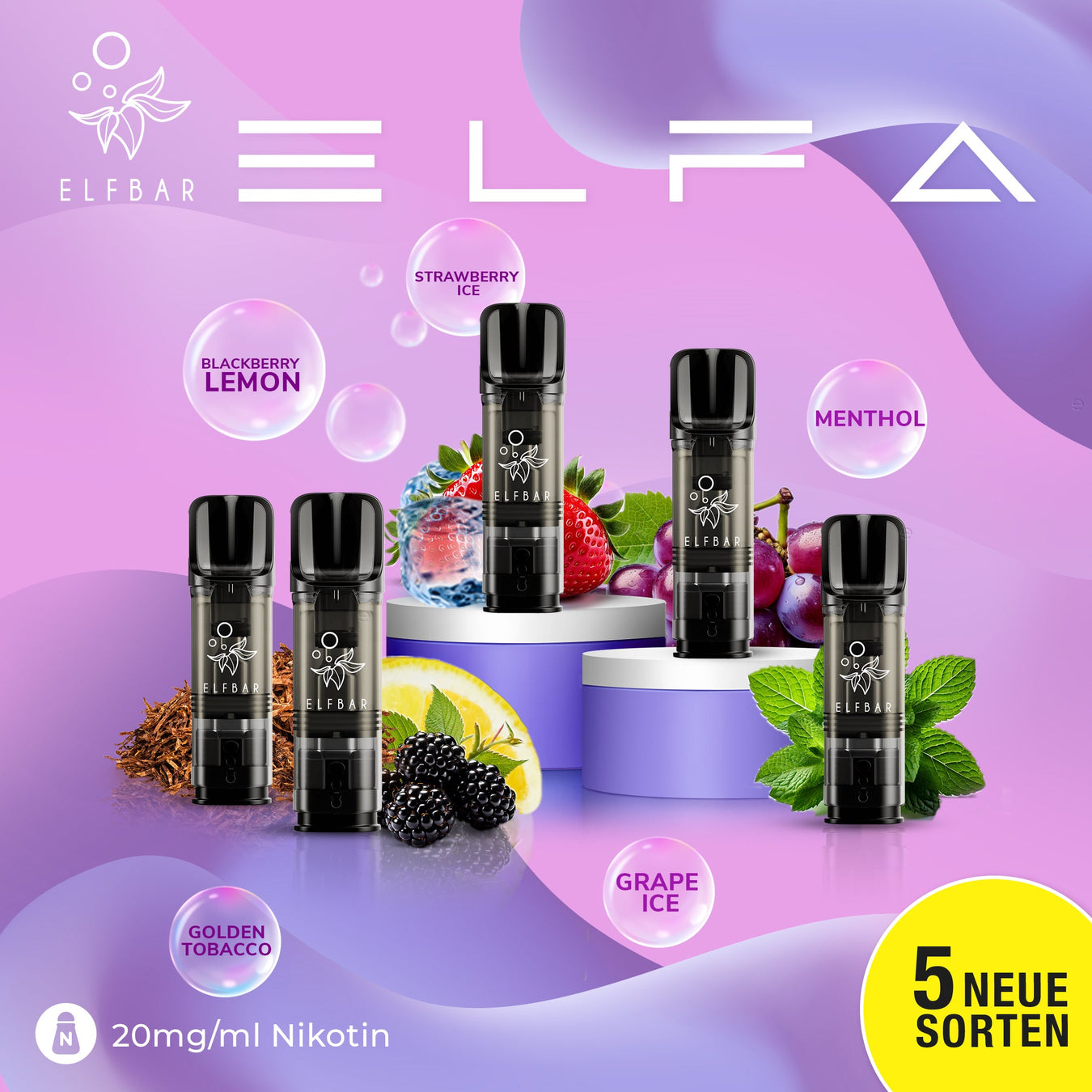
Those who find that vaping allows them to reduce their cigarette consumption or eliminate it entirely usually look for a more permanent and cost-effective solution. This is where pod systems come in. These typically consist of a rechargeable base unit and replaceable, pre-filled pods containing nicotine salt e-liquid.
A typical setup looks like this:
- Base unit with battery (e.g. 400–600 mAh) for a day of moderate vaping.
- Pre-filled pods with 2 ml of nicotine salt liquid (20 mg/ml) – compliant with the TPD limit.
- Mesh coil in the pod, those for uniform
Flavour provides.
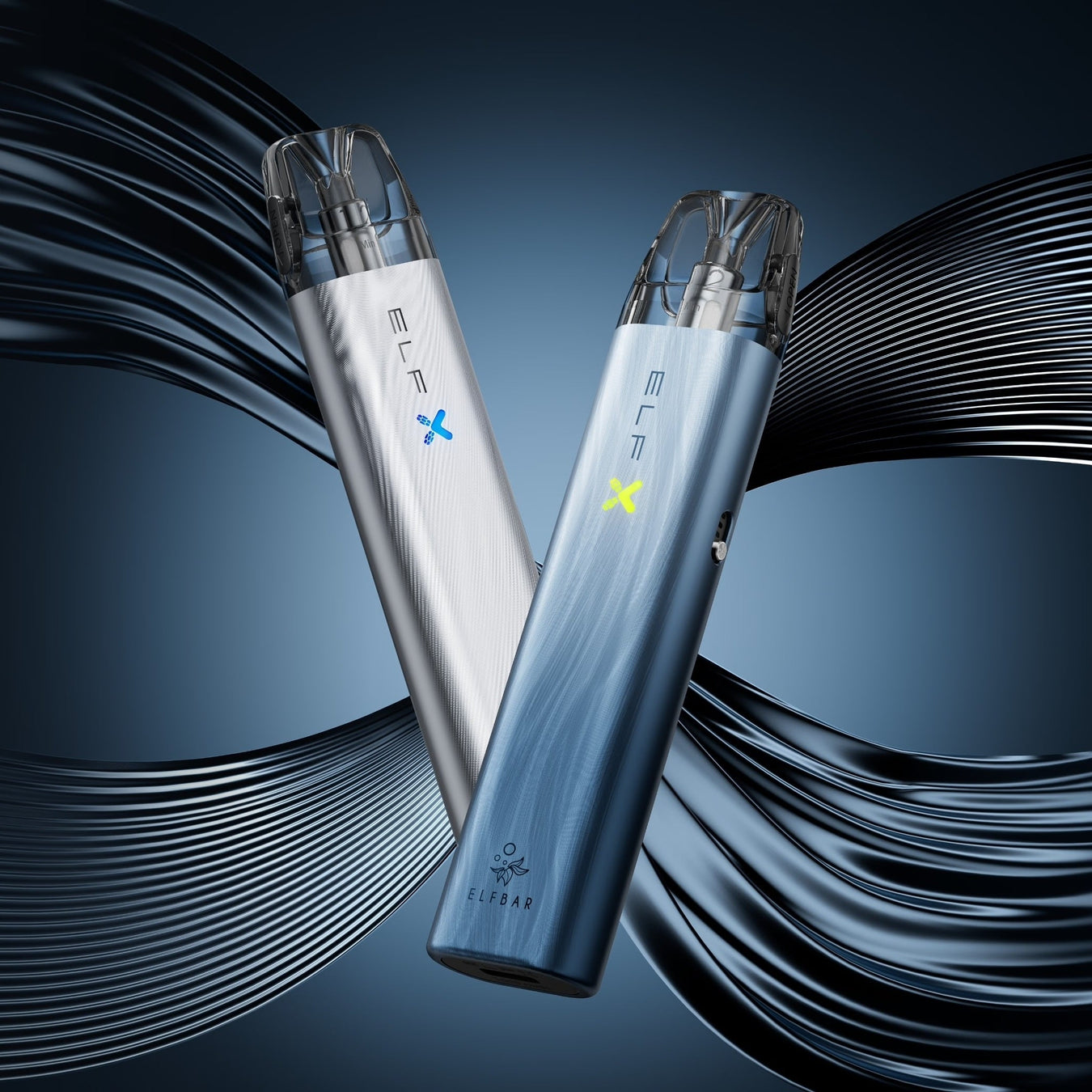
An example of such a setup is the
4.3 Mesh Coils: Why the Flavour plays a role in the transition
An underestimated factor in the transition is the
Our experience shows that users report that mesh-based systems subjectively offer 20–30% more performance.
5. Step-by-step: Your personal switching plan with nicotine salt
5.1 Phase 1 – Preparation (1–3 days)
- Analyze smoke profile: How many cigarettes per day? When do you typically smoke (in the morning, after meals, while driving)?
- Select starting strength: Use the table in section 3.1 to determine the nicotine salt strength. Heavy smokers should start at the higher end (20 mg/ml).
- Selecting a device: A disposable e-cigarette can be useful for a "crash test". Those who want to plan for the long term should start with a pod system.
- Plan for at least one backup device: In practice, a surprisingly high proportion of relapses occur because the only device is empty or lost.
5.2 Phase 2 – Full transition (first 2–4 weeks)
The goal in this phase is: no more tobacco cigarettes, but complete replacement by nicotine salt vapes.
Example of a daily routine for a smoker with 20 cigarettes/day and 20 mg/ml nicotine salt:
- In the morning, directly after waking up, 5–10
puffs . - After breakfast, another 5–10
puffs . - Short sessions (2–5) are distributed throughout the workday.
puffs ) during the times when people used to smoke. - 5-10 each in the evening after dinner and before bed.
puffs .
Experience shows that many switchers reach a total of 150–250 during this phase.
5.3 Common mistakes in the first few weeks – and how to avoid them
Mistake 1: Changing the variety too often
Anyone who goes every two days
Error 2: Battery constantly almost empty
Below about 20% battery level, the performance of many devices noticeably decreases. The vapor becomes thinner, and the nicotine delivery is less effective. It's best to recharge early or have a second device ready.
Error 3: No backup device
If your only device breaks or gets lost, the next cigarette is usually just around the corner. Plan for an inexpensive second device or at least an extra disposable e-cigarette from the start.
Error 4: Nicotine salt in the high-performance device
Nicotine salt e-liquids belong in MTL pod systems. When used in very powerful sub-ohm devices, the vapor production per puff is extremely high. Typical consequences: throat hit, dizziness, nausea.
6. Nicotine reduction with nicotine salts – realistic schedules
6.1. When is the right time to cut back?
A good time to reduce your nicotine intake is when you experience hardly any strong nicotine cravings during the day for 2-3 weeks and no longer think about cigarettes. Many people switching from smoking need about 4-8 weeks for this stabilization. During this phase, the goal is not to "heroically" reduce your nicotine intake, but to change habits (no more smoking during coffee breaks, no more "reward cigarettes").
Even the DEBRA study Studies on tobacco use in Germany show that most adult e-cigarette users are former or current smokers. Products containing nicotine should therefore primarily be seen as a tool for quitting smoking – not as a long-term leisure activity.
6.2 25–30% Reduction Steps: A Proven Scheme
In practice, a gradual reduction of approximately 25–30% every 3–6 weeks has proven effective. An example for someone starting at 20 mg/ml:
- Phase 1 (0–6 weeks): 20 mg/ml nicotine salt – complete cigarette replacement.
- Phase 2 (6–12 weeks): Change to approximately 12 mg/ml.
- Phase 3 (12–18 weeks): Switch to 8–10 mg/ml.
- Phase 4 (18–24 weeks): Switch to 4–6 mg/ml.
- Phase 5: Optional switch to 0 mg/ml or gradual withdrawal from vaping.
Important: Each phase should be extended flexibly if increased cravings, irritability, or sleep problems occur. These signals indicate that the body needs more time to adjust.
6.3 Typical stumbling blocks when reducing
- Jumps that are too big: Switching directly from 20 mg/ml to 3 mg often leads to relapse within days. Smaller steps are more sustainable.
- Ignore periods of stress: Giving things up is much harder during very stressful times, whether at work or in your personal life. Plan your reduction steps for calmer periods.
- "Just one" cigarette as a reward: If you reward yourself with a cigarette after a stressful day, your brain signals: nicotine = reward + smoking ritual. In the long run, this makes it harder to quit both tobacco and vaping.
7. Health assessment: Opportunities and limitations of nicotine salt vapes
7.1 Fewer harmful substances than cigarettes – but not harmless
The Federal Institute for Risk Assessment (BfR) The German Federal Institute for Risk Assessment (BfR) emphasizes that e-cigarettes generally release significantly fewer toxic and carcinogenic substances compared to tobacco smoking. At the same time, the BfR points out that long-term data is still limited and that e-cigarettes are not a "healthy" product, but rather a potentially less harmful alternative.
For adult smokers who want to quit tobacco, this results in a clear priority: the goal is to achieve complete smoking cessation. Nicotine salt vapes can be a transitional technology – not a new permanent habit.
7.2 Scientific evidence on smoking cessation
The overviews already mentioned in the Cochrane Library The authors analyze randomized controlled trials on e-cigarettes as a smoking cessation aid. They conclude that, in controlled studies, nicotine-containing e-cigarettes enable adult smokers to achieve higher abstinence rates than some traditional nicotine replacement products.
However, there are limitations: The studies involve limited numbers of participants and mostly highly structured detoxification programs. These conditions are often lacking in everyday life.Therefore, it makes sense to combine nicotine salt vapes with other strategies – such as behavioral therapy support, self-help programs or medical supervision.
7.3 Protection of young people and non-smokers
The DEBRA study This shows that e-cigarettes in Germany are predominantly used by former or current smokers. For young people and non-smokers, there is no benefit, only a potential risk of developing nicotine addiction.
Reputable retailers work with age verification services such as... DHL Identity Check, where delivery is only permitted to the named individual aged 18 and over. For parents, this means: pay attention to reputable sources and seek a conversation early if you suspect clandestine use.
8. Practical checklist for switching to nicotine salt vapes
8.1 Quick check: Are you ready to go?
- [ ] I have determined my average number of cigarettes per day.
- [ ] I have selected a suitable nicotine salt strength (see table in section 3.1).
- [ ] I deliberately chose a disposable device or a pod system.
- [ ] I have at least one backup device or a spare disposable e-cigarette.
- [ ] I know my “critical situations” (coffee, driving, alcohol) and consciously plan vaping sessions for them.
8.2 Troubleshooting problems
-
Strong cravings despite frequent vaping:
→ Choose a higher nicotine strength or slightly increase your puff frequency. -
Dizziness, headache, nausea:
→ Take a short break, drink water, and choose a lower strength next time you buy it. -
Scratch or “Burnt Button”:
→ Replace the pod if necessary, ensure there is enough e-liquid, and avoid continuous use. With refillable pods, always wait 5–10 minutes after filling to allow the cotton to become saturated. Further tips on typical pod problems can be found in the article. "E-liquid leak in the pod? Here's how to fix the problem". -
Uncertainty regarding nicotine strength:
→ The in-depth article "Finding the right nicotine strength for your pod system" offers additional decision-making support.
Key insights for the transition
- Nicotine salt vapes offer a smooth draw with high nicotine effectiveness and can significantly ease the switch from cigarettes.
- The legal framework in Germany (Tobacco Products Act, Tobacco Tax Act, TPD) limits the amount of nicotine and the filling volume – an important protective mechanism for consumers.
- A realistic switching plan combines appropriate nicotine strength, easy-to-use devices (disposable or pod systems), and an awareness of typical stumbling blocks.
- Reduce nicotine gradually by about 25–30% every 3–6 weeks, once you have been smoke-free for several weeks.
- E-cigarettes are not a health product, but they can be a significantly less harmful alternative to tobacco cigarettes for adult smokers if used responsibly.
Notice and disclaimer
This article is intended solely for adult smokers who wish to reduce or quit their tobacco consumption. It does not replace medical advice, diagnosis, or treatment. If you have a pre-existing medical condition, are pregnant, have cardiovascular problems, or are unsure about the suitability of nicotine products, you should always consult a doctor.Decisions about quitting smoking, nicotine consumption and the use of e-cigarettes should never be made solely based on online information.