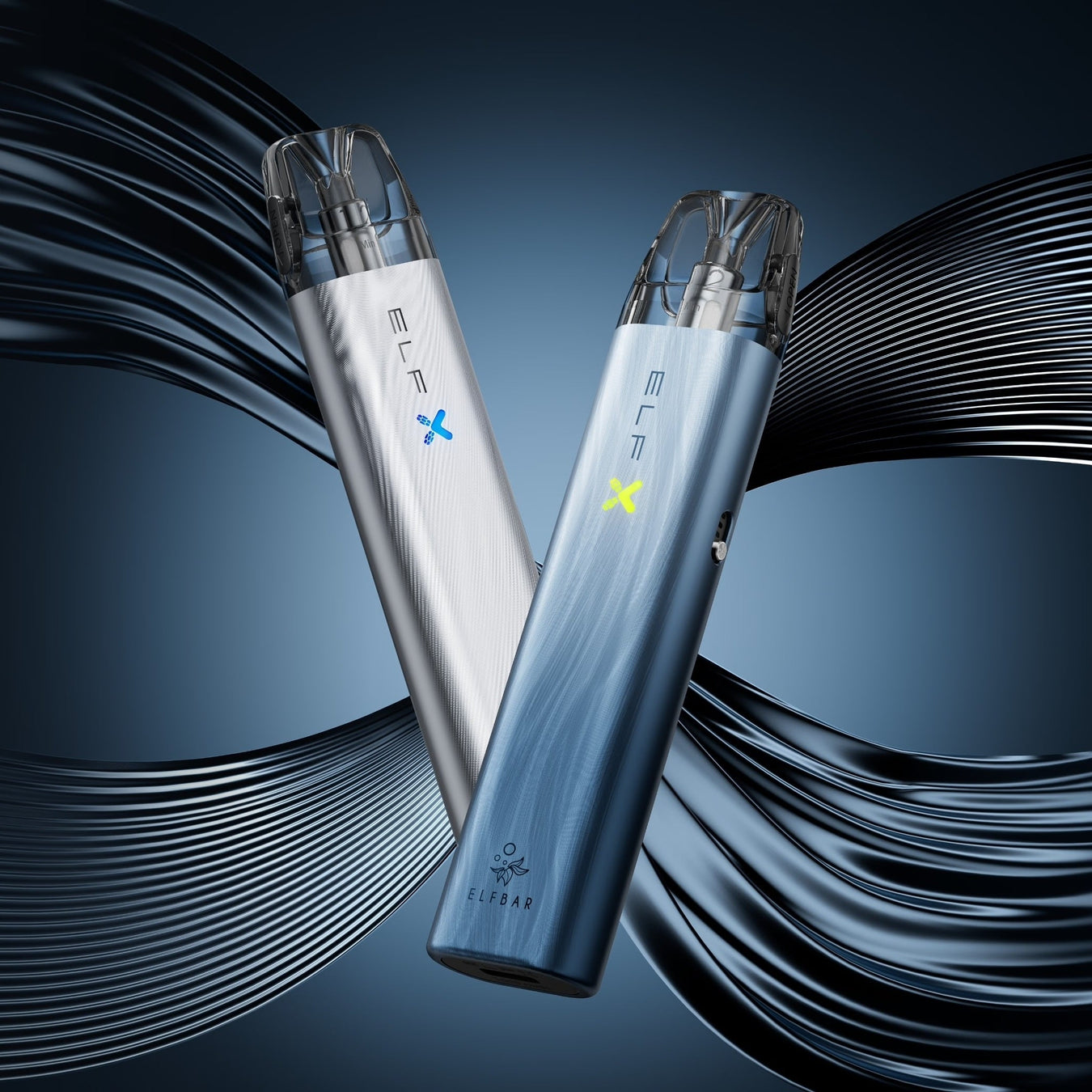
Weight vs. Capacity: The best battery for on the go

Choosing the right pod system is often a balancing act: We want a device so light and compact that it disappears into a shirt pocket, but at the same time has enough battery life to last through a long workday without needing to recharge. In the vaping world, performance is often reduced to a single number – milliampere-hours (mAh). But those who rely solely on this figure overlook the crucial factors that determine actual everyday usability.
In this guide, we examine the complex relationship between portability and battery capacity. We show why a smaller battery sometimes lasts longer than a larger one and how you can find the ideal device based on your individual usage profile.
Quick Start: Key Takeaways
- Efficiency over capacity: A 500 mAh battery with high resistance (e.g. 1.1 Ω) can be more efficient than a 1000 mAh battery with lower resistance and high wattage.
- Realistic expectations: Marketing claims regarding "puff counts" are often based on laboratory conditions. Our simulations for urban users show that the actual reach varies with intensive use.
- Fast charging advantage: Modern USB-C ports drastically reduce charging time (often to under 45 minutes), making the absolute battery capacity less critical in everyday use.
- Ergonomics beats weight: The shape and material density influence the wearing comfort more than the pure weight in grams.
- Legal compliance: In Germany, nicotine content (max. 20 mg/ml) and tank volume are strictly regulated by law. Tobacco Products Act (TabakerzG) regulated.
- Sustainability: Proper disposal via collection points (in accordance with the Battery Act - BattG) is essential for the environmental impact of pod systems.
The mAh myth: Why more doesn't always mean longer
A battery's capacity is measured in milliampere-hours (mAh). Technically, this value describes the amount of charge a battery can store. However, many users mistakenly equate mAh directly with battery life. In practice, battery life is the result of the capacity, the resistance of the coil (atomizer head), and the power output (watts).
A device like the classic
Logic check: The runtime is a function of $Energy (mAh)/Power consumption (Watts). A higher resistance (Ω) generally reduces power consumption, which extends the runtime of smaller batteries.
Portability redefined: Weight vs. perception
When we talk about "on the go," we usually mean in a bag or in our hand. An interesting phenomenon we frequently observe in customer consultations is the perception of weight. A device might feel light on the scale, but "annoying" in a trouser pocket if it's cylindrical and rolls around.
Rectangular or flat designs, such as those of the
Comparison of ELFBAR -Systems for mobile users
| Model | Battery capacity | Target audience | Special feature |
|---|---|---|---|
| 500 mAh | Minimalists | Extremely lightweight, ideal as a secondary device | |
| 850 mAh | Urban Professionals | Balance of style, metallic feel and durability | |
| ELFX Kit | 1000 mAh | Power users | Maximum performance, refillable pods |
Scenario analysis: The "Urban Professional" in focus
To translate the theoretical values into practice, we modeled a scenario that reflects the typical daily routine of a working vaper in a major German city. This user vapes in stressful situations, while commuting, and during short coffee breaks.
Modeling parameters (urban use)
For this analysis, we created a model that goes beyond standard laboratory values and takes more intensive usage patterns into account.
| parameter | Value | Explan |
|---|---|---|
| Train duration | 4 seconds | Longer than the ISO standard (3s) for deeper satisfaction |
| train volume | 70 ml | Higher volume due to stress vaping |
| Performance level | ~15 watts | Typical area for mesh coils in pod systems |
| Sweet/Dessert | Higher thermal stress on the coil |
Simulation results
Our modeling shows that a 500 mAh battery (
Methodological note: These values are projected estimates based on a deterministic model for heavy usage patterns. Actual operating time varies depending on individual train behavior and ambient temperature.
The role of charging speed
An often underestimated factor in the "weight vs. capacity" debate is charging time. If a device can be almost fully charged via USB-C within 30 to 45 minutes, the absolute mAh rating becomes less important – provided a power source (laptop, car, power bank) is available.
Older systems often used Micro-USB, which meant charging times of 2 hours or more. Modern systems
Technical efficiency: Coils and liquid consumption
Battery life is inextricably linked to the efficiency of the coil.
Influence of flavors on hardware
An interesting technical aspect is the influence of the e-liquid. Sweet flavors (desserts, candies) often contain more sweeteners, which leave residue on the coil when heated (so-called "gunking"). Our analysis of coil lifespan shows:
- Mint/Tobacco: Can extend the coil lifespan to up to 10 days.
- Sweet fruits/desserts: They often reduce their optimal performance after about 5 days of intensive use.
An efficient system must therefore not only save electricity but also preserve coil integrity. For users who are Disposable vapes When switching to vaping, this is an important factor in cost calculation. In our cost comparison between pods and disposable vapes, we discuss these long-term savings in detail.
Legal framework and security in Germany
When buying a battery carrier for on-the-go use, safety plays a paramount role. In Germany, e-cigarettes are subject to strict controls by the [relevant authority/organization]. Federal Institute for Risk Assessment (BfR) and the customs authorities.
Things you should pay attention to:
- Control characters: Every e-liquid and every pre-filled pod sold in Germany must bear a valid tax stamp. This guarantees that the product has been taxed in accordance with the Tobacco Tax Act (TabakStG).
- WEEE registration: Vaporizers, being electrical devices, must be properly disposed of. EAR Foundation It must be registered. This ensures that the manufacturer takes responsibility for recycling.
- Child lock: Look for devices with integrated security mechanisms (such as 3-pull activation or mechanical locks) to prevent unauthorized use.
Disposal: A critical point
A portable battery is only as good as its lifespan. Never throw used pod systems in the trash. According to the German Battery Act (BattG), retailers are obligated to take back used batteries and electronic devices. Use the collection boxes in stores or municipal recycling centers to return valuable raw materials like lithium and cobalt to the cycle.
Economic efficiency: The Nicotine Efficiency Index (NEI)
For many people switching providers, financial savings are a major factor. We have the Nicotine Efficiency Index (NEI) calculated to compare the cost per milligram of absorbed nicotine.
Calculation logic: NEI = Price/(Liquid Volume * Concentration * Bioavailability). For pod systems, we assume a bioavailability of approximately 55% (based on clinical averages).
Our simulation for the German market shows:
- Cigarettes: Approx. 0,26 € per mg nicotine (at 8,00 € per pack).
-
ELFBAR Pod systems: Approx. 0,21 € per mg of nicotine.
Although the annual savings are approximately... 141 € Considering that vapers exhibit 40% higher behavioral intensity compared to smokers, the pod system offers primarily structural advantages through the reusability of the battery. A robust device like the
Conclusion: Here's how to find the perfect middle ground
There isn't one "best" battery, but rather the best device for your specific needs. If you're looking for maximum portability and only use your device occasionally, then this is the right choice.
For demanding everyday life, where reliability and feel count, the
Power users who value maximum customization and performance will find what they're looking for in the ELFX Kit With a 1000 mAh battery and up to 30 watts of power, it's the ideal tool. Performance is paramount here, supported by a battery that can withstand even intensive sessions.
No matter which system you choose: Make sure you use genuine products, follow the safety guidelines, and dispose of your old devices responsibly. The journey away from traditional cigarettes is a process in which the right hardware is your most important companion.
methodology & Assumptions for the simulation
The data mentioned in this article are based on a scenario model for an urban commuter (30–45 years old).
- Model type: Deterministic parameter simulation (not a clinical laboratory study).
- Basis: ISO 20768 (vaping standards) with adjustments to reflect real user behavior.
- Restrictions: Results may vary depending on ambient temperature, battery age, and individual puffing technique.
| parameter | Value | Unit | Source/Category |
|---|---|---|---|
| Liquid capacity | 16 | ml | standard |
| Nicotine concentration | 20 | mg/ml | TPD limit (EU/DE) |
| Bioavailability | 0.55 | factor | Clinical average value |
| Train frequency | High | - | Model "Urban Professional" |
| Electricity costs (charging) | Negligible | - | Standard household rates |
Important notice (YMYL Disclaimer): This article is for informational purposes only and does not constitute medical or health advice. E-cigarettes are not risk-free. Nicotine is a highly addictive substance. The use of nicotine-containing products is not recommended for non-smokers, young people, pregnant or breastfeeding women, or people with cardiovascular or respiratory conditions. Please consult a qualified physician with any health concerns.