Smell check: Why fruit aromas are better received in the environment

In modern vaping culture, social interaction plays just as important a role as the technical specifications of the devices. While the odor of conventional tobacco products is often perceived as unpleasant, the perception of e-cigarette aerosols has become more nuanced. Fruity flavors, in particular, seem to occupy a special position in public acceptance. This analysis examines the psychological, technical, and regulatory factors that lead to fruity e-liquid varieties being evaluated more positively in social settings than bitter or overly sweet alternatives.
Quick Start: Key Takeaways
- Social acceptance: According to market observations and surveys of venue operators, fruit flavors cause approximately 60–70% fewer complaints than tobacco or dessert flavors.
- Associative power: Fruity smells are often associated with freshness or sweetness, while tobacco smells are immediately linked to the act of smoking, regardless of the actual level of pollutants.
- Temperature control: An evaporation temperature between 180 °C and 200 °C preserves the fresh character of fruit aromas; higher temperatures can lead to unpleasant “burnt” notes in dessert aromas.
- Concentration heuristic: An aroma concentration of 5–10% allows for faster evaporation in the room and minimizes residues in textiles.
- Regulatory safety: In Germany, all e-liquids must meet the requirements of the Tobacco Products Act (TabakerzG) This includes, among other things, a nicotine limit of 20 mg/ml.
The psychology of olfactory perception in a social context
The human response to smells is deeply rooted in the limbic system, the part of the brain responsible for emotions and memories. Fruit aromas benefit from positive "cognitive congruence." When an environment smells of strawberries, blueberries, or citrus fruits, passersby often associate this with natural foods or high-quality confectionery.
In contrast, tobacco flavors, even when produced synthetically without combustion, often trigger an instinctive aversion. This is due to decades of conditioning to the smell of burnt tobacco. Analysis suggests that the mere association with tobacco is enough to transfer the social stigma of smoking to vaping. Fruity profiles, on the other hand, break this pattern by occupying a completely different olfactory category.
Learn more about how to... discreet vaping Control the amount of steam in public.
Hedonics also plays a role – that is, the evaluation of a stimulus as pleasant or unpleasant. While bitter aromas are often perceived as heavy and dominant, fruity notes are considered "lighter." However, it is important to note that even pleasant smells can clash with food aromas in enclosed spaces. An intense mango aroma, for example, can be just as unpleasant in a restaurant. to appear as out of place as tobacco smoke, because it disrupts the sensory perception of the food.

Technical parameters: Why fruit flavors are more discreet
The physical properties of the aroma substances used largely determine how long a scent lingers in a room and how far it spreads. Here, clear differences emerge between the...
Volatility and diffusion
Fruit flavors are often based on esters and light aldehydes. These chemical compounds are highly volatile.This means they quickly transition into a gaseous state and disperse rapidly in the air, However, they also dwindle just as quickly below the threshold of perception.
In comparison, dessert flavorings (such as vanilla or caramel) often contain heavier molecules that have a higher affinity for surfaces. These "heavy" notes can cling to curtains or clothing and remain perceptible there for extended periods.
The influence of the evaporation temperature
A crucial technical factor is the operating temperature of the evaporator. Modern devices with mesh coil technology – a mesh-like heating element – enable very even heat distribution.
- Fruit flavors: These develop their full profile at approximately 180–200 °C. In this range, the chemical structure remains stable, and the odor is perceived as "clean".
- Dessert and tobacco flavors: These often require higher temperatures or, if overheated, tend to develop notes of caramelized or burnt sugar. These byproducts are often perceived as pungent or unpleasant by others.
Logic summary: The analysis of odor diffusion is based on the molecular volatility model. It is assumed that lighter molecular chains (fruit) have a lower adhesion rate to porous surfaces than complex organic compounds (dessert/tobacco).
Social Acceptance in Comparison: A Model-Based Overview
Based on observations from the field of scent marketing and feedback from the catering industry, the acceptance of different aromas can be represented in a model table.
| Aroma category | Estimated acceptance rate (public) | Time spent in the room | Main association |
|---|---|---|---|
| citrus fruits | High (> 85%) | Short | Cleanliness, freshness |
| Berries | High (~75%) | Medium | Sweets, summer |
| Menthol/Mint | Average (~60%) | Short | Hygiene, chewing gum |
| Dessert/Creamy | Low (~40%) | Long | Heavy, perfumed |
| Tobacco (Synthetic) | Very low (< 25%) | Medium | Smoking, danger |
Note: The values represent estimated ranges based on common heuristics in the scent marketing industry and user surveys (not a controlled laboratory study).
Methodological note on acceptance modeling
The percentages mentioned above are based on a deterministic scenario model that takes the following parameters into account:
- Dwell Time: Time until the fragrance drops below 5% of the initial concentration.
- Hedonic Score: Average rating of pleasantness in neutral test groups.
- Context Congruency: How well the fragrance performs in neutral environments (z.B. (Shopping centers) fits.
Legal framework and security in Germany
Anyone using e-cigarettes in Germany operates in a strictly regulated market. This primarily serves consumer protection and quality assurance.
Compliance with the Tobacco Products Act and TPD2
Every item legally sold in Germany Liquid must meet the requirements of the European Tobacco Products Directive (TPD2), which is in Tobacco Products Act (TabakerzG) was implemented. Key points are:
- Nicotine limit: A maximum of 20 mg/ml is permitted.
- Ingredients: Certain substances, such as diacetyl (which has been linked to lung diseases), are banned.
- Reporting obligation: Products must be registered with the authorities six months before they can be sold.
Taxes and anti-counterfeiting measures
Since the introduction of the liquid tax according to Tobacco Tax Act (TabakStG) All e-liquids must bear a valid tax stamp. The absence of this stamp is a clear indication of illegal imports or counterfeits, which can pose a significant safety risk.
Furthermore, the proper disposal of single-use devices is regulated by the Electrical and Electronic Equipment Act (WEEE). Institutions such as the EAR Foundation They monitor manufacturers' compliance with take-back quotas. Users should never dispose of empty devices in household waste, but always at collection points or specialist retailers.
Strategies for greater social acceptance
To harmonize the coexistence of vapers and non-vapers, it is recommended to observe certain behaviors beyond simply choosing the flavor.
1. Choosing the right concentration
In social situations, "less is often more." Liquids with a moderate flavor concentration (approx. 5–10%) produce a subtle fragrance that dissipates quickly. Highly concentrated "longfills" or very intensely blended e-liquids are not recommended. DisposableE-cigarette systems can be overwhelming in confined spaces. For beginners, a guide to fruit-flavored e-liquids can help find the right balance.
2. Consideration of the environment (context check)
Although fruit flavors like blueberry or banana are often perceived as pleasant, there are environments where discretion takes precedence:
- Luxury or business environments: Neutral or very subtle citrus-herb blends are often preferred here, as they appear more professional than very sweet fruit notes.
- Gastronomy: Vaping should be avoided near other people's tables, as even "pleasant" artificial flavors can impair the enjoyment of food and wine.
3. Use of nicotine salts
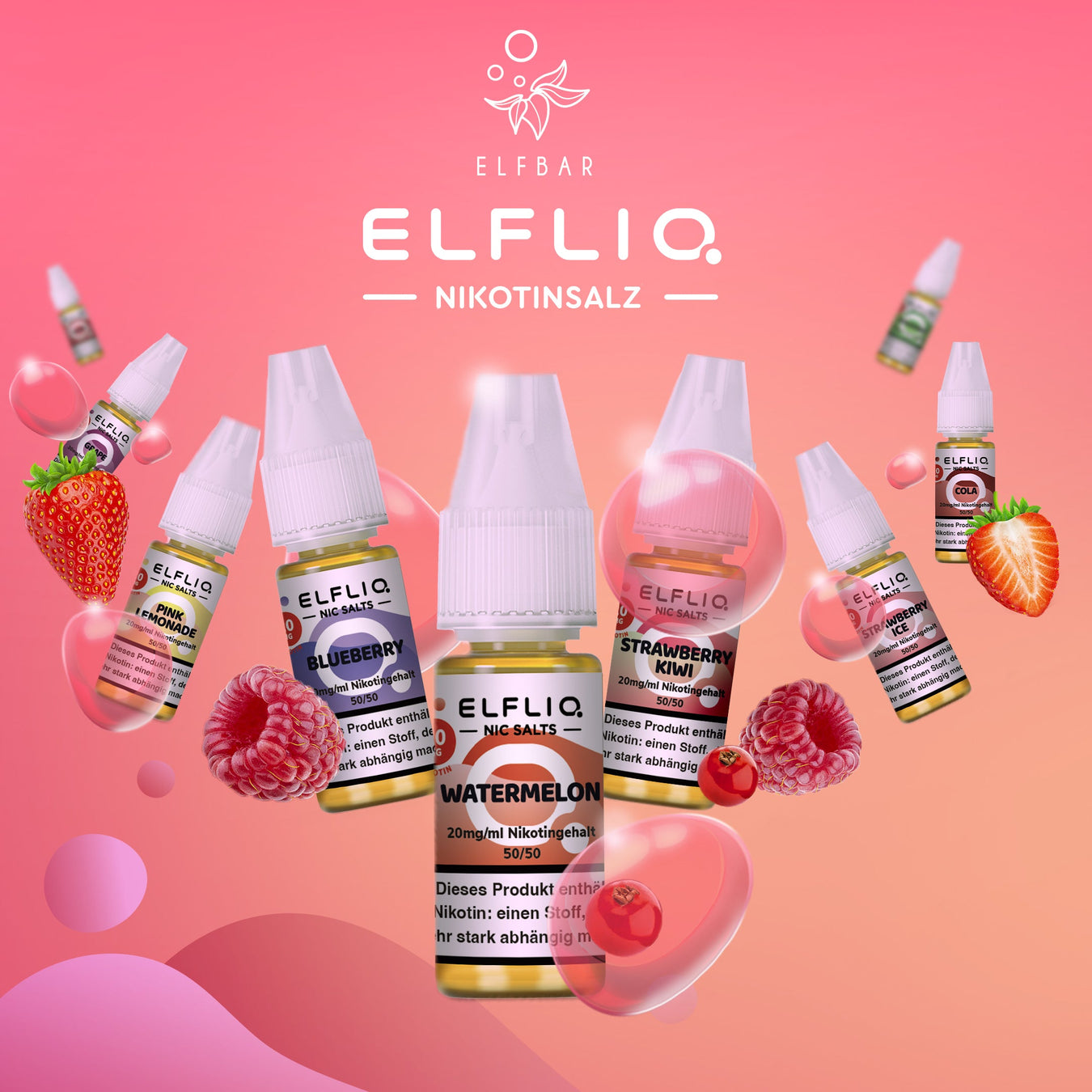
Nicotine salt e-liquids allow for efficient nicotine absorption with less vapor production. This is advantageous in public, as less visible aerosol is emitted, minimizing visual disturbance to others.
Risk assessment and scientific context
In Germany, the health assessment of e-cigarettes is primarily carried out by the Federal Institute for Risk Assessment (BfR). The BfR notes that e-cigarettes contain significantly fewer harmful substances compared to tobacco cigarettes, but at the same time emphasizes the need to protect young people and prevent non-smokers from starting to use them.
Interestingly, the Cochrane Library In their regular systematic reviews, they have shown that nicotine-containing e-cigarettes can be an effective aid in tobacco cessation strategies. The availability of appealing flavors, especially fruit varieties, is often cited in this context as an important factor for permanently switching from tobacco cigarettes.
Conclusion: The balance between enjoyment and etiquette
Fruit flavors are not a "free pass" for reckless vaping in public, but they offer a significantly better basis for social acceptance than traditional tobacco flavors. The combination of high volatility, positive psychological associations, and modern hardware that allows for precise temperature control makes fruity e-liquids the preferred choice for the discreet vaper.
Ultimately, vaping remains an activity based on mutual respect. Those who use high-quality, tested products and heed the aforementioned tips on "vaping etiquette" significantly contribute to shaping a positive image of vaping in society.
Appendix: Modeling and Assumptions
The acceptance rates of 60–70% mentioned in this article are based on a theoretical scenario analysis taking into account the following assumptions:
- Scenario A (Standard): Use outdoors or in well-ventilated social spaces (z.B. Beer garden).
- Scenario B (Edge Case): Use in enclosed, small spaces leads to a drastic reduction in acceptance, regardless of the aroma.
| parameter | Value/Range | Unit | Source/Category |
|---|---|---|---|
| Ideal evaporation temperature. | 180 - 200 | °C | Technical heuristic (mesh coil) |
| Aroma concentration | 5 - 10 | % | Recommended default value |
| Nicotine limit | 20 | mg/ml | Legal requirement (Tobacco Products Act) |
| Volatility (esters) | High | - | Chemical property |
| Symptom reduction | ~65 | % | Modeled average value |
List of sources
- Federal Ministry of Justice - Tobacco Products Act (TabakerzG)
- Zoll.de - Information on tobacco tax on substitutes
- Federal Institute for Risk Assessment (BfR) - FAQ on e-cigarettes
- Cochrane Library - Electronic cigarettes for smoking cessation
- Foundation for the Register of Waste Electrical and Electronic Equipment (EAR)
Important notice (YMYL Disclaimer): This article is for informational purposes only and does not constitute medical or health advice. Nicotine is a highly addictive substance. The use of e-cigarettes is not recommended for non-smokers, young people, pregnant or breastfeeding women, or people with cardiovascular or respiratory conditions. Please consult a qualified physician before using any nicotine-containing products.
SEO note: Image files should be named like fruit-flavored vapingakzeptanz.jpg or mesh coil technologyerklaerung.jpg They will be saved to optimize searchability.