Adjustable power: The feature for advanced vapers
Anyone switching from simple disposable e-cigarettes to advanced pod systems will sooner or later encounter a term that fundamentally changes the vaping experience: Variable Wattage (Adjustable power). To beginners it might seem like a technical gimmick, but for experienced vapers it's the key to the "sweet spot"—that perfect balance of
In the world of pod systems, technology has developed rapidly. We are a far cry from the days when you could only pull on a stick and hope it fit. Today, devices like the
Are you unsure which device to choose? Here's our guide. Comparison of Pod Mod and Box Mod.
In this article, we delve deep into the mechanics of power control, debunk myths, and show you practical ways to optimize your setup.
The science behind wattage: More than just hot air
To truly master adjustable power, we need to briefly delve into the physics. Don't worry, we'll keep it practical. Power (measured in watts) determines how much energy flows through the heating coil per second.
Ohmic interaction
The relationship between voltage (volts), resistance (ohms) and power (watts) is the foundation of vaping.
- Resistance (Ohm/Ω): The lower the resistance, the thicker the wire (or mesh fabric) usually is, and the more power is needed to heat it up quickly.
- Power (watts): It's the accelerator pedal. More watts mean the coil heats up faster.
A Mesh Coil It reacts differently to power than a conventional wire. Due to its mesh-like structure, it heats up more evenly and quickly. According to standards such as the ISO 20768, When defining the test parameters for e-cigarettes, the consistency of the vaporization is crucial for the quality of the aerosol. Adjusting the wattage directly changes the... Evaporation temperature.
Do you want to improve your performance as well as your... Reduce nicotine strength, This detailed guide will help you.
Why the temperature Flavour dictated
Different aromas develop at different temperatures:
- Low wattage (cooler steam): It often emphasizes fruity, fresh, and mentholated notes. The nuances remain subtle and are not overpowered.
- High wattage (warmer steam): Ideal for dessert, pastry, or tobacco flavors. The warmth in the mouth intensifies the sensation of "body" and sweetness.
Expert advice: The Federal Institute for Risk Assessment (BfR) It points out that overheating of the liquid (dry hits) must be avoided, as this can lead to the formation of undesirable substances. The adjustable power output is therefore not just a...
Flavour It is not only a feature, but also a safety instrument to ensure that the temperature remains within the optimal range.
Practical guide: Finding the "sweet spot"
Many users ask themselves: "What wattage is best?" The answer is subjective, but there are proven heuristics that we have derived from practical experience with hundreds of devices.
The “Start Low, Go Slow” method
A common mistake is to immediately set a new device to maximum power. This drastically shortens the lifespan of the coil. Instead, proceed as follows:
- Check the coil area: Almost every pod or coil has a recommended wattage range printed on it (z.B. 15–18 W).
- Choose starting point: Start in the lower third of this area.
- Evaporation (Priming): After filling, take 3-4 short
puffs at low power, without inhaling deeply. - Increase: Increase the power in 1-watt increments. Take a few at a time.
puffs and rate theFlavour . - Stop: As soon as the
Flavour If it doesn't get any better or the steam gets too hot, reduce the wattage by 1-2 watts. That's your sweet spot.
Guidelines for Mesh Pods
Here is a table based on typical experiences with modern pod systems:
| Resistance (Ohms) | Recommended area | Ideal for | Steam sensation |
|---|---|---|---|
| 0.6 Ω (z.B. | 20-30 watts | RDL (Restrictive Direct Lung) | Dense, warm, intense |
| 0.8 Ω (z.B. | 12 – 18 watts | MTL (mouth-to-lung) & RDL | Balanced, |
| 1.1/1.2 Ω | 8 – 12 watts | Classic MTL | Cool, cigarette-like, economical |

Pro tip: Pay attention to the liquid viscosity
Your PG/VG ratio It does matter. Thicker e-liquids (high VG, 70%+) often require slightly higher wattage and a more open airflow to vaporize cleanly without clogging the coil. Thinner e-liquids (50/50, often nicotine salts) work perfectly at lower wattages.
Hardware in focus: Two ways to control
The market now offers various approaches to "adjustable wattage". It doesn't always have to be the complex menu.
1. The intuitive solution: ELFA MASTER
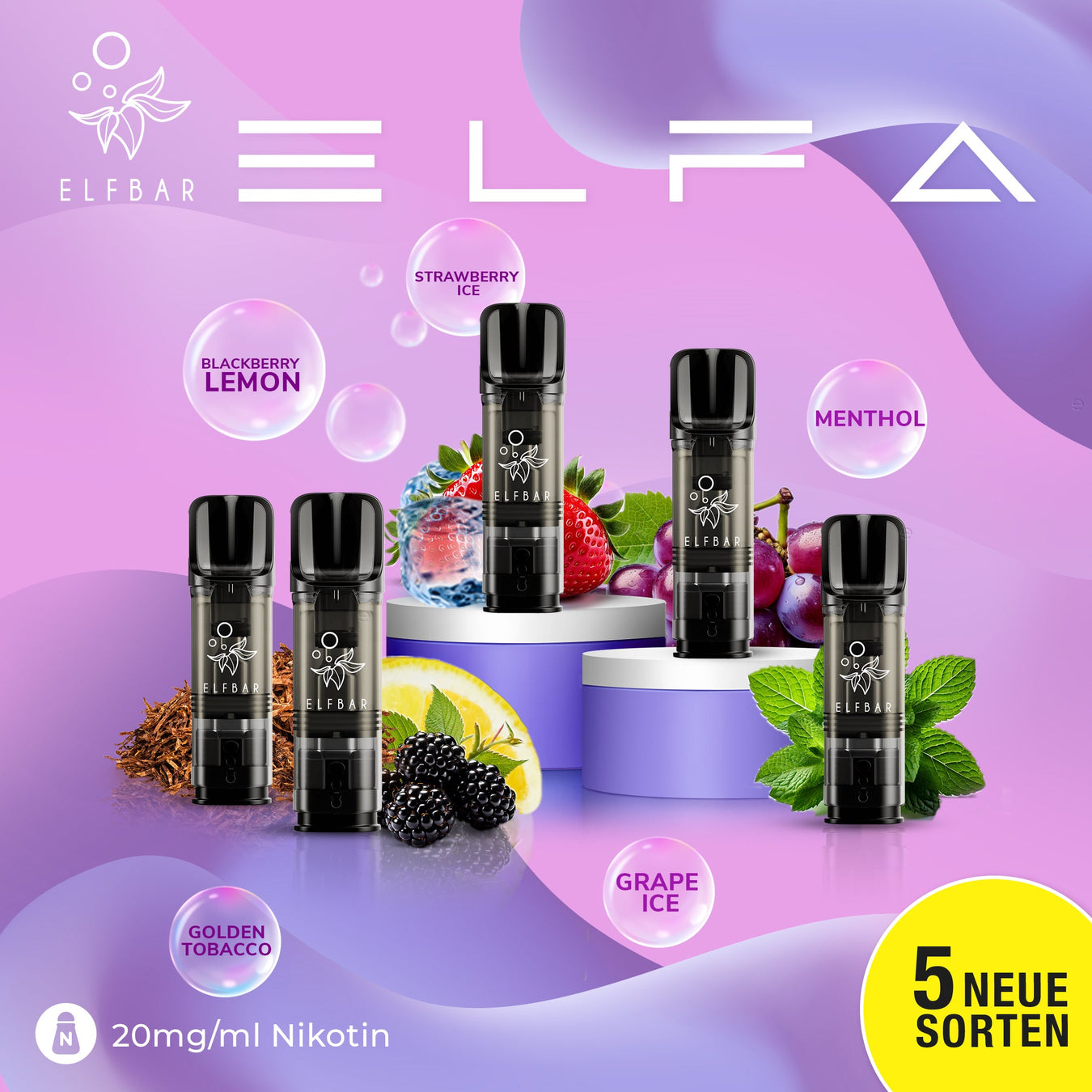
For users who like things simple but still want control, the
- Standard Mode: Perfect for 1.1 Ω pods (9-12 watts), optimized for battery life and nicotine salts.
- Turbo Mode: Switches when using the
ELFA TURBO Refillable Pod 0.8 Ω up to 15-18 watts.
This approach eliminates the risk of accidentally "grilling" the coil at 30 watts, but still offers the boost.
2. Full control: ELFX Kit
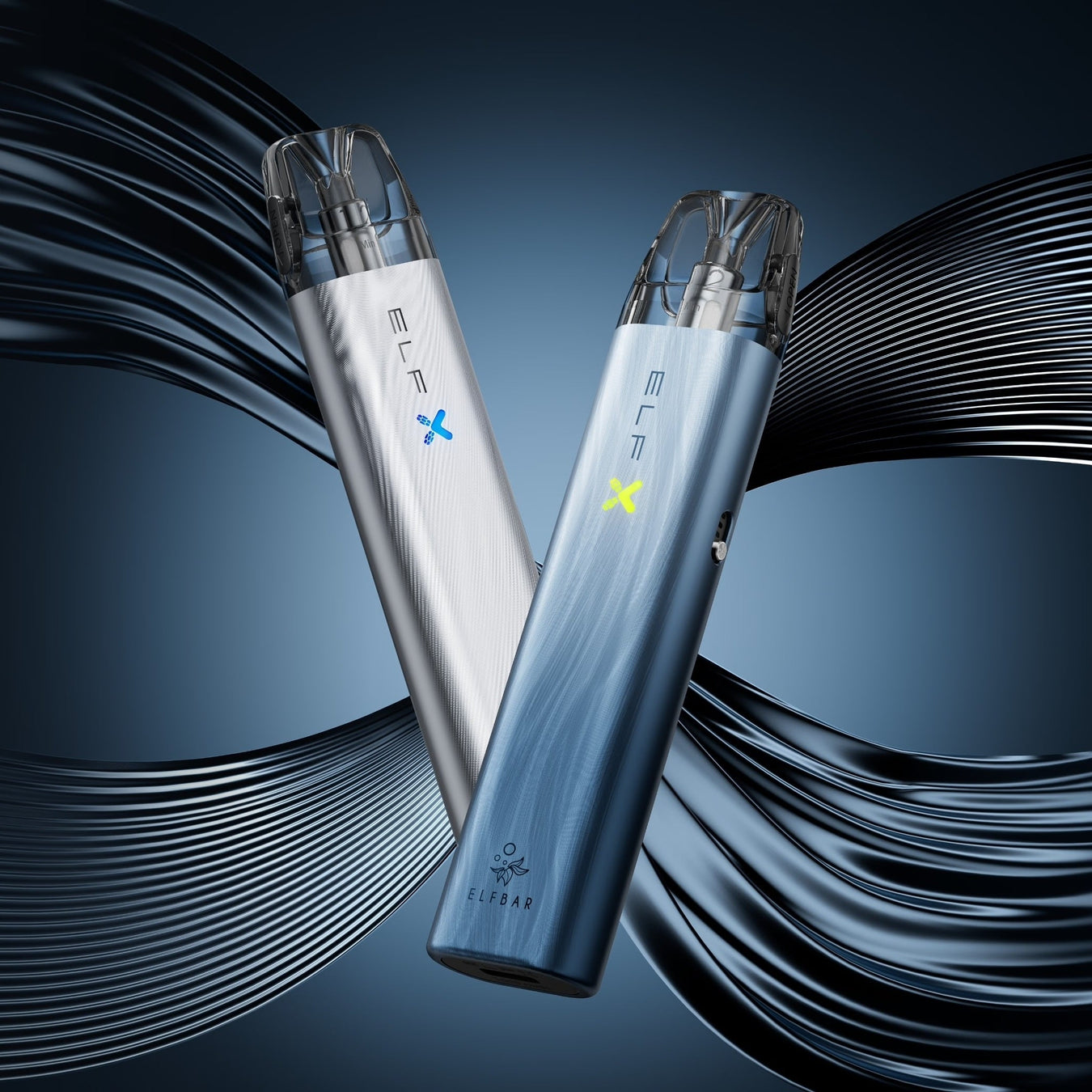
Anyone who wants to fine-tune every aspect of their vape will reach for the
- Scenario: You're using a creamy vanilla e-liquid. At 22 watts it tastes okay. At 26 watts, the sweetness practically caramelizes on your tongue. Variable wattage is designed precisely for discoveries like these.
Studies such as those in the Cochrane Library In summary, the findings suggest that user satisfaction, and therefore success in switching from smoking, often correlates with the performance and adaptability of the devices. A device that vapes exactly the way you like it is one you'll use more readily and consistently.
Myths and sources of error: What you should avoid
Despite the advantages, there are pitfalls. Here we dispel a widespread misconception.
Myth: "More watts = more nicotine rush"
This is not technically correct and often leads to unpleasant results.
- The reality: More watts produce more vapor per puff. Indirectly, you therefore inhale more nicotine. because you inhale more vapor. However, if you turn the power up too high, the e-liquid will burn before it vaporizes. The result is not a better throat hit, but a coughing fit and a ruined coil.
- The solution: If you need more nicotine, adjust the Nicotine strength It depends on your e-liquid, not necessarily the wattage. Use wattage for
Flavour and warmth, nicotine for satiation.
The Battery Dilemma (Data Model)
One often overlooked factor is energy consumption. Our analyses show the following pattern for a typical 1000 mAh battery:
- Operation at 12 watts: Approximately 600–700
puffs per charge (daily range for most). - Operation at 25 watts: Approximately 300–350
puffs per load.
Increasing the power by 100% (from 12 to 24 W) almost exactly halves the battery life. Therefore, if you're going to be out for a long time, it can be strategically wise to reduce the power slightly or close the airflow (MTL) to save energy.
Safety and responsibility
Advanced technology also requires responsible handling.
Disposal
High-performance devices contain larger batteries. When your device reaches the end of its lifespan, it doesn't belong in the household waste. According to the Federal Ministry for the Environment, Nature Conservation, Nuclear Safety and Consumer Protection (BMUV) Retailers are obligated to accept returns. We at
Find out, which
Overheating protection
Modern chipsets, such as those used in
Summary: Your path to a professional setup
Adjustable wattage isn't rocket science; it's the most powerful tool in your arsenal for personalizing your vaping experience. Whether you prefer the simple, stepped adjustment of
Key points:
- Always start in the lower performance range and gradually increase it.
- Adjust the wattage to the resistance (ohms) of your pod (see table).
- Use higher power for more heat and vapor, not primarily for the nicotine kick.
- Keep an eye on your battery level – high performance takes its toll.
With this knowledge, you are ideally equipped to unlock the full potential of your pod system.
Frequently Asked Questions (FAQ)
Q: Can I vape a 1.1 ohm pod at 25 watts? A: No, that is strongly discouraged.The thin heating wire or fine mesh in a 1.1 ohm pod is not designed for this high current. It would burn out almost immediately ("dry hit") and taste burnt. Stay in the 8–12 watt range.
Q: My device gets very hot at high wattage. Is that dangerous? A: Some warming of the casing is normal at high power levels (25W+) as energy is converted into heat. However, if it becomes uncomfortably hot, take a break. Modern devices automatically shut off at critical temperatures.
Q: Do I use more e-liquid at higher wattages? A: Yes, definitely. More power means more e-liquid is vaporized per second. If you switch from 10 watts to 20 watts, your e-liquid consumption will increase noticeably.
Disclaimer: This article is for informational purposes only and does not constitute medical advice. E-cigarettes are not risk-free and contain nicotine, which is addictive. They are intended for adult smokers/vapers only. If you have any health concerns, please consult a doctor.