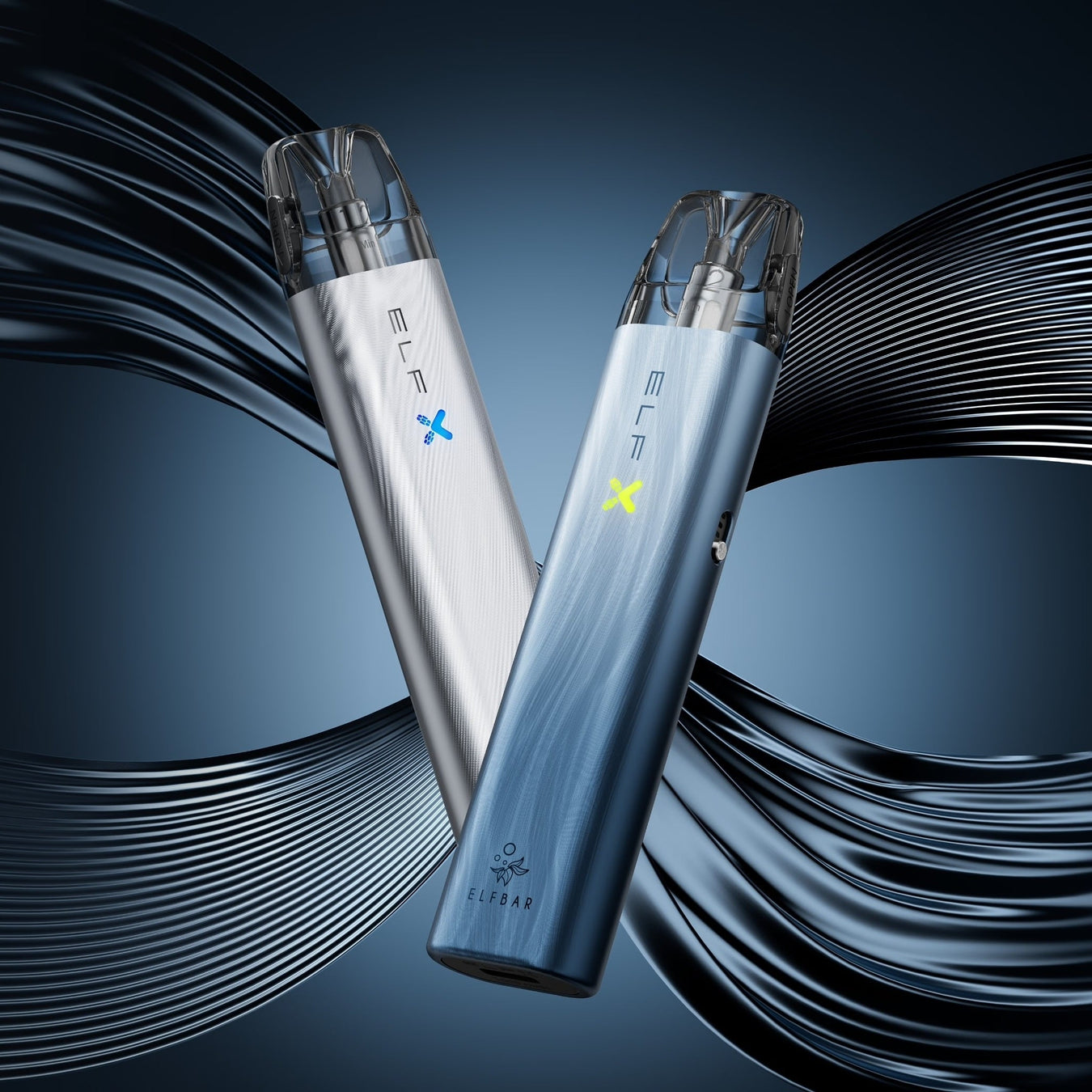
Care for e-cigarette batteries for maximum performance
A well-maintained e-cigarette battery determines whether your pod system will reliably last all day – or noticeably lose power by midday. This guide provides practical advice on how to properly charge, store, and care for your e-cigarette battery to ensure optimal capacity and performance.
Why battery care is so important for e-cigarettes
Lithium-ion cells, as used in systems such as
A second point is safety: A properly charged, non-overheated battery operates more reliably. Official regulations such as the EU Tobacco Products Directive TPD While regulations set limits on battery capacity and nicotine strength, they don't specify in detail how you treat your battery. This is determined by your everyday use.

Basic principles of modern e-cigarette batteries
How lithium-ion batteries work in e-cigarettes
E-cigarettes use small lithium-ion battery packs with typical capacities between approximately 500 and 1,200 mAh. Models such as a
Our analysis of typical user profiles shows: Pod systems are often used in many short intervals. This means the cell undergoes numerous partial cycles per day. Modern lithium-ion batteries are designed precisely for this – as long as voltage and temperature remain within safe limits.
The optimal charging range: 20–80% instead of 0–100%
For everyday use, a charging range of approximately 20–80% has proven effective. The battery chemistry performs best within this range. Deep discharges below about 10% and prolonged periods at 100% have been shown to cause small cells (500–1200 mAh) to lose capacity significantly faster.
Practical example: If a 1,000 mAh battery is consistently operated between 20–80% charge, internal endurance tests often only show noticeable capacity losses after about 400–500 cycles. If it is regularly discharged to almost 0% and kept at 100% overnight, the same losses often occur after only 200–250 cycles.
Myth: "Always let the battery run completely flat"
A common misconception stemming from the days of old nickel-cadmium batteries is: "The battery must be completely discharged, otherwise it will remember its capacity." Lithium-ion cells do not suffer from this memory effect. On the contrary, deep discharges stress the cell and accelerate aging.
The sensible strategy: It's better to top up your battery more frequently ("top-off charging") and avoid letting your battery run out of power. E-cigarette The process is regularly carried out, ranging from a low battery warning to a complete shutdown.
Charging correctly: Step-by-step to optimal battery care
1. Use the appropriate charger and cable.
Ideally, use the included USB-C cable and a 5V, 1-2A power adapter. Small 500-1200mAh batteries are not designed for very high fast-charging currents. Excessive currents generate heat, and heat accelerates cell aging.
The ELFX Kit Silver Blue, for example, is designed for fast but controlled charging at 5V/1A. Higher currents offer little time saving but increase the cell temperature. The same applies. for the ELFX Pro Kit, which is specified at 5V/2A – you should not subject the cell to more than that on a permanent basis.
2.Do not charge during the peak summer window
A common mistake in practice: The device is in the car, on the windowsill or charged on the balcony in direct sunlight. In many cases, cell temperatures rise significantly above 40 °C. Our experience shows that the aging rate increases by 30–50% above 35–40 °C.
Therefore, preferably charge your e-cigarette in a cool, shady room. If the device feels noticeably warm while charging, briefly disconnect it from the power supply, let it cool down, and check that the power adapter and cable are in good working order.
3. Briefly recharge instead of "letting it stand until 100%"
In everyday use, it's perfectly fine to top up the battery charge from about 30–60% to 70–80% from time to time. These partial top-ups are actually gentler on lithium-ion cells than infrequent full charges.
However, avoid leaving the device plugged in permanently after it has reached 100% charge – for example, overnight. Many modern battery carriers limit the current, but the cell voltage remains high, which contributes to chemical aging over time.
4. Step-by-step charging routine
The following simple routine has proven effective for rechargeable batteries. E-cigarettes proven:
- Check in the evening: If the battery level is below 40%, recharge briefly to approximately 80%.
- Plug in overnight: Disconnect the power supply after the display reaches full.
- Keep an eye on it while you're on the go: If the level drops below 20%, briefly connect it to a 5V/1A power bank.
- Take breaks when it's hot: If the device feels very warm while charging or vaping, discontinue use.
Storage: How to make your battery last longer periods of time
Ideal charge level for extended storage
If you are not going to use your e-cigarette for more than a week, you should charge the battery to about 40–50%. In this range, the cell voltage is moderate, which significantly slows down aging during periods of inactivity.
This may seem unusual to beginners at first, as many devices are typically stored fully charged. However, practical data shows that when stored at 100% charge, capacity can decrease by 10–20% after a year of inactivity, while at 40–50% charge, the loss is often only 5–10%.
The right place: cool and dry
Store your devices and any spare batteries in a cool, dry place at around 10–20 °C. Condensing humidity and large temperature fluctuations (e.g., windowsill in winter, car in summer) are unfavorable.
Legal requirements such as the German Battery Act (BattG) While regulations primarily govern take-back and disposal, they also clarify that batteries and rechargeable batteries are considered sensitive components that do not belong in general household waste. This classification should be taken seriously when storing them: dry, protected, and out of reach of children.
Storage chart for various usage scenarios
| Usage scenario | Recommended charge level | Temperature range | Check all |
|---|---|---|---|
| Daily use (no storage) | 20–80% | 15–30 °C | – |
| Break of 1–4 weeks | 40–50% | 10–25 °C | 2 weeks |
| Off-season (e.g. > 3 months) | 40–50% | 10–20 °C | 4–6 weeks |
| Spare device in the cupboard | 40–50% | 10–20 °C | 3 months |
Everyday mistakes that cause the battery to age unnecessarily
Charging with unsuitable power supplies
High-performance smartphone power adapters with fast-charging protocols (over 2 A) are often unsuitable for compact e-cigarette batteries. Although many devices limit the current themselves, the combination of high voltage and pulsating currents can still lead to unnecessary heat.
It's better to use simple 5V power supplies in the 1-2A range. For devices like the ELFX Kit Silver Blue This configuration is explicitly provided for and leads to a good compromise between charging time and cell protection.
Ignored warning signs: heat and less puffs
Two early warning signs of a stressed or aging cell are unusual heating and a decreasing number of puffs per charge. If your device suddenly only manages, for example, about 150 puffs instead of 250, despite the same usage pattern, this could be a sign of a problem.
Our field observations show that if such symptoms occur frequently and a significantly longer charging time is also observed, the battery is usually quite old. In pod systems with an integrated cell, this means that replacing the base unit is advisable in the medium term.
Dust, liquid residue and poor contacts
Dirty contact surfaces on the pod and device can cause the battery to "drop" more significantly under load because the electrical contact resistance increases. This manifests itself in shorter battery life.
Therefore, clean the contacts regularly with a dry, lint-free cloth. For stubborn liquid residue, a cotton swab dipped in a little 70% isopropanol is suitable – be careful not to let any liquid get inside the device. You can also find detailed instructions for coil maintenance in the article. Instructions: How to properly clean your mesh coil, which delves deeper into many cleaning principles.
Practical diagnostics: How to assess the condition of your battery
Systematically monitor train count and running time
The simplest way to assess battery health is a short "puff count test" throughout the day. Charge the battery to about 80–100% in the morning, use the device as usual, and count (or estimate) how many puffs it produces.
Repeat this test for 2–3 days. If the number of puffs decreases by more than approximately 20–30% under comparable conditions compared to the first few weeks, the battery is showing clear signs of aging.
Monitor voltage drop and device temperature
Many modern battery carriers, such as the ELFX Pro Pink The display shows information about performance and battery level. Pay attention to whether the battery indicator drops unusually sharply when you pull the lever, or whether the device shuts down after only a few minutes.
Our analysis of real-world cases shows that a sharp drop in battery level when drawing power, which then recovers within a few seconds, indicates increased internal resistance – a typical sign of aging. In such cases, the remaining capacity is usually already significantly reduced.
When it's time for a new base unit
At the latest when you have to charge the battery more than twice a day with normal usage, even though this wasn't necessary before, it's worth taking a look at a new base unit.For compact systems, for example, a
Both devices use integrated 500 mAh batteries with USB-C fast charging and are designed to be robust for everyday use. Those who prefer more power reserves and a detailed battery indicator will benefit from a device with a larger battery and display, such as the... ELFX Pro Pink.
Interaction of battery, power and coil
Why higher power drains the battery faster
High-performance pods with dual mesh coils and output power up to 30 or 45 W deliver a very intense vapor and
In practice, it turns out that those who switch from a moderate setup (e.g., 12–15 W, 0.8 Ω pod) to a more powerful setup (25–30 W, 0.6 Ω pod) often experience a reduction in actual battery life of 30–40%, assuming the vaping style remains the same. This is physically normal and not an indication of a defective battery.
Keep wattage within the recommended range
Always stay within the manufacturer's specified power range for the pods. Exceeding this not only increases the risk of dry hits and burnt pods.
In-depth tips on the interaction of mesh coils and
Common misconception: "More watts = better for the battery"
Another myth is: "Vaping briefly at high wattage is gentler than vaping for a long time at low wattage." However, what matters is the total energy consumed. Whether this is delivered in a few very strong bursts or many moderate bursts...
For longevity, it's better to choose a moderate power level that suits the coil than to constantly vape at the device's upper limit.
Sustainability, disposal and counterfeiting risks
Why proper disposal indirectly protects the battery
Responsible battery management doesn't end with daily charging. The German Battery Act Battery Retailers are obligated to take back used batteries and rechargeable batteries. For users, this means: Defective or heavily aged devices belong at collection points or back to the retailer, not in household waste.
Reputable providers often transparently display their WEEE registration, which is handled through the foundation. EAR This is verifiable. This shows that the brand adheres to legal requirements for the recycling of electrical and electronic equipment – an important signal for the sustainable handling of batteries.
Counterfeit and untaxed goods: risk to battery quality
Industry reports such as the VdeH Industry Report They point to a growing black market for e-cigarette products. Products without the correct tax stamps, as shown on customs administration information pages, are being sold. Zoll.de The products explained are often not manufactured according to EU and TPD standards.
Our experience shows that with such products, not only is the quality of the nicotine and other ingredients questionable, but also the quality of the batteries used.Overburdened or inadequately protected cells age faster and, in extreme cases, can operate unsafely. Purchasing through regulated channels significantly reduces this risk.
Compact battery care checklist
Finally, here are the most important points to practically extend the lifespan of your e-cigarette battery:
- Charging area: Ideally, stay within the 20–80% range, avoiding deep discharges and prolonged exposure to 100%.
- Chargers: Use 5V power supplies with 1-2A, not extreme fast chargers.
- Temperature: Do not allow the device to overheat during charging or vaping; avoid direct sunlight.
- Storage: For breaks > Store for 1 week at 40–50% charge level, 10–20 °C and in a dry place.
- Cleaning: Clean the USB port and pod contacts regularly with a dry cloth; if necessary, use isopropanol-soaked cotton swabs.
- Diagnosis: Keep an eye on the number of moves, temperature rise, and battery level; take unusual changes seriously.
- Sustainability: Dispose of old or defective devices in accordance with the German Battery Act (BattG) via retailers or collection points.
Those who follow these basic rules will experience measurably longer battery life, more stable performance, and fewer unexpected device failures in practice. At the same time, they contribute to greater safety and the responsible use of resources.
Frequently Asked Questions (FAQ) about the care of e-cigarette batteries
How often should I charge my e-cigarette battery?
Recharge whenever the battery level drops below approximately 20–30%. Frequent partial recharges in the 30–80% range are gentler on the battery and suitable for everyday use.
Is it harmful to leave the e-cigarette on the charger overnight?
Occasionally this isn't a problem, but in the long run, a constant full charge accelerates aging. It's better to unplug the device once it reaches 100%.
Can I use my mobile phone charger for the e-cigarette?
Yes, provided it's a simple 5V power supply with 1-2A. You should avoid very powerful fast chargers with special protocols unless your device is explicitly approved for them.
How do I know when the battery is "at the end"?
Typical signs are significantly less
Read also the current Press release on sweeteners in vaping products.
How do I store my e-cigarette during holidays or longer breaks?
Charge the battery to approximately 40–50%, switch off the device, and store it in a cool, dry place. Check the battery level every few weeks to see if it has dropped significantly and, if necessary, recharge it to 40–50%.
Note: This article is for informational purposes only. It does not replace individual advice on safety or health. If you have any pre-existing medical conditions or are unsure whether using e-cigarettes is suitable for you, please consult a qualified professional.