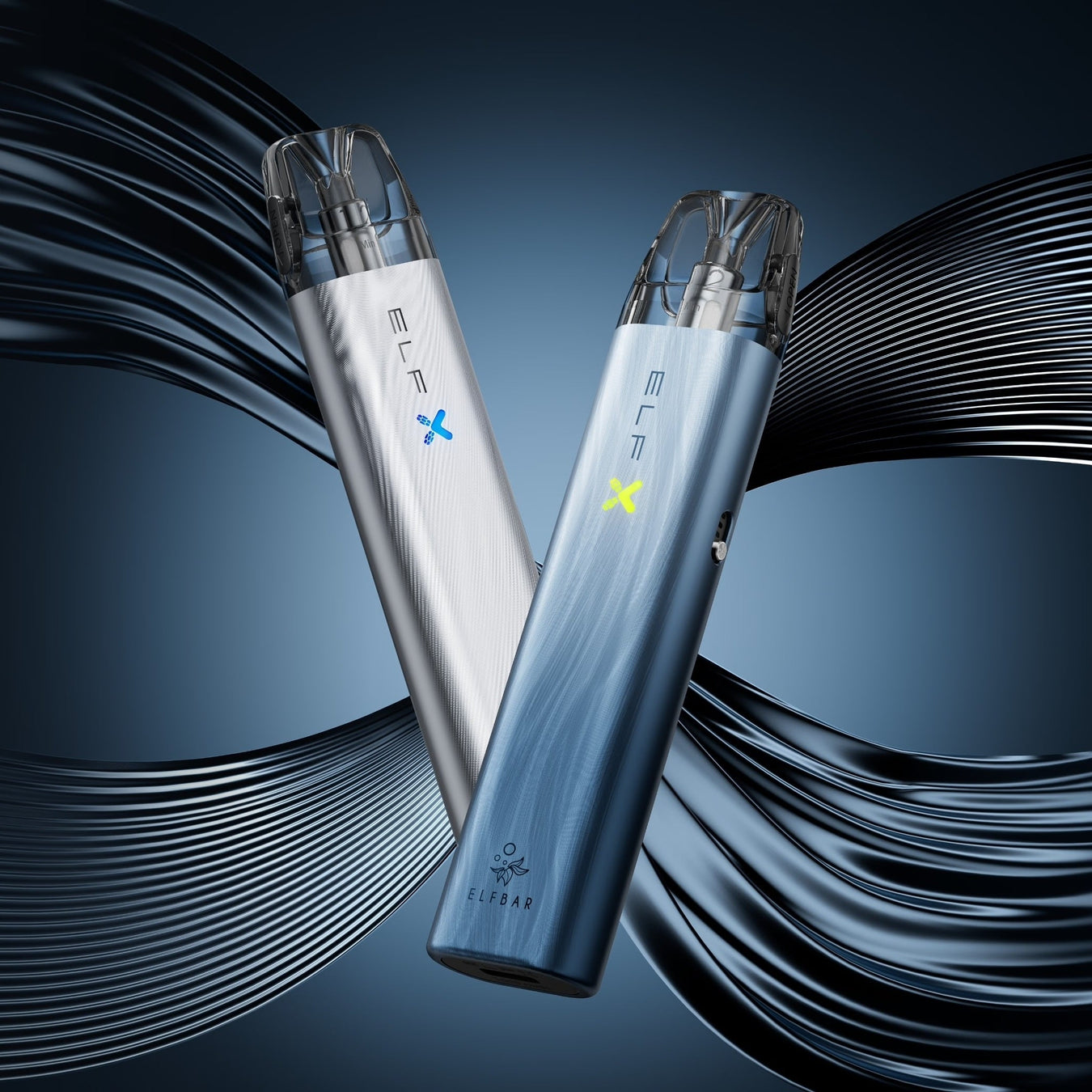
Maintaining your e-cigarette battery: Extend its lifespan (2026)
Maintaining your e-cigarette battery: What really extends its lifespan
Short answer: An e-cigarette battery lasts longest when it is stored at room temperature stored, between 20% and 80% remaining charge operated and with the suitable original cable is being charged. Deep discharge, prolonged heat (car, sun, heating), and storage at 100% or 0% significantly shorten the lifespan. This guide clearly distinguishes between disposable devices (battery not maintainable but storable) and refillable pod systems such as
Disposable vs. Pod System: Where does skincare actually make a difference?
Before you set up routines, clarify what type of battery you are using — the care logic differs fundamentally.
| type | Is battery maintenance possible? | Key influencing factor |
|---|---|---|
| Disposable e-cigarette (e.g. | No — closed system | Storage temperature and storage duration |
| Rechargeable pod systems ( | Yes | Charging cycles, deep discharge, heat |
| External battery carriers (box mods) | Yes, intense | Cell quality, charging current, storage |
If your device no longer loads, Is this a separate error case — which will be discussed in the article?
The most important rule: Avoid deep discharge
Modern lithium-ion batteries don't like being completely drained. If the remaining charge drops below approximately 5–10% and the battery remains in this state for several days, it can chemically age or permanently lose capacity. Practical tip: Check your battery as soon as the first red LED appears on your battery.
Temperature: the underestimated killer
Heat accelerates the chemical aging of batteries. Specifically, this means:
- Car dashboard in summer: It can reach 60–80 °C. Leaving the battery there is the fastest way to prematurely wear out an ELFX.
- Radiator, windowsill, sauna, beach: Avoid them as well.
- Cold: Batteries deliver less power below 5°C. This is usually reversible—however, if you plug the device directly into a charger from a cold jacket pocket, condensation inside can cause damage. It's best to let it reach room temperature before charging.
- Optimal area for storage and use: 15–25 °C.
Store — but properly
Pod systems such as
- Use the original cable or a reputable USB-C cable: Cheap cables often fail to maintain stable current and voltage.
- Prefer weak power supplies: A 5-watt phone charger is gentler on the battery than a 65-watt fast charger. Fast chargers unnecessarily heat up small batteries.
- Do not leave permanently plugged in: Unplug when fully charged. While overnight "trickle charging" is manageable for modern batteries, it does slightly accelerate wear.
- Never charge on a soft surface: Beds, sofas, and cushions can trap heat. Hard, unobstructed surfaces.
- Do not vape while charging: Simultaneous power draw from two sources puts a strain on the charging electronics.
- Replace damaged cables immediately: Bent or torn plugs pose a real safety risk.
Storage over days and weeks
If you are a Pod system or does not use a reserved disposable vape for a while:
- Charge level before packing: 40–60% (pod system) or unopened in original condition (disposable).
- Temperature constant 15–25 °C, dry, no direct sunlight.
- Do not store in a drawer with coins or other metal parts — contact bridges can cause short circuits.
- Only open the original packaging of disposable devices when needed. An open pod can lose aroma through evaporation.
Longer storage of unopened disposable vapes is possible, but the liquid will age over time. Disposable product range page lists current models — in practice, newly produced devices are significantly more consistent in terms of aroma.
Original accessories and reputable sources
Battery problems are surprisingly often caused by counterfeits. Counterfeit devices use inferior cells, defective protection circuits, and cheap solder. Symptoms include excessive heat during charging, very short battery life, bulging casings, and unusual odors. To be on the safe side, buy only from authorized dealers. An overview of sources is provided in the article. Where
What you should absolutely avoid
- Open the battery, drill into it, pierce it: Life-threatening in lithium-ion cells (thermal runaway).
- Continue using damaged or swollen devices: Dispose of it properly immediately.
- Immerse in water: Even a "brief rinse" is enough to destroy the electronics.
- Straight from the freezer to the charger: Condensation can cause short circuits.
- Third-party chargers without a CE mark: Voltage spikes can disable protective circuits.
Cycles, calendar aging, wear and tear — which matters more?
Batteries age not only through use (cycle aging) but also through time (calendar aging). Even an unused battery typically loses 2–4% of its capacity per year under proper storage conditions. In hot conditions or if constantly kept at 100% state of charge (SoC), this can increase to double-digit percentages per year. In practice, this means that a rarely used ELFX battery stored at 100% in a car will often perform worse after a year than a second ELFX battery that is used daily but well-maintained. Users who rotate multiple pod systems should treat them all equally—otherwise, capacity differences will occur.
A practical guideline: If the battery life per full charge has decreased by noticeably more than 30% compared to the first week, the battery is nearing the end of its useful life. With refillable systems that have a replaceable coil, the device often remains usable; only the daily usage intensity decreases.
Travel and airplane
E-cigarettes and their batteries are subject to IATA and Lufthansa standard regulations. into hand luggage, Do not pack it in your suitcase. Checked baggage is sometimes subjected to high pressure and temperature fluctuations; this is unsuitable for lithium-ion cells. Leave the device switched off at the airport, and pack e-liquid in 100ml containers in a clear plastic bag. Some countries have their own vaping regulations—check beforehand.
Disposal of defective batteries
Defective vape batteries belong not Dispose of batteries in your household waste. According to the German Battery Act (BattG), retailers are obligated to take back used batteries and battery-operated devices free of charge. Return the device to the point of sale, a recycling center, or a suitable collection container for small electrical appliances. Avoid storing swollen or damaged batteries indoors and protect them from impacts during transport.
Key Takeaways
- Battery care primarily concerns refillable pod systems (
ELFA , ELFX) and external battery carriers. - Room temperature, no permanent 0% or 100%, original cable — that covers 90% of the maintenance.
- Heat is the underestimated killer: avoid cars, heating, and the sun.
- Immediately take swollen or hot batteries out of service and dispose of them via BattG.
- Counterfeits are a common source of battery defects — only buy from reputable dealers.
This article is for general information purposes only. E-cigarettes are intended for adult use only. Always follow the manufacturer's safety instructions.