E-liquid costs: The price factor for the pod system
Introduction: Keeping an eye on ongoing costs
Transparency note: This guide was developed by the experts at Elfbar.de We have created this document. It contains information about our products as well as links to our online shop. Our goal is to provide you with an objective basis for your purchasing decision, based on market analysis and our experience in customer support.
When choosing a vaping system, many users initially focus on the purchase price of the device. Refillable pod systems like the
This article provides a structured cost analysis. We break down how prices are calculated, help you estimate your consumption, and compare the potential long-term costs of different systems. This gives you a sound basis for making a decision that takes both your vaping experience and your budget into account.
The basics of e-liquid costs: What determines the price?
The price of e-liquids or pre-filled pods results from a combination of raw material costs, manufacturing, logistics and – to a significant extent – statutory charges.
The composition of the price
An e-liquid essentially consists of propylene glycol (PG), vegetable glycerin (VG), flavorings, and optionally nicotine. While the quality of the flavorings can vary, the biggest price driver in Germany is the tobacco tax.
Since July 1, 2022, all e-cigarette liquids have been subject to tobacco tax, as stated in the Tobacco Tax Act (TabakStG) This tax is levied per milliliter, meaning that the tax component often constitutes a significant portion of the final customer price. Information from the German customs Confirmation that both nicotine-containing and nicotine-free substances are affected. Always look for the German tax stamp when purchasing to ensure that the product is legal and tested.
Price differences: Pre-filled pods vs. refillable bottles
The choice of format has direct consequences Impact on the cost per milliliter:
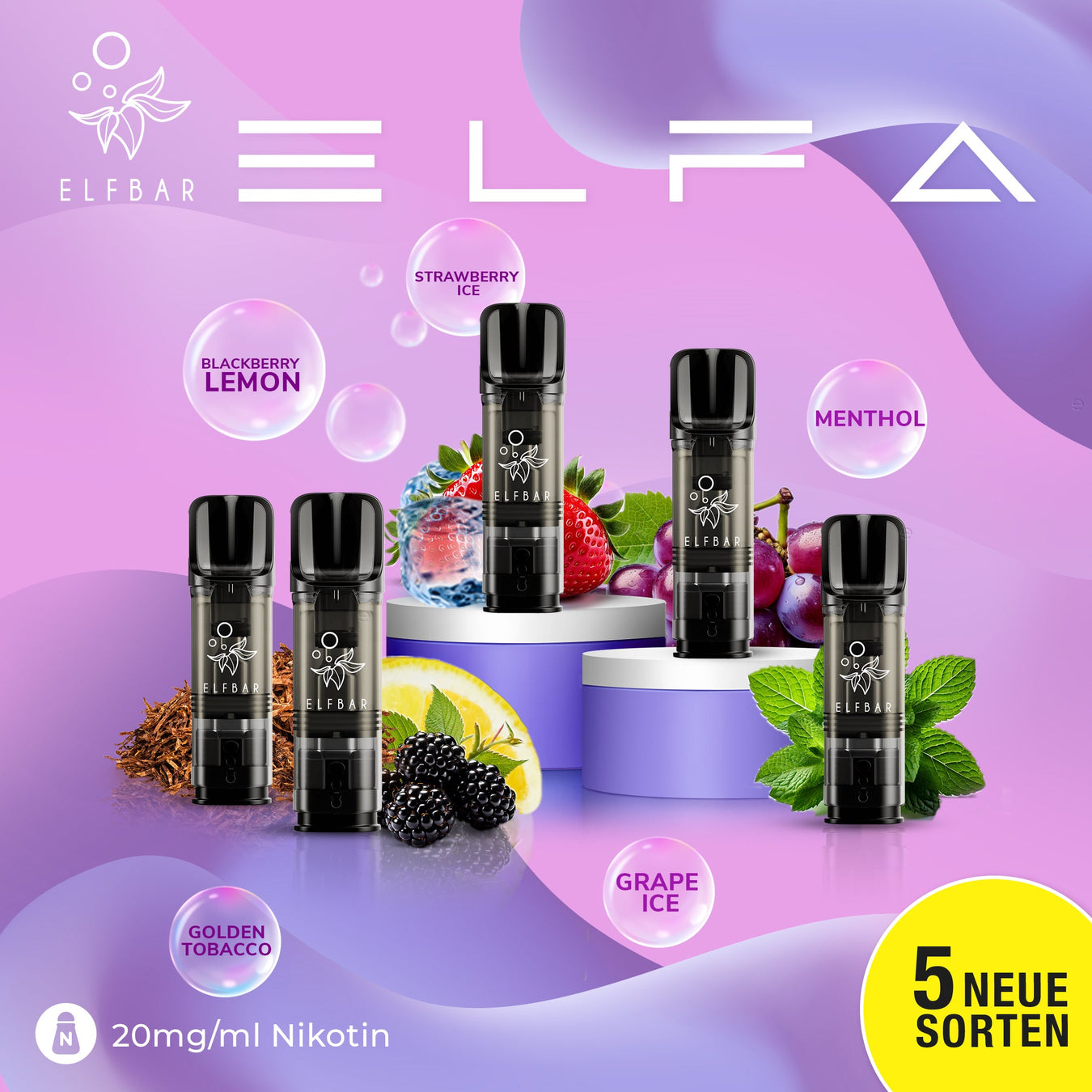
- Prefilled Pods: These offer a high level of convenience, as they can simply be replaced after use. This convenience is reflected in a higher price per milliliter.
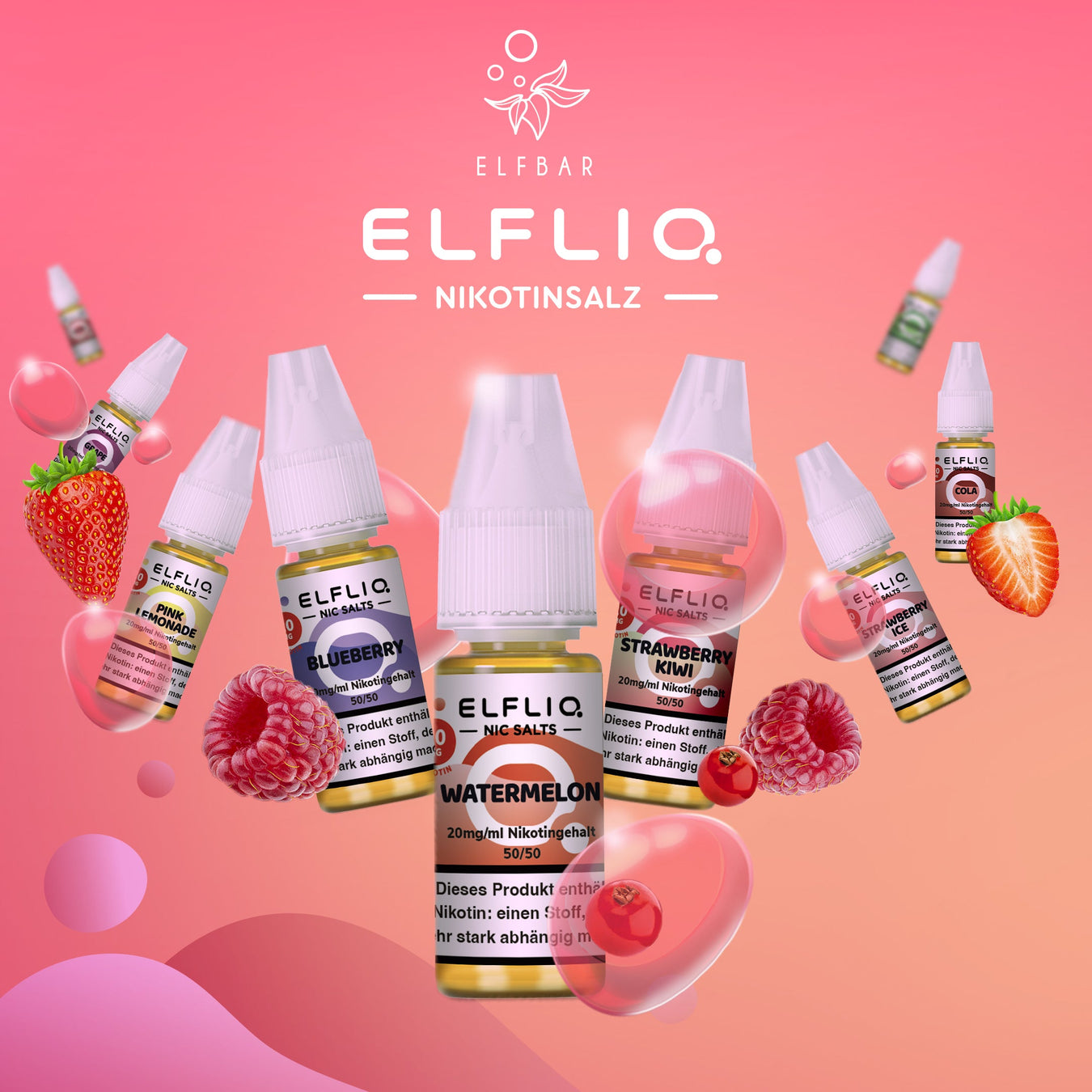
- Refill bottles (e-liquid): 10ml bottles are generally the most cost-effective option. They require manual filling of the pod, however, this reduces ongoing costs. Systems such as the
ELFA TURBO Refillable Pod are designed to minimize this additional effort.

Your personal consumption: A realistic assessment
Monthly expenses depend heavily on your individual vaping habits. Based on observations from our customer support and typical market patterns, users can often be divided into three categories (values serve as a guide):
Typical user profiles (estimates)
- Occasional users: Vaping is done rather irregularly or in social situations. Consumption is often... 1–2 ml per day (approx. 30–60 ml per month).
- Moderate user: They regularly use e-cigarettes as an alternative to tobacco cigarettes. Here we often observe a consumption of 3–4 ml per day (approx. 90–120 ml per month).
- Heavy users: Frequent use throughout the day. Consumption can 5–6 ml per day or more (from 150 ml per month).
Factors that influence consumption
Besides frequency, technical parameters influence the consumption rate:
- Traction technology (MTL vs. DL): Most pod systems use the "mouth-to-lung" (MTL) technique, which produces less vapor and therefore tends to consume less liquid than "direct-lung" (DL) devices.
- Device performance: Higher wattage settings inevitably lead to faster vaporization of the e-liquid. Modern mesh coils, as used in the
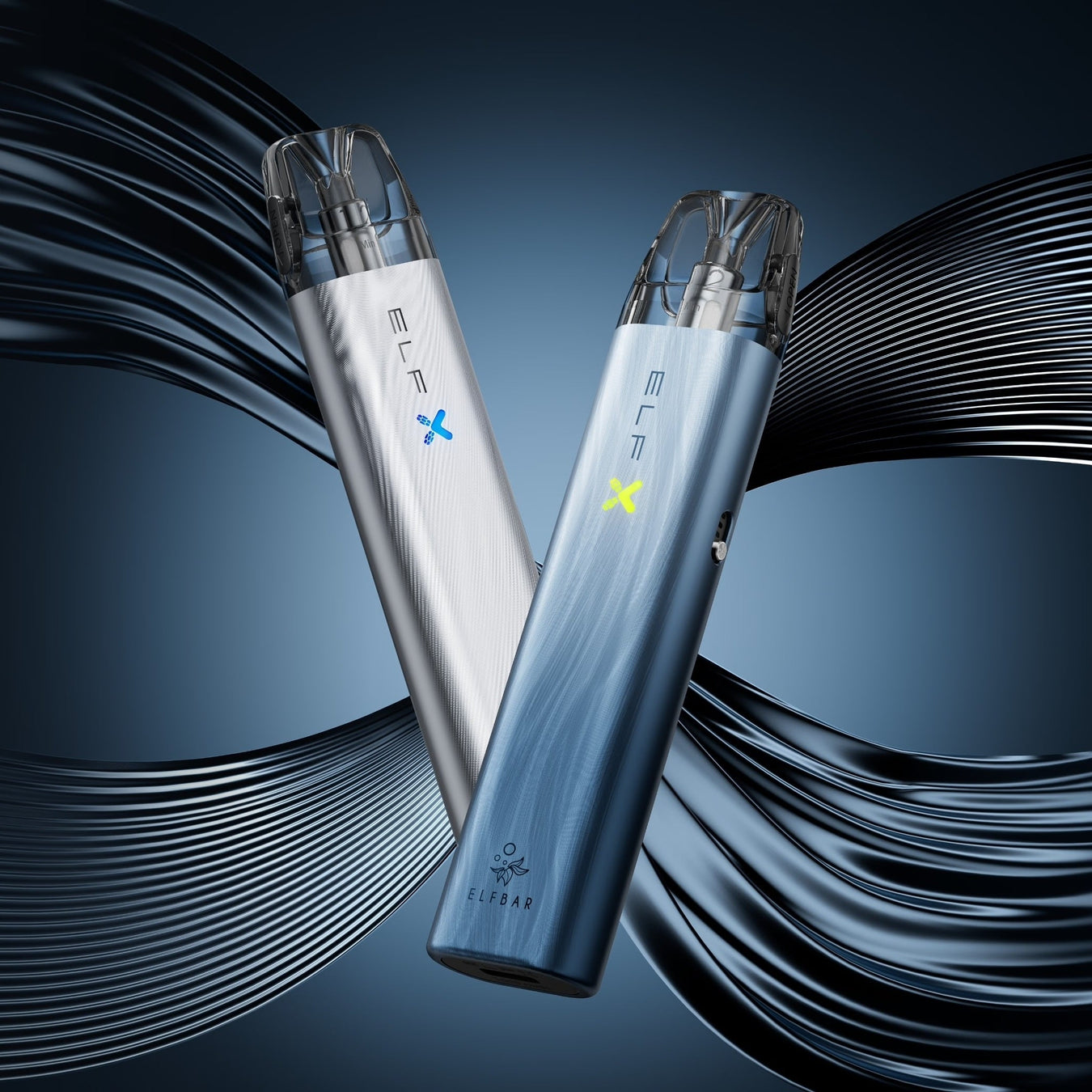
ELFX -Series, are optimized for efficiency, but increase throughput at high power. - Nicotine strength: In many cases, users observe that a higher nicotine concentration (e.g., nicotine salt) leads to faster satisfaction, resulting in less overall cravings.
puffs be done.
Cost comparison: Disposable vs. refillable system
A common misconception is that disposable vapes are cheaper in the long run due to their low initial price. A model calculation illustrates the potential savings of switching systems.
Model calculation: One year at a glance
The following table shows a sample calculation for a moderate user (approx. 4 ml/day). Please note that this is a theoretical model; actual costs depend on individual prices and the lifespan of the hardware.
| Cost | Disposable vape (example) | Refillable system (e.g. |
|---|---|---|
| Liquid costs per day | approx. €16.00 (for 2 x 2 ml) | approx. €2.00 (4 ml at €0.50/ml) |
| Liquid costs per month | approx. €480.00 | approx. €60.00 |
| Hardware costs per year | Including | approx. €25 (device) + approx. €130 (consumable parts*) |
| Total costs per year | approx. €5,760.00 | approx. €875.00 |
Assumptions for the model calculation: Disposable vape (2 ml) for €8.00. Refill liquid (10 ml) for €5.00. Refillable pod (consumable part) for €5.00, replacement every 14 days. Prices are based on market averages in Germany (as of 2023/2024).
Result of the modeling: In this scenario, the calculated savings potential is up to €4,885 per year. Even with differing prices or lower consumption, the trend generally remains in favor of refillable systems.
Expert tips for cost optimization
Based on our experience in the specialist retail sector, the following measures have proven effective in increasing efficiency:
- Choice of liquid: Very sweet e-liquids (often called "coil killers") can leave residue on the heating coil. This can shorten the lifespan of a pod. Clear, fruity e-liquids often allow for longer use of the same pod.
- Quantity planning: Many retailers offer tiered pricing or bundles for 10ml bottles. Once you've found your favorite, bulk packs can reduce the cost per milliliter.
- Equipment maintenance: Keep the contacts between the pod and battery carrier dry and clean. Optimal current transfer ensures even vaporization and prevents unnecessary wear.
- Take advantage of benefit programs: Many specialist shops offer loyalty points or newsletter discounts.At Elfbar.de Members can, for example, benefit from the EB Club on regular purchases.
Conclusion: Cost-conscious vaping
Switching from disposable products to a refillable pod system is often the most economically sensible decision for regular users. While the initial costs for the base device are higher, this investment typically pays for itself within a few weeks thanks to the significantly lower cost of refill liquids.
You can achieve full cost control by knowing your daily consumption and strategically using refillable bottles. This not only allows you to vape more cost-effectively, but also reduces electronic waste compared to disposable solutions.
Learn in detail how much your daily How much does a nicotine dose really cost?.
Frequently Asked Questions (FAQ)
How much can I really save by switching? That depends heavily on your consumption. Our model calculation shows a potential savings of several thousand euros per year for moderate users. Even with occasional use, savings in the three-figure range are likely.
When does purchasing a new device become worthwhile? Based on e-liquid prices, the "break-even point" (the point at which savings cover the device costs) is often reached after just 2 to 4 weeks with daily use.
Why are payment options often limited for e-cigarettes? Some payment providers, such as PayPal, exclude transactions for tobacco products and related items in their Acceptable Use Policy. Reputable retailers offer alternatives like Klarna, credit card, or Giropay instead.
Are cheaper e-liquids less safe? Price alone is not an indicator of safety. Compliance with TPD2 regulations and correct taxation are crucial. Only buy products from trusted retailers to ensure that the ingredients have been tested.
Legal notice: This article is for general information purposes only and does not constitute financial or health advice. All calculations are examples based on assumptions; actual costs may vary. E-cigarettes are intended for adult smokers. Federal Institute for Risk Assessment (BfR) It points out health risks and strongly advises non-smokers and young people against consumption.