What is really contained in the e-liquid of a disposable vape?
Propylene glycol, glycerin, flavorings, and nicotine salts – what's really in a disposable vape? Many users switching from traditional cigarettes are curious or even concerned about the composition of the e-liquid they inhale. This uncertainty is understandable. The aim of this article is to provide complete transparency and explain the ingredients of e-liquids in modern disposable vapes, such as those from [Brand Name].

The vapor is based on propylene glycol (PG) and vegetable glycerin (VG).
Every e-liquid, whether in a disposable vape or a refillable system, is based on two fundamental carrier substances: propylene glycol (PG) and vegetable glycerin (VG). Their ratio to each other largely determines the vapor properties.
What is propylene glycol (PG)?
Propylene glycol (PG) is a colorless and virtually odorless organic compound widely used in the pharmaceutical and food industries. In e-liquids, it fulfills two main functions:
For your safety, always pay attention to Prohibited ingredients in e-liquids.
- Aroma carrier: PG is an excellent solvent for flavorings and nicotine. It ensures that the
Flavour The molecules are distributed evenly in the liquid and released precisely when heated. - "Throat Hit": PG is responsible for the sensation in the throat that many former smokers know and appreciate as a "throat hit" or "flash." A higher PG content leads to a more intense sensation, similar to that of a traditional cigarette.
What is vegetable glycerin (VG)?
Vegetable glycerin (VG) is a sugar alcohol derived from vegetable oils (e.g., rapeseed or palm oil). It is more viscous than PG and has a slightly sweet taste.
- Steam volume: A high VG content produces dense, voluminous vapor clouds.
- Gentleness: VG makes the vapor noticeably softer and smoother in the throat.
The PG/VG ratio: The mixture makes the difference
The PG to VG ratio is crucial for the vaping experience. While high-VG e-liquids (z.B. While 70% VG or more is popular in large sub-ohm vaporizers, disposable vapes rely on a more balanced mixture.
Professional tip from practical experience: For Compact disposable vapes with modern mesh coils A 50/50 PG/VG ratio has become the industry standard. The reason is practical: this moderate viscosity ensures optimal e-liquid flow to the heating coil. A high-VG e-liquid that is too thick would flow too slowly through the fine channels of a small pod system, resulting in dry vaping.
Do you know how to... Dispose of empty disposable vape containers must?
For better clarity, we have summarized the properties of PG and VG in a table:
| Characteristic | Propylene glycol (PG) | Vegetable glycerin (VG) |
|---|---|---|
| Main function | Steam generation | |
| viscosity | Thin liquid | Thick liquid |
| steam quantity | Small amount | High |
| throat sensation | Intensive ("scratching") | Soft |
| Own | Neutral | Slightly sweet |
The heart of the experience: The aromas
Flavors are the soul of every e-liquid. They create the wide range of flavors.
The art of e-liquid production lies in dosing the flavors so that they create an intense, but not overpowering, taste.
The purity of the flavorings is a crucial safety feature. Reputable manufacturers have their e-liquids tested by independent laboratories such as... ASL Analytic Serv
The effect: Nicotine salt for a gentle and effective absorption
For many people switching from smoking, effective nicotine absorption is crucial to satisfying their cravings for a cigarette. This is where nicotine salts come into play.
What is nicotine salt?
Unlike the traditionally used "free" nicotine (freebase), nicotine salt is a more stable form of nicotine bound to an organic acid (z.B. benzoic acid). This small chemical difference has major practical implications:
- Softer "Throat Hit": Nicotine salt allows for higher nicotine concentrations without the strong scratching sensation in the throat that would occur with free nicotine.
- Faster inflow: The body absorbs nicotine salt more quickly, leading to a faster and more satisfying effect – similar to that of a tobacco cigarette.
- Stability: Nicotine salts are less volatile and oxidize more slowly, which improves the shelf life of the liquid.
These properties make nicotine salt the ideal choice for low-power devices such as disposable vapes. More detailed information on how it works can be found in our article "What is nicotine salt e-liquid and how does it work?".
Legal framework in Germany
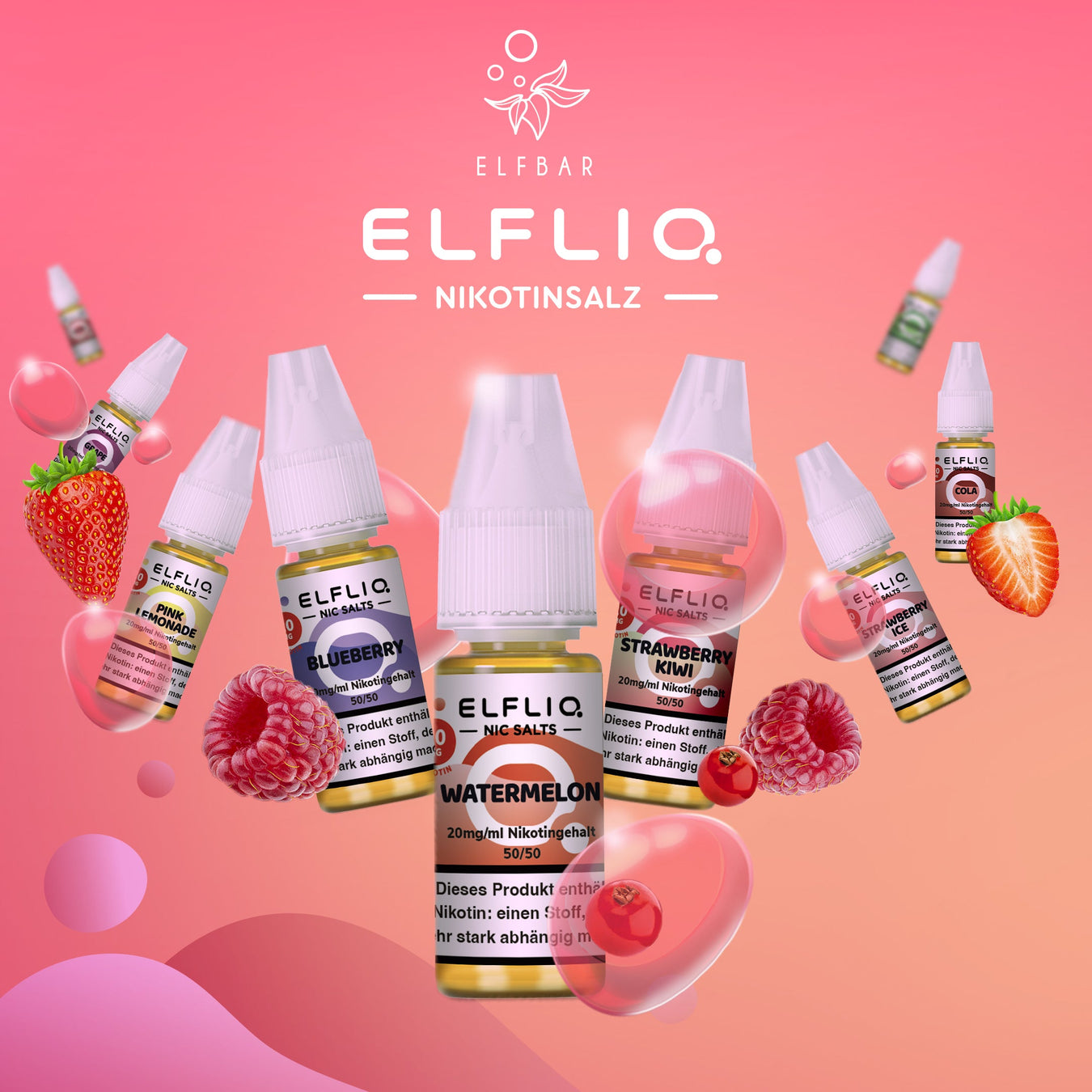
The European Tobacco Products Directive (TPD), transposed into German law by the Tobacco Products Act (TabakerzG), sets a strict upper limit for nicotine-containing e-liquids. The nicotine concentration must not exceed 100%. 20 milligrams per milliliter (20 mg/ml) do not exceed. All disposable vapes legally sold in Germany, such as the
For users who
Safety and quality: What is not contained in an e-liquid
Transparency also means clearly stating what should not be included in a high-quality e-liquid. Reputable manufacturers commit to the highest purity standards.
A common myth: "Antifreeze"
A common misconception is the claim that e-liquids contain antifreeze. This is based on a misleading oversimplification. While propylene glycol (PG) is indeed a component of some antifreeze products, its function and concentration are completely different. PG is a substance approved by health authorities worldwide and is also used in toothpaste, cosmetics, and as a food additive (E 1520). The form used in e-liquids is of pharmaceutical purity and safe for human consumption.
Guaranteed purity through independent testing
Quality products are regularly tested for potentially harmful compounds that could be formed when heated. These include, in particular:
- Diacetyl, acetoin and acetylpropionyl: These substances have been blamed for the so-called "popcorn lung effect" and have no place in e-liquids.
- Aldehydes (formaldehyde, acetaldehyde): These can occur at very high temperatures or with improper use (z.B. "Chain vaping" can occur. Good device design with temperature control and the use of high-quality materials minimize this risk.
The Federal Institute for Risk Assessment (BfR) The BfR confirms its assessment that e-cigarettes, when used correctly and in compliance with legal standards, are potentially less harmful than tobacco cigarettes. At the same time, the BfR emphasizes the importance of protecting young people and advises non-smokers against using them, a position we fully share.
Key Takeaways: What you should know about e-liquid ingredients
In summary, an e-liquid in a compliant and high-quality disposable vape consists of only four simple but carefully selected components:
- Propylene glycol (PG): The
Flavour The carrier that provides the "throat hit". - Vegetable glycerin (VG): The steam generator, which is responsible for dense clouds and a smooth draft.
- Food-grade flavorings: Provide for the
Flavour and the Vielfa lt. - Nicotine salt (or no information): Provides a fast and satisfying nicotine effect at concentrations up to the legal maximum of 20 mg/ml.
The safety and quality of these ingredients, their purity, and the correct mixing ratio are crucial for a satisfying and safe vaping experience. Therefore, always ensure you purchase your products from verified and official retailers to avoid counterfeit and non-compliant products.
Frequently Asked Questions (FAQ)
Are PG and VG safe to inhale? PG and VG are approved for use in food and pharmaceuticals and are generally considered safe. Long-term inhalation studies over decades are still pending, but current scientific evidence, including from the BfR (German Federal Institute for Risk Assessment), indicates a significantly lower risk profile compared to smoking tobacco.
Why is the nicotine strength limited to 20 mg/ml? This upper limit was set within the framework of the EU Tobacco Products Directive (TPD). It represents a compromise that is strong enough to make it easier for smokers to switch, but at the same time aims to limit the risk of excessive nicotine intake and addiction, especially among young people.
Do the flavorings contain sugar? No, the sweet ones
Legal and health notice: This article is for informational purposes only. E-cigarettes and nicotine-containing products are intended for adult smokers as an alternative to traditional cigarettes. They are not suitable for non-smokers, minors, pregnant or breastfeeding women, or individuals with cardiovascular disease. If you have any health concerns, please consult a doctor. Sales are restricted to persons over 18 years of age.