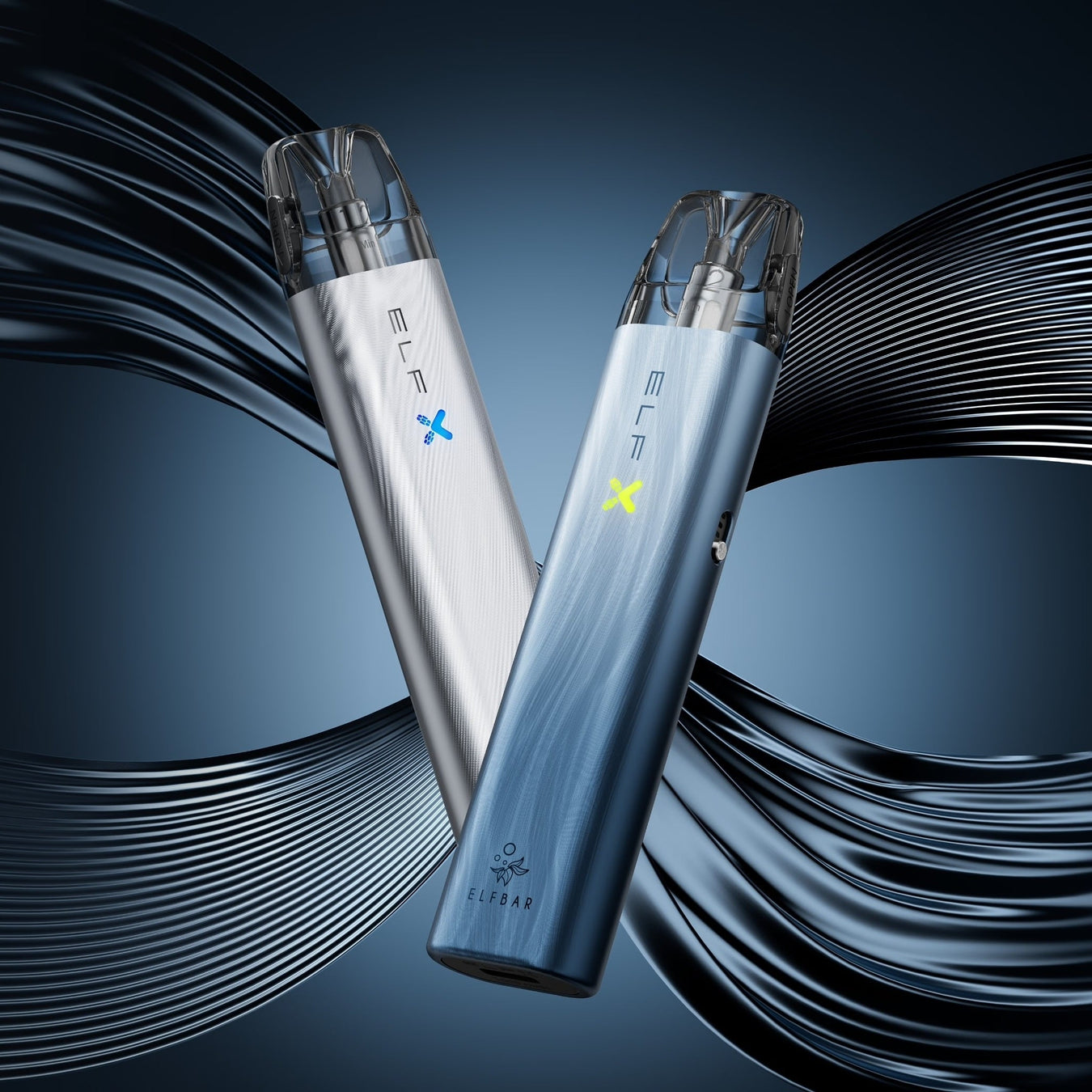
Battery indicators: Keep an eye on the charge level
Battery indicators: Keep an eye on the charge level
Quick Start: Key Takeaways
- Display precision: Most modern pod systems use a voltage-based estimation of the state of charge (SoC), which typically offers an accuracy of ±5–10%.
- Optimize lifespan: To maintain the battery capacity in the long term, the device should ideally be charged when the indicator reaches a medium level (approx. 40–60%, often yellow).
- Avoid deep discharge: Continuously discharging the battery until the flashing red signal (below 20%) can noticeably reduce the battery capacity after only 30–50 charging cycles.
- Misinterpretations: A constant red light during use does not always indicate a dead battery, but can also point to contact problems with the pod or a worn-out coil (atomizer head).
- Storage: For extended periods of non-use (several weeks), a charge level of 50–60% is optimal to minimize chemical degradation.
- Legal compliance: In Germany, e-cigarettes must comply with the Tobacco Products Act (TabakerzG), which, among other things, limits the nicotine concentration to a maximum of 20 mg/ml.
- Disposal: According to the Battery Act (BattG), batteries must not be disposed of in household waste, but must be recycled via official collection points.
The development of modern e-cigarettes has led to a significant professionalization of user interfaces. While early models often only warned of sudden shutdown with a simple flashing signal, current pod systems feature sophisticated LED color codes or digital displays. These indicators are crucial for an uninterrupted vaping experience, as they allow users to plan their energy consumption in advance. This guide analyzes the technical functionality, the interpretation of the signals, and the impact of usage patterns on battery health.
The technology behind the display: Voltage vs. Capacity
The battery level indicator on e-cigarettes is mostly based on measuring the battery voltage. A lithium-ion battery, as used in pod systems, typically operates within a voltage range of approximately 4.2 volts (fully charged) down to 3.2 or 2.75 volts (discharged).
Voltage-based Estimation
In consumer electronics, voltage-based measurement dominates because it is cost-effective and sufficiently precise for everyday use. Analyses show that this method achieves an accuracy of approximately ±5–10% under controlled conditions. This meets the needs of most vapers, who simply need to know whether their device is "full," "medium," or "empty."
In contrast, there is the so-called "Coulomb Counting," which measures the actual current flow. While this method is more precise (±1–3%), it is also significantly more expensive to implement and requires complex calibration processes that are rarely economically viable in compact pod systems.
Methodological note: The accuracy specifications are based on technical analyses of common state-of-charge (SoC) estimation methods used in consumer electronics. In practice, factors such as ambient temperature and battery aging can affect precision.
Color codes and their meaning: A guide
Most manufacturers use a standardized traffic light system to visualize the charge level.Although the exact thresholds may vary depending on the model, the following pattern has become established as an industry standard:
- Green (100% – 70%): The battery is sufficiently charged. In this range, the device often operates at maximum output power, unless it has a constant power output.
- Blue or white (70% – 30%): A medium charge level. For most users, this is the ideal time to plan a charging opportunity for later in the day.
- Red (below 30%): The battery is almost empty. Many devices reduce their power output at this stage to conserve the remaining energy.
- Flashing red: The battery voltage has dropped below the safety threshold (often around 3.2V) and the device shuts off the power output to protect the battery cells.
A common mistake in practice is misinterpreting a constantly lit red light during use. In many cases, this doesn't primarily indicate a low battery level, but rather excessive contact resistance. This can be caused by dirty contacts between the pod and the battery carrier or by a defective coil. A quick cleaning of the contacts or reinserting the pod often resolves this issue immediately.
Scenario analysis: The "structured commuter"
To illustrate the benefits of precise battery indicators, let's consider the model of a user who is switching from tobacco cigarettes to a pod system and relies on a reliable supply of nicotine during their daily commute.
Modeling nicotine equivalence and use
In this scenario, we assume a user who previously smoked 5 cigarettes per day. This corresponds to a systemic nicotine intake of approximately 7.5 mg per day. To achieve this amount with a TPD-compliant e-Liquid To cover a nicotine level of 20 mg/ml, the user needs approximately 0.27 ml of liquid, which is about 55
| parameter | Value | Unit | Basis/Assumption |
|---|---|---|---|
| Nicotine demand (systemic) | ~7.5 | mg/day | Equivalent to approximately 5 cigarettes |
| Liquid consumption | ~0.27 | ml/day | At a nicotine salt concentration of 20 mg/ml |
| Estimated puffs per day | ~55 | Puffs | Based on MTL usage patterns |
| Battery capacity (example) | 1000 | mAh | Typical capacity of modern pod systems |
| Estimated reach | ~2-3 | days | In the above-mentioned consumption pattern |
Modeling note: This data is derived from a theoretical simulation of nicotine bioavailability and the average energy consumption of mesh coils. Individual factors such as puff duration and wattage can influence the actual values.
For this type of user, a 5-level indicator (as used in...) is suitable. Pod systems with long battery life The indicator light (which can be found) is of high value. A change from green to yellow very precisely signals that the device has enough power for the rest of the workday, but should be charged in the evening. A simple binary light (on/off), on the other hand, would trigger significantly higher "battery anxiety" (fear of a dead battery).
Maximizing lifespan: The 20-80 rule
The way a user reacts to the battery indicator signals directly impacts the chemical aging of the lithium-ion cell. Expert observations from customer support and technical feedback reveal clear patterns:
- Avoiding extremes: Batteries age most slowly when kept between 20% and 80% charge. Constantly pushing them to the point of automatic shutdown (red flashing light) stresses the cell's anode and cathode.
- Charge cycle degradation: A battery that is consistently discharged below 20% can experience a capacity loss of over 10% after just 30 to 50 such cycles. Over a period of a few months, this means the device will need to be charged noticeably more often.
- Thermal stress: Charging with very high currents (fast charging) generates heat. If possible, a standard 5V/1A power adapter should be used, as often recommended in the manuals. According to Vaping360, moderate charging is more sustainable for the cell chemistry in the long run.
Legal framework and security in Germany
The operation and sale of e-cigarettes in Germany is subject to strict regulatory requirements, which also concern the safety of the installed batteries and transparency for the consumer.
Conformity and authenticity
An important aspect of safety is the use of genuine products. Counterfeit devices often have inferior electronics that display the charge level inaccurately or lack overcharge protection circuits. Users should always look for the German tax stamp, which, according to the regulations, Tobacco Tax Act (TabakStG) This label is mandatory. It is not only a sign of correct taxation, but also an important indicator of the product's marketability and originality in German specialist retail.
Environment and waste disposal
Once a battery has reached the end of its lifespan – recognizable by its rapid discharge despite a green indicator – it must be disposed of properly. EAR Foundation In Germany, compliance with the WEEE Directive on the disposal of waste electrical and electronic equipment is monitored. Vapers are legally obligated not to dispose of old devices in household waste, as the lithium-ion batteries they contain can cause fires if damaged in garbage trucks.
Troubleshooting: If the display isn't doing what it's supposed to
Occasionally, the LED indicator may give signals that confuse the user. Here are the three most common scenarios, based on patterns from specialist forums such as the e-smoking forum:
- The indicator immediately switches from green to red: This often indicates high internal resistance of the battery (end of its lifespan) or that the device is being used in very cold temperatures. Lithium-ion batteries lose a significant amount of performance in freezing conditions.
- Device is not charging even though the cable is plugged in: Check the USB-C port for lint or dirt. Often, a physical blockage prevents proper contact.
- The LED flashes when pulling the plug, even though the device has just been charged: This is often a protective function against short circuits. It usually means that the coil's resistance is outside the safe range or that a liquid leak is interfering with the electronics.
Summary of recommendations
For optimal use of your pod system, it is recommended to understand the battery indicators as an active management tool.React promptly to the change to yellow or red to prevent deep discharges. When purchasing, look for devices with multi-stage indicators, as these offer significantly better planning reliability than simple signal lights.
In conclusion, the technological advancements of modern pod systems have made vaping more convenient and safer. Adhering to simple charging guidelines and understanding the meaning of color codes significantly contribute to protecting the long-term value of your investment in a high-quality device.
YMYL disclaimer: This article is for informational purposes only and does not constitute medical or health advice. Nicotine is a highly addictive substance. The use of e-cigarettes is not recommended for non-smokers, young people, pregnant or breastfeeding women, or people with cardiovascular or respiratory conditions. If you have health problems or questions about quitting smoking, please consult a qualified doctor or pharmacist.